
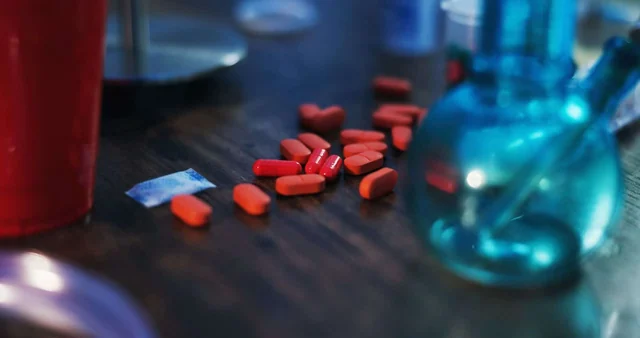
Yes. Penal Code section 653f(d)(1) makes it a separate crime to solicit another person, “with the intent that the crime be committed,” to commit certain drug sale, transport, or manufacturing offenses. The crime does not require the other person to agree, and no drugs or money ever have to change hands.
What the solicitation law covers
Section 653f(d)(1) applies to a request that someone commit an offense specified in Health and Safety Code section 11352, 11379, 11379.5, 11379.6, or 11391. Those sections cover selling, furnishing, and transporting for sale various controlled substances, and manufacturing them.
The statute does not carve out a person who asks to buy for personal use. Its words reach anyone who asks “another to commit an offense specified in” those sections, and selling or furnishing drugs to you is such an offense. California’s drug diversion law treats this as a real charge: Penal Code section 1000(a) lists a violation of section 653f(d) “if the solicitation was for acts directed to personal use only” among the offenses that can qualify for pretrial diversion, subject to that statute’s other conditions.
A first conviction is punishable by up to six months in county jail. A person previously convicted of this kind of solicitation who is convicted again faces up to one year in county jail or a felony term under Penal Code section 1170(h). Subdivision (d) also does not apply when another law would impose a longer term, and section 653f(h) says nothing in the section prevents prosecution under any other law that provides for greater punishment.
When the crime is complete
The official jury instruction on solicitation, CALCRIM No. 441, requires proof that you requested another person to commit the crime and that you intended the crime be committed. It tells jurors a person “is guilty of solicitation even if the crime solicited is not completed or even started” and that the person solicited “does not have to agree.” Its bench notes add that one appellate court has held the other person must actually receive the request, and the instruction includes that element when receipt is disputed.
California treats solicitation as its own crime elsewhere too, including solicitation to commit murder under a different part of the same statute, though the penalties and the crimes covered are very different.
The corroboration requirement
A charge under subdivision (d) “shall be proven by the testimony of one witness and corroborating circumstances” (section 653f(g)). CALCRIM No. 441 explains that corroborating evidence must tend to connect you to the crime and be independent of the witness’s account, but it “need not be strong,” and it may include your own acts, statements, or conduct. The requirement is real, but your own messages or conduct can supply the corroboration.
How this differs from the sale charge itself
Besides selling and transporting, section 11352(a) covers anyone who “offers to transport, import into this state, sell, furnish, administer, or give away” certain drugs, and that offense carries a felony term of three, four, or five years under Penal Code section 1170(h). That offer language describes the seller’s side of a deal; a request to buy is not itself an offer to sell. That does not make a request safe. Section 11352(d) says it does not limit prosecution for aiding and abetting, conspiring, or acting as an accessory, and section 653f(h) preserves prosecution under any law with greater punishment. Which charges fit depends on what was said and done.
How solicitation differs from an attempt
Attempt is a separate crime. Under Penal Code section 21a, it has two elements: the specific intent to commit the crime, and a direct act toward committing it that falls short. CALCRIM No. 460 notes that some courts have concluded “a mere solicitation is not an attempt,” while at least one court disagreed, reasoning that words alone can be an act toward a crime, particularly where the offense by its nature requires the participation being requested. A solicitation charge under section 653f(d) does not depend on that debate.
What to do if you are in this situation
- Do not contact the other person again to find out what happened or to explain yourself; that contact can create new evidence.
- Preserve, do not delete, any texts, calls, or messages related to the request. What you said, and how, is often the central evidence in these cases.
- Do not assume that because no deal happened, there is no case. Section 653f(d) does not require one.
- Ask your lawyer whether pretrial diversion under Penal Code section 1000 could apply.
- Get legal advice before making any statement to police about the request or your intent.
If you are facing a solicitation charge connected to a drug offense, the Law Offices of David S. Chesley can review the specific words used, who else was involved, and whether the corroboration the law requires actually exists. Call (800) 755-5174 to discuss your case.