









Drug crimes in California can often be divided into two categories: Possession and sale. Possession charges revolve around the personal use of controlled substances, while sale charges consist of the production, transportation, and distribution of them.
Regardless of what law you're accused of breaking, these are serious charges. You could be facing years in prison, thousands of dollars in fines, and a criminal record. You need help from a drug charges lawyer in Los Angeles.
The Law Offices of David S. Chesley includes several former prosecutors, police officers, and judges who have extensive experience on both sides of the courtroom. With over 50 years of combined legal experience, our law firm provides strong defenses to clients accused of drug crimes.
Don’t let a drug charge define your life. David S. Chesley provides strategic, results-driven defense for all state and federal drug crimes in Los Angeles. Call today: (800) 755-5174.
The firm’s original article states: “Reviewed by Attorney David S. Chesley, September 2026. California criminal defense since June 2005, SBN 236611.” This attribution concerns the original article.
Key Points
- Drug charges vary greatly depending on the specifics, ranging from simple possession to selling to manufacturing.
- Federal drug charges are typically harder to fight than state charges.
- California offers drug diversion programs such as Proposition 36 and PC 1000, which can help alleged drug offenders avoid jail time.
- The Law Offices of David S. Chesley leans on insights from former prosecutors to help clients fight drug charges.
- Drug-crime specific defenses include lack of possession, wrongly identified substances, and valid prescription
Why Hire a Specialized Drug Crimes Lawyer in Los Angeles?
You need a specialized Los Angeles drug crimes lawyer because of the complexity of these charges. California's drug laws have changed significantly over time; proper chemical testing procedures need to be followed, and evidence collection laws can make or break cases.
David S. Chesley is a former Los Angeles County prosecutor who knows how the state builds drug cases. Now, as a Los Angeles-based defense attorney, he fights for clients' rights by exposing evidentiary issues, dissecting prosecutors' arguments, and building comprehensive defense strategies.
California's drug laws are severe. Felony cases can result in years of jail time, along with tens of thousands of dollars in fines. And if you allegedly crossed state borders, you could also be facing federal charges.
It's not enough to hire a defense lawyer without drug crime defense experience — you need someone who understands and can fight your specific charges.
Drug Charges We Defend in Los Angeles
The Law Offices of David S. Chesley is prepared to defend against any drug charges in Los Angeles, from simple possession to manufacturing and distributing. If you're facing any of the charges below (or something related), contact us today for a free case review:
Possession of a Controlled Substance
Possession of a controlled substance refers to either carrying illegal drugs on your person or otherwise owning them. This charge is sometimes referred to as "simple possession" or "possession for personal use."
- Statute: HS § 11350(a)
- Penalties include up to 1 year in jail and/or $1,000 in fines.
- Common substances include marijuana, cocaine, heroin, and methamphetamine.
- Actual Possession: Having the illegal drugs with you, like in your pocket or backpack.
- Constructive Possession: Having illegal drugs somewhere else that you control, like in your glovebox or locker.
Possession for Sale
Possession for sale refers to situations where a person controlled illegal drugs with plans to sell it to another person, but have not completed it yet. If you have completed the transaction, it becomes the sale of a controlled substance.
- Statute: HS § 11351
- Typical penalties include 2, 3, or 5 years in jail and/or up to $20,000 in fines.
- Possession-for-sale charges generally do not qualify for Penal Code § 1000 pretrial drug diversion; any other treatment or sentencing option depends on the exact offense and court order.
- There are no specific weight limits that automatically turn a simple possession charge into possession for sale.
- However, higher amounts can influence the prosecution's decision. They can also lead to sentencing enhancements.
Drug Trafficking (Sale or Transportation of a Controlled Substance)
Drug trafficking is a blanket term that refers to both the sale of controlled substances and the transport of controlled substances. These are covered by the same statutes in California, which singles out methamphetamine in a separate statute.
- General Statute: HS § 11352
- Penalties typically include 3, 4, or 5 years in jail and/or up to $20,000 in fines.
- Methamphetamine Specific Statute: HS § 11379
- Meth-specific penalties are up to 4 years in jail and/or up to $10,000 in fines.
- These sale or transportation charges generally do not qualify for Penal Code § 1000 pretrial drug diversion; any other treatment or sentencing option requires a case-specific review.
- These charges include substances such as cocaine and heroin.
- This could include the completed sale of illegal drugs, or transporting them with the intent to sell.
- Transporting across state lines can lead to federal drug charges.
Drug Manufacturing
Manufacturing or producing a controlled substance under Health and Safety Code § 11379.6 concerns chemical extraction or independent chemical synthesis, not ordinary cultivation by itself. The process need not be completed; prosecutors must prove the charged manufacturing conduct, including any qualifying beginning or intermediate steps.
- Statute: HS § 11379.6
- Penalties include 3, 4, or 7 years in jail and/or up to $50,000 in fines.
- To be convicted, you do not have to complete making/growing the drug — you only have to start or advance the process.
- You are not guilty of drug manufacturing if you were unaware that the product you were making was an illegal drug.
Prescription Drug Fraud
Prescription drug charges in Los Angeles are covered under the same statutes as other drug charges. They are unique in the ways that people allegedly commit them.
- This could be a person falsifying a prescription in order to obtain drugs.
- This also includes doctors writing false prescriptions, then later selling the excess.
- These can include substances like oxycodone, Xanax, Valium, and Adderall.
Federal Drug Charges
Federal drug charges are different from your typical Los Angeles drug charges. They involve federal prosecutors, who often have greater resources than local prosecutors. Federal charges depend on an applicable federal statute and the alleged facts. A charge under 21 U.S.C. § 841 does not require proof that drugs crossed a state line or that conduct occurred on federal property.
Common federal drug charges and statutes:
- Simple Possession: 21 USC § 844
- Drug Manufacturing/Distribution: 21 USC 841
- Conspiracy to Distribute Drugs: 21 USC § 846
- Continuing Criminal Enterprise — “Drug Kingpin”: 21 USC § 848
California Drug Diversion Programs (Proposition 36 and PC 1000)
Drug diversion programs provide valuable opportunities for individuals accused of drug crimes to avoid jail and receive treatment. Different options include qualifying PC 1000 pretrial diversion, older Penal Code § 1210.1 treatment probation, and the 2024 treatment-mandated felony framework discussed under Proposition 36. They have different eligibility and dismissal rules.
What is Drug Diversion?
Los Angeles drug diversion programs are government programs set up to provide alternatives to the criminal justice system for drug charges. Most of them target simple possession charges and protect your criminal record.
The main benefits include:
- Stay out of jail
- Avoid lengthy court cases
- Addiction treatment and support
- Possible dismissal of charges
What Are the Eligibility Requirements for Los Angeles Drug Diversion Programs?
PC 1000
- Only charged with simple possession — not sale or distribution.
- Violence and/or threats were not used in your alleged offense.
- No prior convictions of an ineligible offense within five years.
- No evidence of involvement in more serious drug crimes.
- No felony convictions within five years.
Older Proposition 36 treatment probation (Penal Code § 1210.1)
- Only charged with nonviolent drug possession and related offenses.
- Weapons were not used in your alleged offense.
- No violent felony convictions within five years
- No minors were involved in the alleged offense.
- You have not refused drug treatment as a condition of probation/parole within five years.
- You were not convicted of an additional, non-drug-related misdemeanor in the same proceeding.
How David S. Chesley Can Help You Qualify
The Law Offices of David S. Chesley has successfully negotiated deals to help clients avoid jail time for drug charges. Using insights from his former time as a prosecutor and connections in Los Angeles courthouses, Mr. Chesley lobbies for his clients to be granted diversionary programs in place of jail time.
Even if you are facing a different charge than simple possession, your Los Angeles drug charges lawyer may be able to negotiate a reduced charge, potentially making you eligible for these programs. Always consult with an attorney before making a plea.
Effective Legal Defenses for Los Angeles Drug Cases
Our drug charge attorneys will examine your case and help you decide on the best legal strategy for your case. Here are some that we often consider using for drug charges:
Illegal Search and Seizure (4th Amendment)
Evidence gathered without probable cause or a warrant can be suppressed. Without this evidence, the state's case can be severely weakened and fall apart. Our lawyers will examine the records of how evidence was obtained and push back against rights violations.
Lack of Possession
For you to be guilty of drug possession in Los Angeles, you must have intentionally held or controlled the substance in question. If you were unaware of it (for example, if someone else hid it in your backpack), we can argue that you did not in fact possess them. Similarly, if you were in the same area as drugs but they were not yours, you did not have control over them.
Not an Illegal Substance
If the state made a mistake when identifying the drugs, we will work to reveal that. We will push for independent testing of the substance and can reveal if it was not actually an illegal drug.
Chain of Custody Errors
When the state makes a mistake handling the evidence, it can become mixed up or contaminated. We will examine every step in the chain of custody and look for mistakes. If we find any, we'll fight to have it thrown out.
Entrapment
If the police went too far in convincing you to break the law, that becomes entrapment. You cannot be held liable for breaking the law when law enforcement forced you to break it — for example, if you were accused of purchasing an illegal substance from an undercover officer, but you felt threatened or pressured to do so.
Valid Prescription
If you were accused of a prescription drug charge, showing that you had a valid prescription can nullify the charges. This can be useful for clients with medical marijuana ID cards.
Penalties for Drug Crimes in Los Angeles, California
| Charge Type | Maximum Jail Time | Maximum Fine |
|---|---|---|
| Possession of a Controlled Substance | 1 Year | $1,000 |
| Possession for Sale | 5 Years | $20,000 |
| Drug Trafficking (General) | 5 Years | $20,000 |
| Drug Trafficking (Methamphetamine) | 4 Years | $10,000 |
| Drug Manufacturing | 7 Years | $50,000 |
Three Strikes Penalties and Los Angeles Drug Charges
California classifies the following charges at "serious felonies," meaning that they count for the state's three strikes law. A qualifying prior strike can double a new felony term. With two qualifying prior strikes, a new serious or violent felony generally can trigger 25 years to life, subject to statutory exceptions and findings.
The following drug crimes qualify for strikes in California:
- Sale of cocaine, heroin, PCP or methamphetamine to a minor
- A felony in which the defendant personally uses a firearm, including a qualifying drug offense
Collateral Consequences of Drug Charges in Los Angeles
Jail time and fines aren't the only consequences you can face if convicted of a drug crime in Los Angeles. Your personal life and career can also be drastically affected.
- You can lose your job or be denied in future applications.
- You could be denied housing by landlords or government agencies.
- You might lose your professional licenses, forcing a career change.
- You can face social stigma that follows you for the rest of your life.
- Immigrants and Non-U.S. Citizens can face naturalization setbacks, denials of visas, and even deportation.
Why Clients Choose the Law Offices of David S. Chesley
The Law Offices of David S. Chesley leans on its inside knowledge of how the state operates, tailored defense strategies, and relationships in Los Angeles courts to deliver positive outcomes for clients. With a history of success and professional recognition, your case is in good hands with our firm.
- Former Prosecutor Advantage: We will attack the state's case using inside knowledge.
- Personalized Defense Strategies: We don't use cookie-cutter approaches. Every case is unique, and your defense should be, too.
- Proven Track Record: The Law Offices of David S. Chesley is well-regarded by former clients.
- Compassionate and Confidential Service: We use discretion when working with clients and always respect their confidentiality.
- 24/7 Availability: You shouldn't need to wait to get emergency legal help.
We're ready to take your case: Call (800) 755-5174 or contact us online to get started today.
Frequently Asked Questions About Drug Charges in Los Angeles
What is the penalty for first-time drug possession in California?
First-time possession of a controlled substance is typically charged as a misdemeanor under California Health & Safety Code § 11350. Penalties include up to one year in county jail and/or a fine of up to $1,000.
Can I get probation for drug trafficking in Los Angeles?
It is possible to get probation for drug trafficking charges in Los Angeles, but it depends on the circumstances of the case. Lower quantities, a lack of a criminal record, and the help of a skilled drug charges lawyer can improve your chances of receiving probation.
What is Proposition 36 drug diversion?
“Proposition 36” can refer to the older Penal Code § 1210.1 treatment-probation law or the 2024 treatment-mandated felony framework under Health and Safety Code § 11395. Eligibility and dismissal differ. Under the older law, a court must make required findings before setting aside a conviction and dismissing the charge; record and disclosure exceptions remain. No arrest-sealing or dismissal result follows automatically from treatment completion.
How long does a drug charge case take in Los Angeles?
In Los Angeles County, a simple misdemeanor drug possession case can often be resolved in 3 to 6 months. Felony cases or those involving complex forensic evidence (e.g., trafficking) can take 6 to 12 months or longer, depending on court dockets, discovery, and pre-trial motions. Plea bargains are common and can shorten the timeline.
Will a drug charge affect my immigration status?
Yes, a drug charge will likely affect your immigration status. A drug conviction can create serious immigration consequences, but simple possession is not automatically an aggravated felony or a crime involving moral turpitude. The statute, substance, conviction record, and federal immigration rules require individual review. A conviction can mean deportation (removal), setbacks on citizenship applications, and denials of visas.
Can I drive if I’m arrested for a drug offense?
It depends on the specific offenses. Simple possession generally does not lead to a suspended driver's license, but a drug DUI conviction likely will. A DUI lawyer can help you challenge the suspension at a DMV administrative hearing.
Los Angeles Drug Charges Resources:
Los Angeles and California Court Resources
Los Angeles County Superior Court
Los Angeles Superior Court Criminal Division
Los Angeles County Drug
Rapid Diversion Program (RDP)
California Courts Criminal Case Guide
General Substance Abuse Resources
SAMHSA Helpline
FindTreatment.gov
National Institute on Drug Abuse
Law Offices of David S. Chesley
Main Office:
4533 Van Nuys Boulevard
Second Floor
Sherman Oaks, CA 91403
(800) 755-5174
Los Angeles County Office:
1933 S Broadway Suite 1100
Los Angeles, CA 90007
(213) 908-2262
Contact the Firm
Criminal Defense
DUI Defense
Fight Your Drug Charges with an Experienced Attorney
Your future is too important to leave to chance. A drug crime conviction can lead to jail time, fines, and setbacks in multiple areas of your life. You need to fight for your freedom.
The Law Offices of David S. Chesley is ready to fight alongside you. We bring:
- Over 50 years of combined courtroom experience
- Insights from former prosecutors, judges, and police officers
- A commitment to our clients, with customized defense strategies
- Payment plans to keep your defense affordable.
Call us today at (800) 755-5174 or contact us online to speak with a drug charges lawyer ASAP.
Additional drug-charge guidance and resources
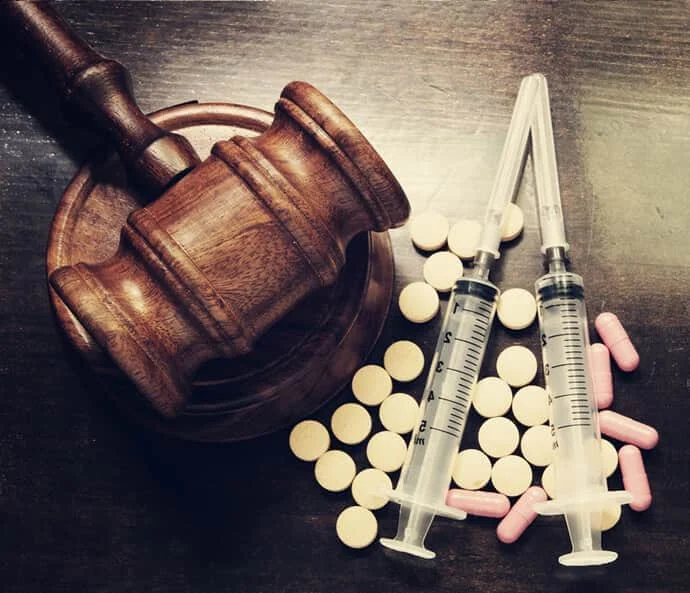
Drug Crimes
A drug allegation can involve possession, possession for sale, transportation, manufacturing or paraphernalia. The filed statute, alleged substance, amount and evidence of intent affect what must be proved. Examples include:
- Distributing drugs
- Drug manufacturing
- Drug possession
- Drug trafficking
- Possession of a controlled substance
- Possessing drug paraphernalia
- Possession with intent to sell
- Selling drugs
If you face one of these allegations, a drug charges lawyer can review the complaint, search, laboratory evidence and next court date with you. Contact the firm to discuss your case.
All drug related crimes that take place in the State of California are very serious matters, and depending upon the circumstances, carry with them severe legal consequences. If you are convicted of a drug charge, there are many different penalties that you may be confronted with, such as monetary fines, probation, and/or a jail term. A drug related conviction on your criminal record may cause many problems in your personal and professional life, as it may minimize your chance of obtaining a good job or a place to live.
California has more than one drug-treatment framework. The older Proposition 36 probation-and-treatment law under Penal Code section 1210.1 differs from Penal Code section 1000 diversion and the 2024 Proposition 36 treatment-mandated felony framework under Health and Safety Code section 11395. The charged count, prior convictions, program terms and court order determine what may be available; neither a fixed one-year program nor dismissal can be promised from an arrest alone.
A closer look at drug charges
This reference covers California law, related charges and common questions to discuss with an attorney.
Jump to a charge or question
Understanding a California drug charge
A drug case does not turn on the label “drug charges” alone. The complaint, cited Health and Safety Code section, alleged substance, laboratory result, location, and what the government says you intended to do with the substance all matter. Someone accused of holding a medication without a valid prescription faces a different legal question from someone accused of possessing it for sale, transporting it for sale, or manufacturing it. The consequences also depend on prior convictions, a possible diversion path, and whether an immigration or professional-license issue needs attention before any plea.
If you have a citation, release paperwork, or a notice to appear, keep the entire set. Record the date of the stop or search, where each item was found, who had access to the place, what you said, and whether officers took a phone or other property. Do not assume the police report contains everything that will be used in court. Counsel can compare the charge sheet, reports, laboratory analysis, recordings, and later discovery; request missing material through the criminal case; and identify deadlines from actual court papers. A private conversation with a defense lawyer is a better place to explain facts than a public post or an attempt to persuade a witness.
Possession, use, and the substance alleged
California Health and Safety Code § 11350 and § 11377 address possession of different controlled substances. The precise charge should be read before discussing an outcome. Possession can be actual or constructive and can be shared; an item in a borrowed car or common room is therefore neither automatic guilt nor an automatic defense. The prosecution still has to prove the applicable elements, including knowing control, knowledge of the substance’s nature, and a usable amount. The 2026 Judicial Council instruction CALCRIM 2304 sets out the proof question for simple possession. A lawyer can test where the item was located, who could reach it, whether the container was labeled, what each person said, and whether the lab identified the charged substance. A valid prescription may matter for a medication, but it needs to match the person, drug, and circumstances.
Being under the influence of a controlled substance is a separate issue under Health and Safety Code § 11550, not § 11350. Officers may rely on observations, field tests, statements, and later toxicology. A positive test alone does not explain when a substance was used, whether it was lawfully prescribed, or whether the charged statute’s conditions are met. Paraphernalia is another distinct allegation: the object and its alleged use need review rather than assuming every ordinary household item is illegal.
Substances can alter the applicable section and evidence. The firm has separate explanations for cocaine, heroin, methamphetamine, fentanyl, opioids, ecstasy, and prescription drugs. These names alone do not establish a charge or punishment. The exact scheduled substance, test method, quantity, formulation, and conduct alleged belong in the analysis. For fentanyl, do not infer a particular enhancement merely from the drug name; the filed statute and its additional elements control. The separate hard-drug-possession topic should also be read against the actual complaint, especially if someone mentions Proposition 36.
Cannabis is legal only within defined boundaries
California permits adults 21 and older to possess specified amounts and cultivate up to six living plants, subject to the statutory conditions and local rules. Health and Safety Code § 11362.1 gives the personal possession limits: generally 28.5 grams of nonconcentrated cannabis or 8 grams of concentrated cannabis. Section 11362.3 still restricts public consumption and certain conduct in vehicles. Legal personal possession is not a license to sell, distribute, drive impaired, bring cannabis onto restricted property, or ignore applicable cultivation rules. The evidence may turn on age, amount, whether a package was opened in a vehicle, where plants were grown, or what conduct was observed. Read the marijuana and marijuana charges topics for the issue actually alleged; a cultivation accusation calls for its own plant-count and site review.
Sale, transportation, and production allegations
Possession for sale adds a claimed intent that simple possession does not require. California uses different statutes for different substances, including Health and Safety Code § 11351 and § 11378. Packaging, cash, messages, scales, observations, and an expert’s opinion may appear in a report, but none should be treated as a shortcut around proof of every charged element. There may be explanations for an item that need documents or witnesses. The 2026 CALCRIM 2302 instruction separates possession and intent-to-sell issues. Counsel should examine whether the prosecution can link the item, the accused person, and the alleged commercial purpose.
An alleged sale or offer to sell requires looking closely at the charged act, communications, exchange, identification, and what was actually transferred or offered. “Trafficking” is a broad label, not a substitute for reading a statutory count; the drug-trafficking topic may involve sale, transportation, or federal allegations. In a transportation case, the current versions of § 11352 and § 11379 specify transportation for sale. Moving a substance is not by itself proof of that purpose. Route, timing, passengers, ownership, communications, and actual statutory language matter. CALCRIM 2300 frames that element for the jury.
Manufacturing or producing raises further questions about the process, equipment, chemicals, who controlled the premises, and what a lab can establish. A person’s presence near a site is not the same as proof of participation. An allegation of maintaining a place for drug sales or use under § 11366 involves a separate place-and-purpose inquiry. Preserve leases, access records, messages, and photographs rather than making assumptions about what an address proves.
Alleged enhancements and restricted places
A drug count can be accompanied by a distinct allegation concerning a firearm, fentanyl-specific provision, school-zone location, or bringing drugs into a jail or prison. Each has its own statutory trigger; proximity, an object in the same building, or a substance label does not automatically establish an enhancement. Counsel should read each separately pleaded count or allegation and compare measurements, property boundaries, who possessed an item, knowledge, and applicable exceptions. Ask what photographs, video, diagrams, property records, or custody logs support the government’s version. A school or correctional setting can also affect how quickly records need to be preserved.
Some cases proceed under federal drug law rather than California charges, or involve both investigations. Federal charging, discovery, detention, sentencing, and plea rules differ. A lawyer should first identify which court and statute appear on the paperwork; California diversion language cannot simply be carried over to a federal case. Avoid drawing a penalty conclusion from a news report about a similar drug or a generic online sentencing table.
The search and the evidence chain
Many defenses begin with the manner in which evidence was found and attributed. The search-and-seizure topic concerns the reason for a stop, warrant or claimed exception, scope of a search, consent, and handling of seized devices and containers. A disputed search does not itself erase a charge; counsel may need a motion, the relevant record, and a court ruling. Even if the search was lawful, the prosecution still must prove identity, substance, possession or conduct, and any required intent. Laboratory chain of custody, packaging, testing method, body-camera sequence, dispatch records, and statements can reveal gaps or resolve uncertainty. Ask for preservation of recordings early, while respecting the actual discovery process and court deadlines.
A useful first case review compares three layers: what the officer initially observed, what later reports and tests claim, and what the filed complaint actually alleges. If witnesses disagree or someone else had access to the vehicle or room, write down names and contact details for counsel rather than asking people to coordinate accounts. If a phone was seized, preserve your own lawful records and tell counsel about relevant messages; do not delete or alter material. If treatment, medication, or a valid prescription may matter, keep dated records and discuss privacy and disclosure choices with counsel before turning them over. These steps make the review more accurate without presuming a defense or an outcome.
Diversion and treatment require an eligibility check
Drug diversion programs are not interchangeable. California’s Penal Code §§ 1000 and 1000.1 describe pretrial diversion for specified charges and people who meet statutory conditions. A lawyer must check the filed offense, history, any concurrent charge, and the court’s findings. The statute provides for a not-guilty plea, a treatment or education plan, monitoring, and possible dismissal after satisfactory completion. It does not mean every first arrest automatically qualifies or every case disappears from all records. Some source and court pages still use the older “Deferred Entry of Judgment” label for PC 1000; the current statute and actual court order should control the advice.
Proposition 36 needs a date and statute. The 2000 measure and the voter-approved 2024 Proposition 36 are different. The latter added Health and Safety Code § 11395, a “treatment-mandated felony” framework for specified possession offenses involving listed drugs and two or more priors from specified statutes, with pleading/proof requirements. It is not an automatic diversion offer for any person with two old drug convictions. The law sets conditions for electing treatment, including a plea and admission of qualifying priors; it provides a possible dismissal after successful treatment under statutory procedures. A description that promises arrest sealing or guaranteed dismissal without checking those conditions overstates the law. Read the Proposition 36 topic alongside the actual allegation and the Legislative Analyst’s 2024 measure explanation.
Treatment can be important even when a particular statutory diversion path is unavailable. A lawyer can ask which court program exists, what treatment documentation is useful, and how participation might affect case resolution. Yet an enrollment form, a prior completion certificate, or an offer from one county does not establish eligibility in another case. Ask about costs, attendance, testing, duration, possible consequences of noncompletion, and what a dismissal would and would not change before agreeing to a program or plea.
Consequences beyond the initial count
The practical stakes may include custody or probation, fines, driving consequences if impaired driving is also alleged, work or licensing concerns, school discipline, housing, and immigration. Those effects are not identical for every offense. Drug-impaired driving is a separate vehicle-law issue; an arrest for possession does not itself establish that a person drove while impaired. If police allege both, retain the driving timeline, test information, and DMV notices as separate documents. Prior convictions, substance type, quantity, and a properly pleaded enhancement can change sentencing exposure, so a generic promise of “no jail” is unreliable.
A dismissal or record-clearing order needs precise explanation. Penal Code § 1203.4 relief has limits and is not literal erasure of a case for every purpose. A diversion dismissal, a later § 1203.4 dismissal, sealing, and an acquittal are different events with different records. Before a plea or diversion choice, ask what disposition will appear in court and background records, which forms of relief might later be available, and what must still be disclosed to an employer, licensing body, or government agency. Do not rely on a source sentence that says a successful program automatically “seals” an arrest without identifying the operative statute and order.
If you are not a U.S. citizen, raise that at the first attorney conversation, before a plea, treatment election, or admission. Federal immigration law can treat drug conduct or a state disposition differently from a California record-clearing rule. The analysis is fact and status specific. Request coordinated criminal-defense and immigration advice before assuming a state dismissal will remove an immigration consequence. Likewise, tell counsel about a professional license or security clearance so the terms of any proposed resolution can be reviewed in context.
What happens after an arrest or citation
The next steps should come from the paperwork, not from a generic timetable. An officer may issue a citation, book and release someone, or seek a court appearance after a complaint is filed. At the first hearing, the court may address the formal charge, counsel, release terms, and future dates. A laboratory result or amended charge may arrive later. A person who was not handed a complaint at the stop should still track the date and case number and ask counsel how to verify whether a filing occurred. Do not miss a date because the report is unfinished or because another person in the same incident received different papers.
The defense can request discovery, examine how evidence was collected, and evaluate whether a suppression or other motion fits the facts. The prosecutor decides what charges to file, but an initial police label is not proof. If a lab identification, body-camera segment, or witness statement is missing, counsel can pursue it through the case rather than assuming the omission favors either side. A plea proposal should be assessed against the charges, possible defenses, prior record, program eligibility, and collateral consequences. Trial remains an option when the state cannot prove the charged conduct or an acceptable resolution is unavailable; no article can decide that choice without the case file.
Release orders may prohibit particular travel, contact, substances, or conduct. Read the actual order and ask counsel about any conflict with treatment, work, or prescribed medicine rather than trying to interpret it from a website. Keep the next hearing and any pretrial-conference deadline visible. If you are considering treatment, collect enrollment and attendance records without assuming treatment alone changes a pending charge. If property is held as evidence, ask counsel how a return request interacts with the prosecution’s preservation needs. Practical control of these steps can prevent avoidable problems even while the legal merits remain disputed.
Choosing counsel and planning a consultation
A useful drug-defense conversation starts with the exact statute and alleged conduct. Ask who would handle the case, how the firm will obtain reports and laboratory materials, whether motion issues are apparent, how diversion eligibility will be evaluated, and which courts or agencies are involved. If a sale or firearm allegation appears, ask what additional fact the state must prove rather than treating it as part of ordinary possession. If a federal investigator made contact, say so immediately; federal and state matters can proceed differently. If you are a noncitizen or hold a regulated license, put that issue on the table before discussing a plea.
No lawyer can responsibly promise dismissal, diversion, no custody, or a particular timeline from a short phone summary. The useful outcome of an initial consultation is a clear plan for obtaining records, preserving your own evidence, identifying deadlines, and testing the government’s allegations. The Law Offices of David S. Chesley can discuss representation and the next step for the specific papers you have. Check local agency and court details against your case papers; this California-wide section explains the shared charge and defense questions.
Questions people ask about drug cases
Will a drug arrest or charge appear on a background check? It can, but the answer depends on whether the record is an arrest, pending case, conviction, diversion dismissal, or later relief, and on who is asking. Obtain the final disposition before making a disclosure decision. A successful program is not a universal promise that all agencies or private databases immediately show nothing.
Should I explain the situation to police before getting a lawyer? You can identify yourself as required, preserve any paperwork, and request counsel. Do not assume an informal explanation cannot later be used as evidence. If an emergency or a medical need is involved, get appropriate help. Counsel can advise how to address investigators or release property without guessing about the charge.
Can the charge be “expunged”? California has different dismissal and record-relief paths. A lawyer needs the actual disposition, probation or diversion completion status, and current statutory criteria. Even where relief is available, § 1203.4 is not a blanket destruction of the court record or a cure for every collateral consequence.
Is PC 1000 the same as Proposition 36? No. PC 1000 pretrial diversion applies to specified offenses and eligibility conditions. The 2024 Proposition 36 treatment-mandated felony law addresses specified repeat possession allegations and has different prior-conviction and treatment-election rules; the 2000 Proposition 36 program is yet another historical reference. Ask which statute is actually on the offer or minute order.
Does a first offense have to be a misdemeanor? No categorical answer follows from the words “first offense.” The substance, quantity, alleged sale or manufacturing conduct, enhancements, and charged statute matter. For an ordinary Health and Safety Code section 11350 simple-possession misdemeanor, the statutory custody maximum is one year in county jail; a separately alleged section 11395 repeat-possession felony, disqualifying prior or sale/manufacturing count needs its own analysis. The complaint and criminal history need review.
Will I get probation instead of custody for a trafficking charge? No one can promise that from the topic label. First determine the actual state or federal count, enhancements, prior record, sentencing rules, plea offers, and available mitigation. A useful consultation addresses realistic exposure and defense options without predicting a result.
How long does the case take? It depends on the court calendar, discovery, lab work, motions, negotiations, and whether the case goes to trial or a program. The notice to appear and later court orders supply controlling dates. Missing a hearing because another county’s case moved more slowly can make a difficult situation worse.
Can I keep driving after a drug arrest? A possession arrest alone is different from a drug-impaired-driving allegation. If a DUI is also alleged, check the citation, any license seizure or DMV notice, and applicable deadlines. Do not infer a license consequence from the drug count alone.
Could this affect immigration status? Yes, potentially. The answer depends on the exact offense, disposition, federal definition, and personal status. A noncitizen should obtain case-specific immigration advice before admitting elements or accepting a plea or diversion terms; a state dismissal may not settle the federal question.
What if the drugs were in a shared car or apartment? Shared access is relevant but not decisive. California law allows constructive or joint possession, while requiring proof of knowing control and the substance’s nature. Counsel should examine keys, seating, ownership, fingerprints or DNA if available, statements, surveillance, and who could reach the item.
What should I bring to a defense consultation? Bring every citation, release condition, complaint, court notice, search inventory, DMV paper if driving is alleged, prescription information, and relevant messages or witness names. Write a private timeline while events are fresh. The first useful question is what has actually been charged and what deadlines are already running, not whether a generic web page predicts the result.
































