
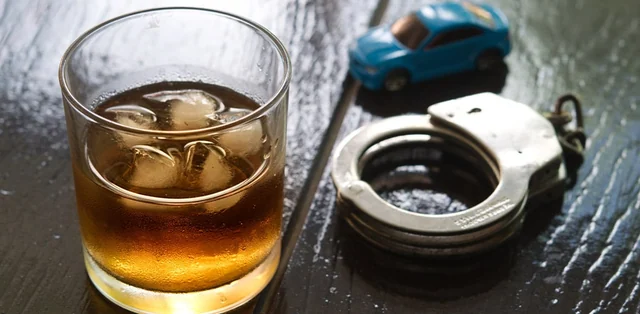
Yes. A first DUI conviction in California can carry 96 hours to six months in county jail and a $390 to $1,000 fine under Vehicle Code 23536. A judge can also grant probation instead, and then jail becomes a condition the judge may add, from 48 hours to six months, under Vehicle Code 23538(a)(1).
How much jail can a first DUI carry?
The Vehicle Code sets 96 hours to six months in county jail for a first DUI conviction, with at least 48 hours served in one stretch.
"If a person is convicted of a first violation of Section 23152, that person shall be punished by imprisonment in the county jail for not less than 96 hours, at least 48 hours of which shall be continuous, nor more than six months, and by a fine of not less than three hundred ninety dollars ($390), nor more than one thousand dollars ($1,000)." (Vehicle Code section 23536(a))
Vehicle Code 23152 is the DUI section. Among other things, it covers driving under the influence of alcohol, driving with a blood alcohol level of 0.08 percent or more, and driving under the influence of a drug.
The court orders the jail days on days other than the person’s regular work days. If 48 continuous hours would interfere with the person’s work schedule, the court must let the person serve them whenever the person is normally scheduled for time off, and it can decide that from the defense lawyer’s statement, an affidavit or testimony (Vehicle Code 23536(b)).
The $390 to $1,000 figure is the base fine. Penal Code 1464(a)(1) adds a state penalty of $10 for every $10 of fine, and the same section refers to further penalties under Government Code 76000 and a surcharge under Penal Code 1465.7. The total a court orders is higher than the base fine. For license suspension and the other penalties, see the firm’s page on DUI penalties in California.
Can a judge give probation instead of jail for a first DUI?
Yes. If the court grants probation, the fine is required and jail becomes optional: the judge may add 48 hours to six months in county jail as a condition.
"If the court grants probation to person punished under Section 23536, in addition to the provisions of Section 23600 and any other terms and conditions imposed by the court, the court shall impose as a condition of probation that the person pay a fine of at least three hundred ninety dollars ($390), but not more than one thousand dollars ($1,000). The court may also impose, as a condition of probation, that the person be confined in a county jail for at least 48 hours, but not more than six months." (Vehicle Code section 23538(a)(1))
Whether a judge grants probation, and whether jail is added, is the judge’s decision. The code names one special factor for that choice, and a rule for a breath or urine test refusal, both covered below.
DUI probation lasts three to five years. Its standard terms include not driving with any measurable amount of alcohol in the blood, not refusing a chemical test if arrested for DUI again, and not committing any crime (Vehicle Code 23600(b)).
In a county with an approved program, the court must also order a DUI program as a probation condition: at least three months and 30 hours when the blood alcohol level was under 0.20 percent, and at least nine months and 60 hours at 0.20 percent or more or after a test refusal (Vehicle Code 23538(b)). The court must revoke probation for failing to enroll in, take part in or finish the program, unless there is good cause (Vehicle Code 23538(c)(1)).
Outside military diversion, a program taken before a conviction does not replace sentencing. Vehicle Code 23640(a) bars a court from pausing a DUI case, or considering dismissal, because the person is attending a program before acquittal or conviction. Section 23640(b) says that rule does not apply to programs after conviction and sentencing, including programs ordered as a condition of probation. The exception is military diversion: a current or former service member who may be suffering from a condition the statute lists, such as post-traumatic stress disorder, as a result of military service is eligible for it on a misdemeanor DUI, and the DMV can still act on the license (Penal Code 1001.80(b) and (n)(1)).
What can raise the jail range?
A child under 14 in the car adds 48 continuous hours if charged and proved, and a DUI that injures someone is a different charge with a higher range.
| Situation | Jail the Vehicle Code sets | Section |
|---|---|---|
| First DUI, no injury | 96 hours to six months; on probation, optional jail of 48 hours to six months | Vehicle Code 23536(a), 23538(a)(1) |
| First DUI with a child under 14 in the car | Adds 48 continuous hours in county jail, whether or not probation is granted | Vehicle Code 23572(a)(1) |
| First DUI that injures someone (a separate charge) | State prison, or 90 days to 364 days in county jail | Vehicle Code 23554; Penal Code 18.5(a) |
| DUI within 10 years of an earlier DUI violation that led to a conviction (a second offense) | 90 days to 364 days in county jail; on probation, at least 96 hours or 10 days, up to 364 days | Vehicle Code 23540(a), 23542(a)(1); Penal Code 18.5(a) |
Jail terms the Vehicle Code sets for a DUI conviction, by situation. These are base ranges. A statute that says "one year" in county jail means 364 days under Penal Code 18.5(a).
The child passenger addition must be charged and proved. It is not imposed if the person is also convicted under Penal Code 273a for the same facts (Vehicle Code 23572(b) and (c)).
A blood alcohol level of 0.15 percent or more, or refusing a breath or urine test, is a "special factor" the court must consider. The statute says it may justify enhancing penalties, deciding whether to grant probation and setting added probation terms (Vehicle Code 23578). A refusal adds fixed jail days to a first DUI that injures someone and to a second, third or later DUI within 10 years. On a first DUI with no injury it adds no fixed days, but Vehicle Code 23577(a)(1) says probation "shall include the conditions in paragraph (1) of subdivision (a) of Section 23538." That paragraph holds the fine and the 48 hours to six months in county jail. The refusal must be charged and proved, and a refusal of a blood test is not covered (Vehicle Code 23577).
An earlier conviction changes the range. A DUI is punished as a second offense when it happened within 10 years of an earlier DUI violation that led to a conviction, or of a reckless driving violation that counts as a prior (Vehicle Code 23540(a)). A reckless driving plea counts as a prior when the prosecutor’s statement says alcohol or drugs were involved, which is often called a "wet reckless" (Vehicle Code 23103.5(c)). Convictions from other states can count (Vehicle Code 23626).
Can I serve DUI jail time at home, or get credit for it?
Sometimes. A county can offer home detention or work release instead of jail, and custody time counts toward the term, but the county and the court decide who qualifies.
Home detention. A county board of supervisors may authorize a program that places people sentenced to county jail, or granted probation, in home detention "in lieu of confinement in a county jail". Participants agree to electronic monitoring and to stay home during set hours, and the program can retake them into custody if they break its rules (Penal Code 1203.016(a) and (b)). The county’s correctional administrator (the sheriff, the probation officer or the director of the county department of corrections) has "sole discretionary authority" over who takes part, and the court can restrict or deny a defendant’s participation at sentencing (Penal Code 1203.016(d)(2), (e) and (g)).
Work release. A county may also offer a voluntary work release program in which one day of participation is in lieu of one day of confinement. A person is eligible only if the sheriff or other official in charge concludes the person is "a fit subject" for it (Penal Code 4024.2(a) and (d)(2)).
Credit. Days already spent in custody for the same case count toward the term (Penal Code 2900.5(a) and (b)). Time in a home detention program under Penal Code 1203.016 "shall qualify as mandatory time in jail" (Penal Code 2900.5(f)), but that section does not itself send anyone to such a program (2900.5(g)). Under Penal Code 4019, for each four-day period one day is deducted from the term unless the record shows the person refused assigned work, and another day unless it shows the person did not follow the jail’s reasonable rules. If all that credit is earned, a term of four days is deemed served for every two days in actual custody. No deduction is made unless the term is four days or longer.
Ask the court at sentencing, and the county sheriff or probation department, which programs the county offers. The code lets each county choose.
Related questions
- Will you go to jail for a first-time misdemeanor in California?
- Is an ignition interlock device required after a first DUI in California?
- Does requesting a DMV hearing stop my license suspension?
- How long does a DUI stay on your record in California?
Frequently asked questions
Is a first DUI a misdemeanor or a felony?
A first DUI with no injury is a misdemeanor in California, because Vehicle Code 23536 sets county jail, not state prison (see Penal Code 17(a)). The exception: after certain prior vehicular manslaughter convictions, a new DUI can be charged as a felony with no 10-year limit (Vehicle Code 23550.5(b)). A first DUI that injures someone can be charged as a felony or a misdemeanor, because Vehicle Code 23554 allows either state prison or county jail (see Penal Code 17(b)).
Does probation without jail still mean a license suspension?
Yes. Vehicle Code 23538(a)(2) says the person’s driving privilege "shall be suspended" by the DMV. The DMV also has its own suspension process, separate from the court case, for a driver who had a blood alcohol level of 0.08 percent or more (Vehicle Code 13353.2(a)(1)).
Does a first DUI count if I am arrested again?
Yes, for 10 years. A new DUI that happens within 10 years of an earlier DUI violation that led to a conviction is punished as a second offense, with 90 days to 364 days in county jail, or at least 96 hours or 10 days if probation is granted (Vehicle Code 23540(a) and 23542(a)(1); Penal Code 18.5(a)).
Talk to a lawyer
The Law Offices of David S. Chesley represent people charged with DUI across California (see the firm’s DUI lawyer page).
The firm offers a free consultation, is available 24/7, and offers payment plans. Se habla español. Call (800) 755-5174 or request a free consultation online.
This page is general information, not legal advice, and no outcome is guaranteed.