
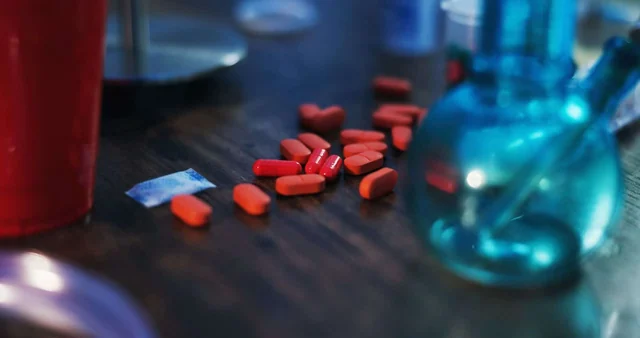
Yes. California’s Health and Safety Code lists khat, the plant itself, and cathinone, the plant’s main stimulant chemical, as Schedule II controlled substances, the same schedule that covers methamphetamine. Simple possession of either one is a crime, and the fact that chewing khat is an accepted social custom in some other countries does not change how California charges it.
What the schedule actually lists
Health and Safety Code section 11055 places its substances in Schedule II. Its subdivision (d), titled “Stimulants,” lists khat and cathinone as two separate entries. Paragraph (7) covers “Khat, which includes all parts of the plant classified botanically as Catha Edulis,” whether growing or not, along with its seeds, any extract, and any preparation made from them. Paragraph (8) separately lists “Cathinone (also known as alpha-aminopropiophenone, 2-aminopropiophenone, and norephedrone).” Because paragraph (7) names the plant itself, California does not need the cathinone listing to treat khat leaves, seeds, or extracts as Schedule II substances. For how simple possession differs from possession for sale generally, see our California drug possession FAQ.
Simple possession: usually a misdemeanor
Possessing khat or cathinone is charged under Health and Safety Code section 11377, which reaches any substance “specified in subdivision (d), (e), or (f) of Section 11055.” As amended by Proposition 47, section 11377 sets the punishment at up to one year in county jail, which makes simple possession a misdemeanor. The statute has one exception, tied to the person’s record. If an earlier conviction was for a crime listed by Penal Code section 667(e)(2)(C)(iv), which includes homicide and attempted homicide offenses and sexually violent offenses, or for a crime that carries sex offender registration under Penal Code section 290(c), the person “may instead be punished” as a felony under Penal Code section 1170(h). For the broader consequences a possession charge can carry and how diversion works, see our page on drug possession.
Possession for sale and selling are felonies
Possession for sale falls under a different statute, with no misdemeanor option. Health and Safety Code section 11378 reaches a substance “specified in subdivision (d), (e), or (f)” of section 11055, and the exceptions that follow that phrase cover only parts of subdivisions (e) and (f), not subdivision (d), where khat and cathinone appear. Section 11378 sets the punishment as imprisonment under Penal Code section 1170(h). That subdivision generally means county jail rather than state prison, but it requires state prison in listed situations, such as when the person has a serious or violent felony conviction (past or current) or is required to register as a sex offender. In practice, quantity, packaging, and scales are the kind of evidence prosecutors use to argue possession for sale; see our page on drug possession for sale for how that evidence is evaluated. Selling, furnishing, or giving away khat or cathinone, or importing either into California, is a separate felony under Health and Safety Code section 11379, punished under Penal Code section 1170(h) for two, three, or four years.
Proposition 36’s treatment-mandated felony does not reach khat or cathinone
Proposition 36, approved by voters in November 2024, added the “Treatment-Mandated Felony Act” at Health and Safety Code section 11395. It applies to a person with two or more prior convictions under listed drug statutes, including sections 11377 and 11378, who possesses a “hard drug.” The statute’s definition of “hard drug” leaves out every stimulant in section 11055(d) but one: it excludes, “with the exception of methamphetamine, any other substance listed in subdivision (d) of Section 11055.” Khat and cathinone are paragraphs (7) and (8) of that subdivision, so section 11395 does not apply to a khat or cathinone possession case, however many qualifying prior convictions a person has. The separate felony exception inside section 11377, described above, still applies on its own terms.
Federal law reaches khat through cathinone and cathine
No federal drug schedule names khat or Catha edulis, either in the schedules Congress enacted in 21 U.S.C. section 812 or in the current regulations that update them (21 CFR sections 1308.11, 1308.12, 1308.13, 1308.14, and 1308.15). Instead, 21 CFR section 1308.11 lists cathinone as a Schedule I stimulant, and 21 CFR section 1308.14 lists cathine as a Schedule IV stimulant. Both listings cover “any material, compound, mixture, or preparation which contains any quantity of” the listed chemical, and the Drug Enforcement Administration’s khat fact sheet says khat contains both chemicals. Federal law therefore reaches khat through its cathinone and cathine content rather than by name, and it places cathinone in Schedule I, not in Schedule II as California does. A federal case is separate from a California charge under section 11377, 11378, or 11379, with its own statutes and procedures, and is beyond the scope of this page.
If you are facing a khat or cathinone charge
- Find out which section you are charged under (11377, 11378, or 11379). The evidence and the possible sentences differ.
- Tell your attorney about every prior conviction. For simple possession of khat or cathinone, the felony question turns on the specific prior offenses that section 11377 refers to, not on how many prior drug convictions you have.
- Do not assume that because khat is legal, or rarely enforced, somewhere else, it will be treated the same way here.
If you are facing a khat, cathinone, or other drug possession charge, the Law Offices of David S. Chesley can review the substance, the quantity, and any prior record with you. Call (800) 755-5174.