
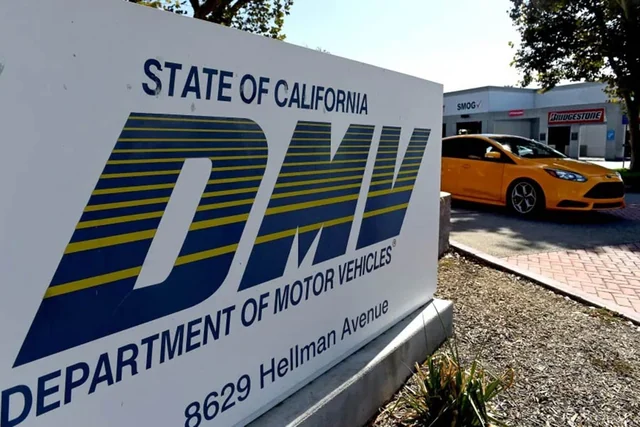
When a California court convicts you of DUI, the court clerk must send DMV an abstract of the conviction, so California DMV holds a record on you even if you have never had a California license. If your license was issued by another state that has joined the Driver License Compact, DMV then reports the conviction to that state, which must treat a DUI conviction as if it had happened there.
Why California DMV has a record on you
The reporting duty in Vehicle Code section 1803(a)(1) is triggered by a person’s conviction in a California court, and it runs from the court clerk to DMV. It does not depend on who issued your license. A short list of minor categories, such as parking violations and citations issued to pedestrians or bicyclists, is exempt (section 1803(b)); DUI is not on that list. The record follows the conviction, not the license.
What the compact requires
California enacted the Driver License Compact into law and entered into it with every jurisdiction “legally joining therein” (Vehicle Code section 15000). The compact’s terms appear at Vehicle Code sections 15020 and following. Your “home state” under the compact is the state that issued your license and has the power to suspend or revoke it (Vehicle Code section 15021(b)).
The trigger is a conviction. The compact defines a conviction as a conviction of an offense related to the use or operation of a motor vehicle, or a forfeiture of bail, bond, or other security posted to secure a court appearance, when that conviction or forfeiture must be reported to the licensing authority (section 15021(c)). An arrest by itself is not a conviction, so the compact’s reporting duty does not begin at arrest. What can happen to your California driving privilege after an arrest is a separate question, covered on the out-of-state DUI page.
What California must send. DMV is California’s compact “licensing authority” (Vehicle Code section 15001). Each party state’s licensing authority must report every conviction, within its jurisdiction, of a person from another party state to the licensing authority of that person’s home state. The report must clearly identify the person convicted, describe the violation and the specific statute, code, or ordinance section violated, identify the court, indicate whether a plea of guilty or not guilty was entered or the conviction resulted from a forfeiture of bail, bond, or other security, and include any special findings (Vehicle Code section 15022).
What your home state does with the report
For purposes of suspending, revoking, or limiting your license, the home state must give the reported conduct the same effect as if it had occurred there when the conviction is for manslaughter or negligent homicide from operating a motor vehicle; driving under the influence of intoxicating liquor or a narcotic drug, or of any other drug “to a degree which renders the driver incapable of safely driving”; a felony in which a motor vehicle is used; or failing to stop and render aid after a motor vehicle accident that caused another person’s death or injury (Vehicle Code section 15023(a)). For any other reported conviction, the home state gives the effect its own laws provide (section 15023(b)). A party state whose laws do not use those exact words must apply them to offenses of a substantially similar nature (section 15023(c)).
The compact does not set a suspension length of its own. Because the home state treats the conduct as if it happened there, the license consequence comes from the home state’s own law.
When California is the home state
The same idea applies in reverse for California licensees. Under Vehicle Code section 13352(d), a conviction elsewhere in the United States (including its territories and possessions, the District of Columbia, and Puerto Rico) or in Canada that would be a Vehicle Code section 23152 or 23153 violation here counts as that conviction, and DMV must suspend or revoke the California privilege “upon receiving notice of that conviction.” The consequences for California drivers are covered on the out-of-state DUI page linked above.
Getting a copy of your California record
DMV’s Records Requests page offers online, kiosk, telephone, and mail options for getting your own driving record; the mail option uses form INF 1125. The online request requires a MyDMV account (DMV driver’s record request). Form INF 1125 accepts either a DL/ID number or your date of birth, and it notes that driver records show reportable convictions for 3, 7, or 10 years as Vehicle Code section 1808 requires (form INF 1125). That record shows what California has on file. Your home state’s licensing agency is the place to ask what it received and what it did with it.
If you are a non-resident facing a California DUI charge, or you want to understand what has already been reported about you, the Law Offices of David S. Chesley can review where your case stands. Call (800) 755-5174 to discuss your case.