
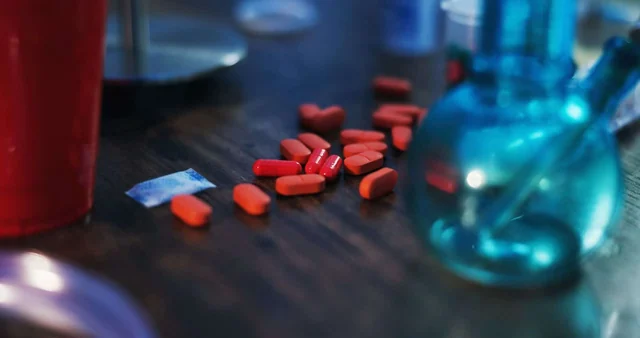
No. Health and Safety Code 11054(d)(18) and (19) list psilocybin and psilocyn as controlled substances, and Section 11377(a) makes possessing them a crime. Section 11390 covers cultivating spores or mycelium to produce them. As of November 21, 2026, federal law also lists both in Schedule I.
What does California law say about psilocybin?
Health and Safety Code 11054(d) lists psilocybin and psilocyn as Schedule I hallucinogenic substances, so each is a controlled substance in California.
Section 11054(a) says "The controlled substances listed in this section are included in Schedule I." Subdivision (d) reaches "any material, compound, mixture, or preparation, which contains any quantity of the following hallucinogenic substances", and its list includes "Psilocybin" at paragraph (18) and "Psilocyn" at paragraph (19). Section 11007 defines a controlled substance as one "listed in any schedule in Section 11054, 11055, 11056, 11057, or 11058". The words turn on whether the material contains a listed substance.
Is possessing magic mushrooms a crime?
Yes. Section 11377(a) covers psilocybin and psilocyn, which 11054(d)(18) and (19) list. Its county jail term is up to 364 days under Penal Code 18.5(a).
Section 11377(a) covers a controlled substance "specified in subdivision (d) of Section 11054, except paragraphs (13), (14), (15), and (20) of subdivision (d)", so paragraphs (18) and (19) are inside it. It says the person "shall be punished by imprisonment in a county jail for a period of not more than one year", which Penal Code 18.5(a) makes up to 364 days, and that the person "may instead be punished pursuant to subdivision (h) of Section 1170 of the Penal Code" with a listed prior conviction, such as one for an offense that requires registration under Section 290(c). Subdivision (b) adds that "The judge may assess a fine not to exceed seventy dollars ($70)".
Proposition 36 of 2024 added Section 11395, which applies to "a person who has two or more prior convictions for a felony or misdemeanor violation of Section 11350, 11351, 11351.5" and other listed drug sections when the person possesses a hard drug. Subdivision (e)(2) says "hard drug" "does not include cannabis, cannabis products, peyote, lysergic acid diethylamide (LSD), other psychedelic drugs, including mescaline and psilocybin (mushrooms)". Section 11377 was last amended before Proposition 36 (see the last question below).
Is it a crime to sell or share magic mushrooms?
Yes. Section 11378 makes possession for sale a felony, and Section 11379 makes selling, furnishing or giving away psilocybin or psilocyn a felony.
Section 11378 applies to a substance "specified in subdivision (d) of Section 11054, except paragraphs (13), (14), (15), (20), (21), (22), and (23) of subdivision (d)", which leaves paragraphs (18) and (19) inside it. It names no term, so Penal Code 1170(h)(1) sets "16 months, or two or three years." Section 11379(a) reaches a person who "transports, imports into this state, sells, furnishes, administers, or gives away" the same substances, or offers to, for "two, three, or four years". Subdivision (c) says "transports" "means to transport for sale", and subdivision (b) sets three, six or nine years for transport from one county to a noncontiguous county. A term under these sections is served in county jail unless Penal Code 1170(h)(3) applies, such as for a person with a prior or current serious or violent felony conviction. The firm's page on the sale of a controlled substance covers these charges.
Is it a crime to grow magic mushrooms or sell spores?
Section 11390 covers cultivating spores or mycelium with intent to produce psilocybin or psilocyn, and Section 11391 covers transporting or selling spores to facilitate that.
Section 11390 applies to a person who, "with intent to produce a controlled substance specified in paragraph (18) or (19) of subdivision (d) of Section 11054", "cultivates any spores or mycelium capable of producing mushrooms or other material which contains such a controlled substance". The punishment is county jail, up to 364 days under Section 18.5(a), "or in the state prison". Section 11391(a) reaches a person who "transports, imports into this state, sells, furnishes, gives away, or offers to transport, import into this state, sell, furnish, or give away any spores or mycelium capable of producing mushrooms" "for the purpose of facilitating a violation of Section 11390", and subdivision (b) says "transport" "means to transport for sale". Section 11391 carries the same punishment as Section 11390. The firm's answer on psilocybin mushroom spores covers those two sections.
Does a city or county decriminalization resolution change this?
No. The state sections cited on this page make no exception for a city or county resolution, and this page does not state what any resolution says.
Article XI, Section 7 of the California Constitution says "A county or city may make and enforce within its limits all local, police, sanitary, and other ordinances and regulations not in conflict with general laws." The text of Sections 11054, 11377, 11390 and 11391 does not contain the words resolution, ordinance, decriminal, local, city or municipal. Section 11377(a) begins "Except as authorized by law" and Section 11390 begins "Except as otherwise authorized by law". This page does not say how a prosecutor or a court treats a local enforcement policy.
How does federal law treat psilocybin?
As of November 21, 2026, 21 CFR 1308.11(d) lists psilocybin and psilocyn in Schedule I, and 21 U.S.C. 844(a) makes knowing or intentional possession unlawful unless an exception applies.
The eCFR (current text, not an official legal edition) lists the two substances at paragraphs (d)(29) and (d)(30) of 21 CFR 1308.11, which covers "any material, compound, mixture, or preparation" containing "any quantity" of the listed hallucinogenic substances. 21 U.S.C. 844(a) makes it "unlawful for any person knowingly or intentionally to possess a controlled substance" unless it was obtained directly, or under a valid prescription or order, from a practitioner acting in professional practice, or the federal drug laws otherwise authorize it. The penalty differs from California's: the subsection allows "a term of imprisonment of not more than 1 year", and a person "shall be fined a minimum of $1,000, or both", with higher terms after prior convictions that this page does not state.
Related questions
- Is ketamine legal in California?
- California Proposition 36 Drug Treatment: 2000 and 2024 Laws
- Possession of a Controlled Substance
Frequently asked questions
Is possessing magic mushrooms a felony in California?
Simple possession is a misdemeanor, but it can be a felony for a person with a listed prior conviction. Section 11377(a) sets county jail of up to 364 days (Penal Code 18.5(a)) and says that person "may instead be punished pursuant to subdivision (h) of Section 1170". Possession for sale is a felony under Section 11378. Section 11395, added by Proposition 36 of 2024, excludes "psilocybin (mushrooms)" from its definition of hard drug.
Does federal law treat magic mushrooms differently?
Federal law also lists psilocybin and psilocyn in Schedule I. The penalty structure differs: 21 U.S.C. 844(a) states a minimum fine of $1,000, while Section 11377(b) allows a fine of up to $70. This page does not state the higher federal terms for prior convictions.
Did the law change recently?
As of November 21, 2026, Health and Safety Code 11377 is shown as last amended by Statutes 2017, chapter 269, effective January 1, 2018, and Section 11054 by Statutes 2017, chapter 27, effective June 27, 2017. Section 11390 has no amendment since it was added in 1985, and Section 11391 was last amended effective January 1, 2016. Proposition 36 of 2024 added Section 11395 and did not amend these sections.
Talk to a lawyer
The Law Offices of David S. Chesley defend drug charges across California (see the firm's drug charges lawyer page).
The firm offers a free consultation, is available 24/7, and offers payment plans. Se habla español. Call (800) 755-5174 or request a free consultation online.
This page is general information, not legal advice, and no outcome is guaranteed.