
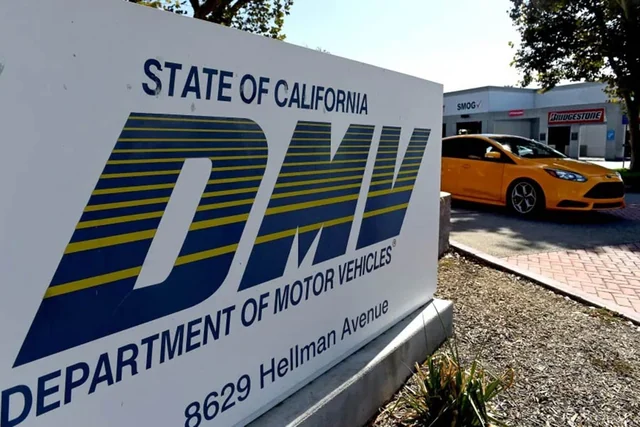
Yes, if the accident crossed the reporting threshold. California requires the driver to report an accident to the DMV within 10 days when it caused more than $1,000 in damage to any one person’s property, any bodily injury, or a death, whether or not an officer came to the scene or wrote a citation. The report is separate from anything the police do.
When the report is required
Under Vehicle Code section 16000(a), a driver in an accident on a street or highway, or in a “reportable off-highway accident,” must report it within 10 days, personally or through an insurance agent, broker, or legal representative, on a department-approved form sent to the DMV in Sacramento, whenever the accident caused more than $1,000 in damage to any one person’s property, any bodily injury, or a death. If anyone involved is complaining of an injury, the form must identify that person by name and current address, if available. One exception: no report is required under this section if the vehicle was owned or leased by, or under the direction of, the United States, California, another state, or a local agency (section 16000(b)).
The $1,000 figure is measured per person. If your accident damaged two different people’s property and neither individual amount was over $1,000, this section does not require a report on that basis alone, even though more than one person was affected.
It can reach a parking lot, not just a public street
A “reportable off-highway accident” is one that happens off the street or highway, involves a vehicle subject to registration, and meets the same $1,000, injury, or death threshold (Vehicle Code section 16000.1(a)). So a parking lot accident can trigger the same duty as one on the street, and the DMV’s report form, the SR 1, has a yes-or-no box for whether the accident happened “on private property.” There is one carve-out: the off-highway category “does not include any accident that occurs off-highway in which damage occurs only to the property of the driver or owner” of the vehicle, when no one is hurt or killed (section 16000.1(b)). Backing into your own garage, with nobody hurt, is not reportable on that basis.
Why “no ticket” does not matter
Nothing in section 16000 depends on whether an officer responded, investigated, or cited anyone. The DMV’s instructions on the SR 1 say the driver must file it “regardless of fault,” and that it is required in addition to any report made to a law enforcement agency, an insurance company, or the California Highway Patrol, because those reports “do not satisfy the filing requirement.”
The DMV report is also separate from the roadside duty after an accident that damages only property: stop, then either find the owner and give your information, or leave a written note and notify the police without unnecessary delay (Vehicle Code section 20002; see our page on hit and run). Doing everything right at the scene does not replace the DMV report, and the DMV report does not replace the duties at the scene.
What happens if you do not report
The DMV “shall suspend the driving privilege of any person who fails, refuses, or neglects to make a report of an accident” as required (Vehicle Code section 16004(a)). That suspension lasts until the DMV receives the report, or receives evidence that financial responsibility (for most drivers, insurance) is in effect under section 16021 (section 16004(b)).
A second, separate suspension track concerns insurance itself. If the DMV receives an accident report alleging that a driver was not carrying the financial responsibility required by Vehicle Code section 16020 at the time of the accident, the DMV “shall immediately mail to that driver a notice of intent to suspend the driving privilege of that driver.” The suspension takes effect 30 days after mailing unless the driver first shows the DMV that financial responsibility was in effect at the time of the accident, and the notice must explain the right to a hearing (Vehicle Code section 16070(b)). So section 16004 applies when a required report is never made, and section 16070 applies when a report alleges a driver was uninsured.
One narrow exception: if none of the people involved reports the accident within one year, the DMV is not required to file a report on it, and the suspension requirements of sections 16004 and 16070 do not apply (section 16000(c)). That is not a reason to wait. The 10-day duty applies from the start, and the exception disappears if anyone else involved reports the accident within the year.
Who can see the report
The report is “for the confidential use of the department,” but on request the DMV discloses the names and addresses of the people involved, the vehicles, the date, time, and location, any suspension action, and the insurers, to people with a proper interest, such as the drivers, injured people, owners of damaged property, law enforcement agencies, and courts (Vehicle Code section 16005). The SR 1 also notes that the DMV records accident information regardless of fault.
Practical steps
- If the accident meets the property-damage, injury, or death threshold, send the SR 1 within 10 days, whether or not police came or anyone was cited. An insurance agent, broker, or lawyer can file it for you, but the duty is yours as the driver.
- Keep a copy of what you sent and a note of the date you sent it.
- Report accurately. Do not alter, backdate, or fabricate any record.
- If you missed the deadline, file anyway: the DMV’s receipt of the report is one of the two things that ends a section 16004 suspension.
If you are unsure whether your accident meets the threshold, or a citation or DUI charge came out of the same accident, the Law Offices of David S. Chesley can review the timeline and paperwork. Call (800) 755-5174 to talk it through.