
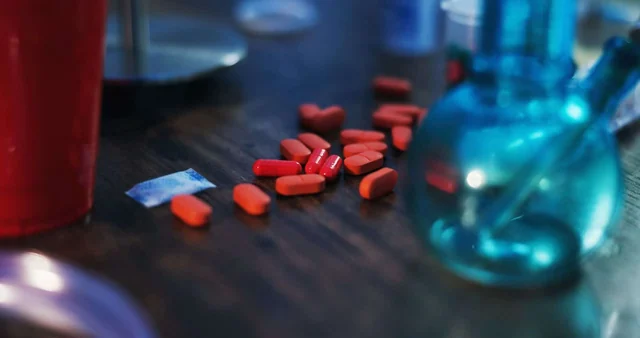
Yes, if what is in the pipe is a usable amount of a controlled substance. A blackened residue or a useless trace cannot support a possession conviction, but a small amount in a form that can be used can, even if it is impure or too little to get anyone high. The pipe itself can also support a separate paraphernalia charge.
What the prosecution has to prove
Under CALCRIM No. 2304, the jury instruction for simple possession under Health and Safety Code 11350 or 11377, the prosecution must prove possession, knowledge, and the identity of the substance, and also that the substance was in a usable amount. A usable amount is a quantity enough to be used by someone as a controlled substance; useless traces or debris are not usable amounts. A usable amount does not have to be enough, in amount or strength, to affect the user.
The same element and definition appear in CALCRIM No. 2307, the instruction for the treatment-mandated felony that Proposition 36 (2024) created for possessing a hard drug after two or more prior drug convictions (Health and Safety Code section 11395).
What “usable” means
The California Supreme Court set out the rule in People v. Rubacalba (1993) 6 Cal.4th 62. The usable-quantity rule bars a conviction only when the substance “simply cannot be used, such as when it is a blackened residue or a useless trace.” A substance containing a controlled substance, even an impure one, can support a conviction if it is in a form and quantity that can be used, and no particular purity or drug effect has to be proven.
In Rubacalba, the item was an off-white rock about one-quarter the size of an aspirin that weighed one-tenth of a gram. An officer testified it could be placed in a pipe and smoked, and the lab test showed only that it contained cocaine. The court held that the trial judge acted within its discretion in blocking defense questions about the rock’s purity and about how much cocaine it takes to get high, because neither is part of the usable-amount test, and the conviction stood.
How the usable-amount question gets decided
Whether residue is a usable amount is a question of fact for the judge or jury deciding the case. Rubacalba shows the kind of evidence that can satisfy the element: an officer’s trained opinion that the material could be used, together with a lab test identifying the drug. A lab analysis of purity is not required. Practically, the questions to ask are what exactly was in the pipe (a burnt film, a scraping, or a visible piece), what the lab weighed and tested, and whether anyone can explain how that material could actually be used.
Rubacalba also flags a separate issue: knowledge. The prosecution must prove you were aware of the substance, and the court quoted an earlier case explaining that “[i]t is not scientific measurement and detection which is the ultimate test” of knowing possession. A trace so small that only lab equipment can find it may not show that you knew it was there.
The pipe itself can still support a different charge
Defeating the usable-amount element does not end a separate paraphernalia charge. Health and Safety Code section 11364 makes it unlawful to possess “an opium pipe or any device, contrivance, instrument, or paraphernalia used for unlawfully injecting or smoking” certain listed controlled substances. That statute contains no usable-amount or residue requirement, so a paraphernalia charge for the pipe can stand even where a possession charge for what was in it cannot. The firm’s page on possession of drug paraphernalia covers that charge’s elements, penalties, and defenses.
What to do if this is your situation
- Do not clean, empty, discard, or otherwise alter the pipe or anything else connected to the case.
- Ask your lawyer to get the crime lab report and any photographs, not just the officer’s field description, so you know what was actually tested and how much material there was.
- Note who else had access to the pipe and for how long. Knowing the substance was there is a separate element from the amount found.
Getting help
If you were charged over residue in a pipe, the Law Offices of David S. Chesley can review the lab report and the rest of the evidence in your case. Call (800) 755-5174 to talk about what the quantity finding means for your charge.