
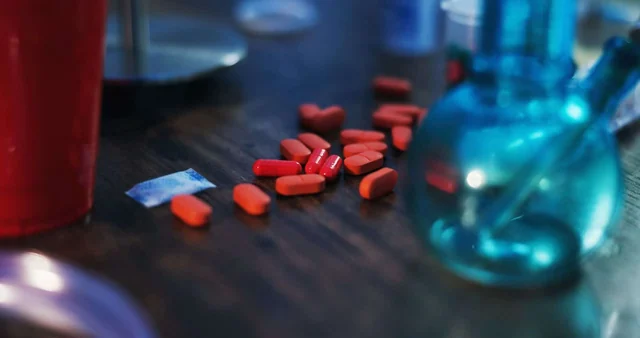
Yes. Under Health and Safety Code sections 11352 and 11379, it is a crime to sell, furnish, give away or offer to sell a covered controlled substance, and section 11375 makes selling alprazolam and the other drugs it lists a crime. Sections 11350(e) and 11377(d) say that the possession exception does not permit sale or distribution inconsistent with the prescription.
Does a prescription let you sell or share your pills?
No. A prescription covers your own use. Sections 11350(e) and 11377(d) say they do not permit distribution or sale of a controlled substance that is otherwise inconsistent with the prescription.
Section 11350(a) makes possession of the substances it lists unlawful "unless upon the written prescription of a physician, dentist, podiatrist, or veterinarian licensed to practice in this state". Subdivision (e) then says the section does not "permit the use of a controlled substance by a person other than the prescription holder". In the subdivision's own words, it also does not "permit the distribution or sale of a controlled substance that is otherwise inconsistent with the prescription". Section 11377(d) has the same sentence for the drugs it covers. So a prescription can answer a possession charge, but it does not authorize passing the pills on. Selling or sharing is a separate charge under sections 11352 and 11379 (section 11375 for selling the drugs it lists), and the firm's answer on carrying prescription medicine without its bottle covers the possession side.
Which law covers selling prescription pills?
Section 11352 covers listed drugs including the Schedule II opioids, and section 11379 covers listed non-narcotic drugs such as amphetamine. Section 11375 covers alprazolam and the other drugs it lists.
Section 11352(a) reaches a person who "transports, imports into this state, sells, furnishes, administers, or gives away" a controlled substance "specified in subdivision (b) or (c) of Section 11055", among others, or "any controlled substance classified in Schedule III, IV, or V which is a narcotic drug". Section 11055(b)(1) lists "Codeine", "Hydrocodone", "Hydromorphone", "Morphine" and "Oxycodone", and subdivision (c) lists "Fentanyl" and "Methadone", so selling those falls under section 11352, which punishes by "imprisonment pursuant to subdivision (h) of Section 1170 of the Penal Code for three, four, or five years". Section 11379(a) uses the same verbs for a substance "classified in Schedule III, IV, or V and which is not a narcotic drug" and for those "specified in subdivision (d) or (e)" of Section 11055, with listed exceptions, and sets "two, three, or four years". Subdivision (d) of section 11055 lists "Amphetamine" and "Methylphenidate", and section 11057(d), which is part of Schedule IV, lists "Zolpidem".
Alprazolam, clonazepam, diazepam, lorazepam, phentermine and the other drugs listed in section 11375(c) are different. For them, section 11375(a) says "this section, and not Sections 11377, 11378, 11379, and 11380, shall apply". Section 11375(b)(1) reaches a person who "possesses for sale, or who sells," one of them and sets "imprisonment in the county jail for a period of not more than one year or state prison", and Penal Code 18.5(a) limits that county jail term to 364 days. The sections do not cover every drug, so the charged drug and subsection matter. The firm's page on sale of a controlled substance covers the charge.
A prescription drug that is not a controlled substance is still covered by the Pharmacy Law. Business and Professions Code 4059(a) bars furnishing "any dangerous drug, except upon the prescription of a physician, dentist, podiatrist, optometrist, veterinarian, or naturopathic doctor", section 4022 counts a drug labeled "Rx only" as a dangerous drug, and section 4026 defines furnish as "to supply by any means, by sale or otherwise". Under section 4321(a), a person who "knowingly violates" the chapter, "when no other penalty is provided", commits a misdemeanor punished by a fine of $200 to $2,000, imprisonment of 30 days to six months, or both. The firm's page on prescription drug charges covers possession and sale cases.
What must the prosecution prove in a sale case?
The People must prove you sold, furnished or gave away the charged controlled substance, knew it was there, and knew its nature. An offer to sell is also covered.
CALCRIM No. 2300, the Judicial Council instruction for both sections, requires proof that the defendant sold, furnished, administered or gave away the substance, "knew of its presence", "knew of the substance’s nature or character as a controlled substance", and that the substance was the controlled substance named in the charge. It defines the first term: "Selling for the purpose of this instruction means exchanging a controlled substance for money, services, or anything of value." Trading pills for a favor or for other goods is therefore selling. The statutes also reach an offer: section 11352(a) and section 11379(a) each apply to a person who "offers to transport, import into this state, sell, furnish, administer, or give away" a covered substance.
What if you gave the pills away or shared them for free?
Payment is not required under sections 11352 and 11379, which list furnishing and giving away beside selling, or under federal law, which covers delivering a controlled substance.
Sections 11352(a) and 11379(a) list "sells, furnishes, administers, or gives away" together, so handing pills to a friend or relative is covered by words other than "sells". Section 11375(b)(1) is narrower: it names only a person who "possesses for sale, or who sells," a drug on its list. Federal law is 21 U.S.C. 841(a)(1), which, "Except as authorized by this subchapter", makes it unlawful for a person "knowingly or intentionally" "to manufacture, distribute, or dispense" a controlled substance. Section 802(11) defines "distribute" as "to deliver (other than by administering or dispensing) a controlled substance", and section 802(8) defines "deliver" as "the actual, constructive, or attempted transfer of a controlled substance". If the person who gets the pills is a minor, different sections apply, and the firm's answer on selling drugs to a minor under Health and Safety Code 11353 covers them. The most serious risk is a death; the firm's answer on selling or sharing fentanyl that causes a death covers it.
Is selling prescription pills a felony?
Under sections 11352 and 11379, yes: both set only Section 1170(h) terms, a felony under Penal Code 17(a). Selling a section 11375 drug can be a felony or misdemeanor.
Penal Code 17(a) counts as a felony a crime punishable "by imprisonment in a county jail under the provisions of subdivision (h) of Section 1170", and sections 11352(a) and 11379(a) each provide "imprisonment pursuant to subdivision (h) of Section 1170" as the punishment. Selling Adderall is covered. The DailyMed drug label says Adderall "contains amphetamine, a Schedule II controlled substance." Section 11055(d)(1) lists "Amphetamine, its salts, optical isomers, and salts of its optical isomers", a group that section 11379(a) reaches. The base term for selling Adderall is therefore two, three or four years. Section 11375(b)(1) allows county jail of up to 364 days or state prison, which Penal Code 18(a) sets at 16 months, two or three years. Because it can be punished either way, selling alprazolam or another drug on its list is a wobbler: Penal Code 17(b) lets it be charged or reduced as a misdemeanor in the cases it lists.
Related questions
- Can carrying prescription medicine without its bottle lead to a drug charge?
- What is the penalty for selling drugs to a minor in California?
- Can selling or sharing fentanyl that causes a death be charged as murder in California?
Frequently asked questions
Does it matter how many pills you sold?
The sale sections name no minimum amount: sections 11352(a) and 11379(a) reach every person who "sells, furnishes, administers, or gives away" a covered substance. The bench notes to CALCRIM No. 2300 say a usable amount is required for transportation but not for a sale.
Can an offer to sell pills be charged even if no sale happens?
The statutes list offers separately from sales. Section 11352(a) reaches a person who "offers to transport, import into this state, sell, furnish, administer, or give away" a covered substance, and section 11379(a) uses the same words. Under CALCRIM No. 2301, the People must prove the person intended to sell when making the offer, but they "do not need to prove that the defendant actually possessed the controlled substance."
Does a prescription in your name protect you if you sell the pills?
Not for the sale. Sections 11350(e) and 11377(d) say the possession exception does not "permit the distribution or sale of a controlled substance that is otherwise inconsistent with the prescription". The prescription is an answer to a possession charge, and selling or sharing the pills is charged under sections 11352 and 11379, or under section 11375 for selling a drug on its list.
Talk to a lawyer
The Law Offices of David S. Chesley defend drug charges across California (see the firm's drug charges lawyer page).
The firm offers a free consultation, is available 24/7, and offers payment plans. Se habla español. Call (800) 755-5174 or request a free consultation online.
This page is general information, not legal advice, and no outcome is guaranteed.