
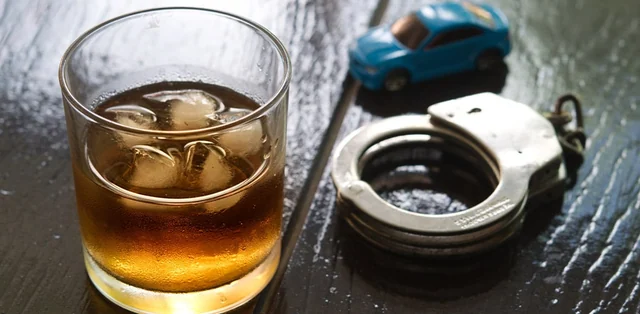
Yes, a DUI case can get dismissed, but only through a specific legal path, not simply by asking. Dismissal can follow an unlawful stop or arrest, a chemical-test problem, a prosecutor's decision not to pursue the case, or a judge's own ruling that dismissal serves justice. Completing a class is not one of them.
What legal paths can lead to a DUI case being dismissed?
A DUI dismissal can follow an unlawful stop or arrest, a chemical-test problem, a prosecutor's own decision, or a judge's ruling under Penal Code 1385.
An unlawful stop or arrest. If the officer had no legal basis to stop your car or to arrest you, your lawyer can file a written motion to suppress the evidence that came from it:
"The search or seizure without a warrant was unreasonable." Penal Code section 1538.5(a)(1)(A)
In a felony case, the motion is made after the information is filed, or at the preliminary hearing if filed and served at least five court days ahead; in a misdemeanor case, before trial; in either, during trial if there was no earlier chance or the grounds were unknown (section 1538.5(f), (g) and (h)). If the motion succeeds, the evidence it covers typically cannot be used against you, and the case can then be dismissed once the prosecution has nothing left to prove the charge; if the motion is denied, a later guilty plea does not take away your right to appeal that ruling (section 1538.5(m)). Officers do not need to see you driving to arrest you for DUI in specific situations, such as a crash (Vehicle Code section 40300.5); the firm's DUI When Nobody Saw You Driving: California Law answer covers those situations.
A problem with the chemical test. Under Health and Safety Code section 100700, labs that run blood, urine or breath alcohol tests for law enforcement in traffic cases must follow the forensic alcohol rules in Title 17 of the California Code of Regulations. A lawyer can check the test records against those rules and challenge a result that did not follow them.
The prosecutor's own decision. The district attorney is the public prosecutor, except as otherwise provided by law, and decides whether to file a DUI charge and whether to keep pursuing it (Government Code section 26500); where a city's charter gives misdemeanors to a city prosecutor, that office makes the call on a misdemeanor DUI (Government Code section 72193). A prosecutor can ask the court to dismiss a case directly, or simply decide not to file it in the first place.
The judge's own power to dismiss. A judge may, on the court's own motion or on the prosecutor's application, dismiss a DUI case "in furtherance of justice," stating the reasons on the record:
"The judge or magistrate may, either on motion of the court or upon the application of the prosecuting attorney, and in furtherance of justice, order an action to be dismissed. The reasons for the dismissal shall be stated orally on the record." Penal Code section 1385(a)
If your case is in Encinitas, the firm's DUI Lawyer Encinitas, CA page covers the criminal case, the DMV license suspension and defense strategies for an arrest there. The same goes for San Diego: see the firm's DUI Lawyer San Diego, CA page.
Does completing a program or diversion get the case dismissed?
No. California law blocks judges from dismissing a DUI case because the defendant attended a class, and misdemeanor diversion does not apply to DUI; military diversion is the one exception.
Completing a class does not get the case dismissed. California law is direct about this: while a DUI charge is pending, the court cannot suspend the case, or consider dismissing it, because you are attending a class or treatment program.
"In any case in which a person is charged with a violation of Section 23152 or 23153 ... the court shall neither suspend nor stay the proceedings ... nor shall the court consider dismissal of or entertain a motion to dismiss the proceedings because the accused person attends or participates ... in any one or more education, training, or treatment programs." Vehicle Code section 23640(a)
Ordinary misdemeanor diversion does not apply to DUI either. Penal Code section 1001.95 lets a judge offer diversion in many misdemeanor cases, but Tan v. Superior Court (Cal. Ct. App., 1st Dist., Div. 1, A163715, filed March 10, 2022, certified for publication) held that section 1001.95 and Vehicle Code section 23640 "can be harmonized and read together" so that a judge may grant misdemeanor diversion, in the judge's discretion, in any case "except when a defendant has been charged with a DUI or one of the offenses" the statute itself excludes. Tan follows Grassi v. Superior Court (2021) 73 Cal.App.5th 283, which reached the same conclusion.
Military diversion is the one route that reaches misdemeanor DUI. A current or former member of the U.S. military who may be suffering from sexual trauma, traumatic brain injury, post-traumatic stress disorder, substance abuse, or mental health problems as a result of military service can be eligible for pretrial diversion on a misdemeanor DUI charge:
"Notwithstanding any other law, including Section 23640 of the Vehicle Code, an offense for which a defendant may be placed in a pretrial diversion program in accordance with this section includes a misdemeanor violation of Section 23152 or 23153 of the Vehicle Code..." Penal Code section 1001.80(n)(1)
Felony DUI is excluded. Satisfactory completion leads to dismissal, but the judge decides whether to grant diversion, you must consent and waive a speedy trial, and DMV can still act on your license (Penal Code section 1001.80(d), (e) and (n)(1)). The San Diego Superior Court has its own request form for this, CRM-284; the firm's San Diego military diversion request and hearing preparation answer walks through it.
What happens to a DMV suspension if the case is dismissed?
A DMV test-result suspension runs separately, but an acquittal requires DMV to reinstate the privilege, and a no-file or insufficient-evidence dismissal reopens the hearing request for a year from arrest.
DMV's suspension and the criminal case run on separate tracks. Vehicle Code section 13353.2(e) makes DMV's decision "a civil matter that is independent of the determination of the person's guilt or innocence." That same subdivision carves out two exceptions tied to how the criminal case ends.
An acquittal reinstates a privilege suspended for the test result. If you are acquitted of the DUI charge connected to a test-result suspension, the law requires DMV to act:
"If a person is acquitted of criminal charges relating to a determination of facts under subdivision (a) ... the department shall immediately reinstate the person's privilege to operate a motor vehicle if the department has suspended it administratively pursuant to subdivision (a)." Vehicle Code section 13353.2(e)
That is reinstating the privilege to drive, not reinstating a suspension. It covers only a suspension for the chemical test result (an APS suspension), not one for refusing a test, and only an acquittal, not charges never filed or dismissed on another ground.
A no-file or an insufficient-evidence dismissal opens a renewed hearing, even after the usual window has closed:
"If criminal charges under Section 23140, 23152, or 23153 are not filed by the district attorney because of a lack of evidence, or if those charges are filed but are subsequently dismissed by the court because of an insufficiency of evidence, the person has a renewed right to request an administrative hearing before the department. The request for a hearing shall be made within one year from the date of arrest." Vehicle Code section 13353.2(e)
Outside those two situations, DMV's suspension generally stands on its own regardless of the criminal case, and the ordinary window to request a first DMV hearing, one held before the suspension takes effect, is 10 days from receiving the notice (Vehicle Code section 13558(b)).
Related questions
For a detailed walkthrough of challenging a breath or blood test on testing-procedure grounds, see the firm's Title 17 violations of breath and blood test procedures guide.
If DMV still has your license suspended after your case ends, see the firm's DUI License Reinstatement page for how to confirm your status and pursue reinstatement.
A DUI arrest and a DUI conviction can leave different marks on your record even after the case ends well; see how long a DUI stays on your record in California.
Frequently asked questions
Does a 0.08% test result always mean a conviction?
No. A test of 0.08% or more taken within three hours of driving creates only a rebuttable presumption of your blood alcohol level while driving, not an automatic finding (Vehicle Code section 23152(b)). Evidence that your blood alcohol was still rising when you drove, or a documented testing problem, can rebut it.
Is pleading to a "wet reckless" the same as getting the case dismissed?
No. A wet reckless is a conviction, not a dismissal. It is a guilty or no-contest plea to reckless driving under Vehicle Code section 23103, with the prosecutor stating on the record that alcohol or drugs were involved (section 23103.5). It stays on your record and counts as a prior DUI for 10 years.
Is a dismissal before trial the same as DUI expungement after a conviction?
No. "Expungement" under Penal Code section 1203.4 comes only after a conviction: after probation is completed or ended early, or when the court grants it in its discretion and the interest of justice, and only if the person is not serving a sentence, on probation or charged with an offense. For DUI the relief is discretionary, not automatic (section 1203.4(c)), and the prior still counts in a later DUI case.
Does a dismissed DUI arrest disappear from your record automatically?
A dismissed misdemeanor DUI arrest can qualify for automatic relief, which notes on the Department of Justice's records that arrest relief was granted (Penal Code section 851.93(a)(2)(A), (b)(1)), and you can also petition the court directly to seal it (section 851.91). Neither one undoes a related DMV suspension, which runs on its own rules.
If I win my DMV hearing, is the criminal case dismissed?
No. The DMV hearing decides only your driving privilege. Under Vehicle Code section 13558(g), DMV's findings at the hearing do not bind the criminal court, and the same facts can still be argued in the criminal case, so the prosecution can continue.
Talk to a lawyer
The Law Offices of David S. Chesley offers a free consultation and is available 24/7, with payment plans and Se habla español, to review which of these paths, if any, fits a specific DUI case. Call (800) 755-5174 or request a free consultation online.