
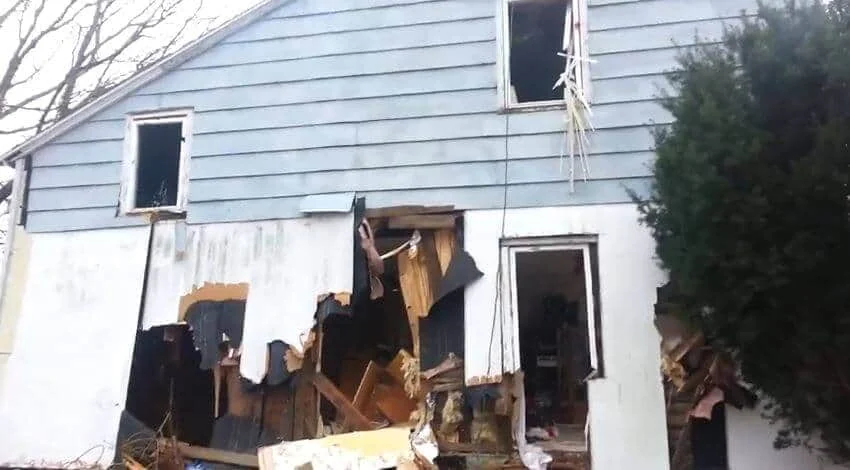
Innocent people often get injured and sometimes killed when police serve warrants, even for minor offenses. Police may even destroy your home or property and will not stop until they finish the job. This story is evidence of what can happen when police serve a warrant, even when it’s for a non violent crime. Although thistook place in the State of New York, we have seen a rise in similar events across the United States, including Southern California.New York Police ended the year with a bang by entirely demolishing the home of David M. Cady Jr. who barricaded himself in his home in order to avoid jail time for a DUI warrant. According to the police departments involved, the reason for the destruction was because Cady was a registered gun owner.During the “standoff” with Cady, at least 18 different police departments from the area and hundreds of police officers demolished Cady’s home. The siege of the Cady home lasted 3 days and ended with David Cady taking his own life with his own firearm. Although the aftermath of the raid looked as if a Tornado had gone through the house, the police did not bother to mention the destruction of the Cady home in their reports.A statement made by the Tompkins County Sheriff’s Department made a small mention of the destruction, saying only “Eventually, law enforcement knew and anticipated needing to enter the residence in order to take the subject into custody. Based upon the information being develop through interviews and practices used by other agencies in the past, it became necessary to breach part of the outside area of the house to ensure the safety of all involved.”Because of this “breach” Cady’s wife and kids have been left homeless and there is very little chance that the police departments involved will help them out in any way.Cady’s decision to barricade himself in his home and hide from police over a DUI warrant was not the right thing to do, but law enforcement only made it worst by destroying the home and leaving the Cady family homeless.David M. Cady has been described as an average family man, David and Melissa have been married since March, 22, 2008, and he worked as an auto mechanic. After 3 days of seeing government agencies destroy his home in order to put him in prison for a DUI, David was finally pushed to commit suicide.His family is now left without a husband/father and with no home. This goes to show us the lengths that our government will go in order to enforce a law. Even for something as minor as a DUI, the government is willing to tear down your home with an army of police officers.We at the Law Office of David S. Chesley decided to share this tragic story so that more people can be aware of how ruthless police enforcement is becoming. Across the U.S.A. and in our own Southern California police tactics are becoming more militarized and aggressive.We have been providing affordable legal services for all, because we believe that enforcing a DUI warrant or other non-violent crimes should never come to this. We ask that you please share this story and that you contact us if you need any legal advice or services. Do not let yourself or someone you know become a victim to aggressive law enforcement.
Legal insights
Police Enforcement Demolishes Home to Serve DUI Warrant.
Any case results or testimonials on this page are firm-published accounts. Each result portrayed depended on the facts of that case. Results will differ if based on different facts. No outcome is guaranteed.
Content adapted from the firm’s existing police enforcement demolishes home to serve dui warrant. page. General information, not legal advice; individual circumstances and current law may differ. The original publication date is shown above.
A conversation can bring clarity.
Bring your questions and any documents you have. Our team can discuss the circumstances of your case and the next steps.
Prepare for your free initial consultationA reputation built on dedication
Awards & recognition












Know who you are calling
David S. Chesley, Esq.
California State Bar #236611 · Admitted June 2, 2005
View the official attorney record (opens in a new tab)A useful first conversation.
Discuss your charge and next court date. Ask who would handle your case, what representation would include, and how fees would work.
Prepare for a consultation