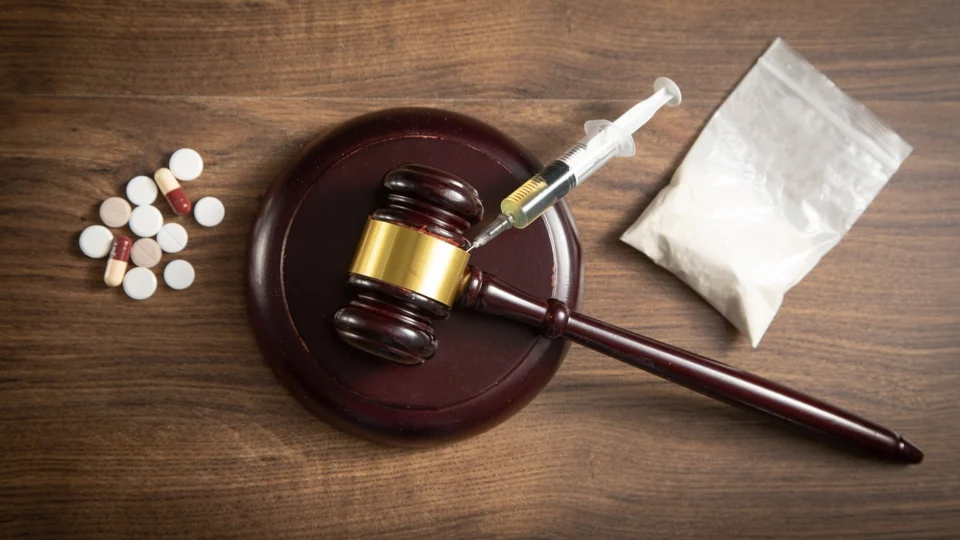
A Lancaster drug charge can be a straightforward misdemeanor or a serious felony, and which one applies turns on the exact substance, the amount, and the person's own record, not just what officers found. The agency that investigates, the court that hears the case, and whether release requires posted bail all follow from the specific charge actually filed.
Our law firm has been featured on






David Chesley in the news
Select a photo to enlarge







Which agency investigates, and which court hears a Lancaster drug case?
Lancaster contracts with the Los Angeles County Sheriff's Department for policing, and a Lancaster drug case is heard at the only courthouse assigned to the county's North District.
The Lancaster Sheriff's Station, 501 W. Lancaster Blvd., Lancaster, CA 93534, (661) 948-8466, patrols Lancaster along with Antelope Acres, Quartz Hill and Lake Los Angeles; the city has no police department of its own. The Superior Court of Los Angeles County's Local Rules Chapter 2 lists only one location for criminal matters in the North District:
North District, in: Michael D. Antonovich Antelope Valley Courthouse, 42011 4th Street West, Lancaster 93534;
Unlike several other Los Angeles County cities, Lancaster does not appear on the County District Attorney's own list of cities with their own misdemeanor prosecutor, so the County District Attorney files both felony and misdemeanor drug charges from Lancaster:
The Los Angeles County District Attorney's Office prosecutes felony crimes throughout Los Angeles County and misdemeanor crimes in unincorporated areas of the county and in all cities except Burbank, Hawthorne, Hermosa Beach, Inglewood, Long Beach, Los Angeles, Pasadena, Redondo Beach, Santa Monica and Torrance.
That is from the Los Angeles County District Attorney's own office FAQ page. A person who cannot afford a lawyer can ask the court to appoint the Los Angeles County Public Defender, who defends eligible clients at every stage, including the preliminary hearing, at no cost to the client.
Does a Lancaster drug arrest require posted bail?
Most drug charges fall under Los Angeles County's 2026 release categories that do not require a dollar amount; only a narrower group still carries a scheduled figure.
The county's felony bail schedule, effective January 1, 2026, is built around a Pre-Arraignment Release Protocol and sorts most drug offenses into non-dollar release categories rather than pricing them. Simple possession under Health and Safety Code 11350 with a qualifying prior is listed as "Book and Release": no bail is required, and the person is released on a written promise to appear. Possession for sale, sale and transport charges are listed the same way. A smaller group, including armed possession under Health and Safety Code 11370.1, possession with a qualifying prior under 11377, manufacturing under 11379.6 and the treatment-mandated felony under 11395, go instead to "Magistrate Review," where a magistrate sets release conditions using the same public-safety and appearance standard a judge applies later, rather than a schedule price. Misdemeanor possession under 11350 or 11377 and misdemeanor use under 11550 are each listed as "Cite and Release," meaning no bail at all and a promise to appear in court. These categories build directly on the California Supreme Court's own rulings on pretrial release. The Court's 2026 decision in In re Kowalczyk confirms that a money amount, where one does apply, cannot simply track a published number:
If the court finds it necessary to condition release on monetary bail, the court must set bail in an amount that is reasonable, considering the purposes of bail and based on an individualized assessment of the totality of the circumstances in a case, including the defendant's financial situation.
The earlier case the Court built on, In re Humphrey, first required judges to look past the dollar figure itself:
the court should consider whether nonfinancial conditions of release may reasonably protect the public and the victim or reasonably assure the arrestee's presence at trial.
Humphrey put the burden on the record, not on an assumption, and Kowalczyk's own rule for whatever amount a judge still sets is that it generally has to be reasonably attainable for that specific person, not simply a convenient round figure, though the person is the one who must come forward with proof of an inability to pay it. For a person held in custody, Penal Code 825(a)(1) requires an appearance before a judge within 48 hours of arrest, not counting Sundays and holidays. See the firm's answers on a California arraignment and how bail amounts are set when one does apply.
Which statute covers the drug named in the police report?
California splits simple possession between two main statutes by the drug's schedule, differing in one word about when a prior conviction turns the charge into a felony.
| Drug | Schedule location | Simple possession statute |
|---|---|---|
| Heroin, cocaine, cocaine base, fentanyl, oxycodone, morphine | HSC 11054 and 11055, narcotic entries | Health and Safety Code 11350 |
| Methamphetamine, amphetamine, PCP, LSD, psilocybin, ketamine | HSC 11054 and 11055, non-narcotic entries | Health and Safety Code 11377 |
| Alprazolam, diazepam, clonazepam, lorazepam and the other listed benzodiazepines | HSC 11057(d); HSC 11375(c) list | Health and Safety Code 11375 |
| Cannabis | HSC 11054(d)(13) | Health and Safety Code 11357 to 11360 (its own age-based rules) |
Both main possession statutes carry up to 364 days in county jail for a first case, under Penal Code 18.5's cap on any "one year" county jail term. The two statutes differ on what happens with a listed prior conviction, and the difference is one word:
shall be punished by imprisonment in a county jail for not more than one year, except that such person shall instead be punished pursuant to subdivision (h) of Section 1170 of the Penal Code if that person has one or more prior convictions for an offense specified in clause (iv) of subparagraph (C) of paragraph (2) of subdivision (e) of Section 667 of the Penal Code or for an offense requiring registration pursuant to subdivision (c) of Section 290 of the Penal Code.
That is Health and Safety Code 11350(a). Health and Safety Code 11377(a) uses the identical structure but says the felony sentence "may" follow instead of "shall," leaving the choice to the court rather than requiring it. The qualifying prior itself is a short, named list under Penal Code 667(e)(2)(C)(iv), not any serious or violent felony generally; it covers specific offenses such as certain homicides, a short list of sex crimes against children, and offenses punishable by life or death.
Several of the substances behind these charges carry serious health risks on their own, separate from the criminal exposure. The federal Substance Abuse and Mental Health Services Administration describes stimulants such as methamphetamine as highly addictive, and the Drug Enforcement Administration's own fentanyl fact sheet explains why even a small miscalculated dose of fentanyl can be fatal. Neither fact changes the charge itself, but both bear on why a case may also involve a request for treatment rather than, or alongside, a criminal resolution.
When does simple possession become a felony?
Outside the listed-prior rule, two situations can turn a Lancaster possession case into a felony: a third qualifying case, or possessing certain drugs while armed with a loaded, operable firearm.
Both routes are narrow and fact-specific; neither applies merely because a person has been arrested for drugs before, and neither applies to cannabis, LSD, psilocybin, mescaline or peyote.
What is the 2024 treatment-mandated felony?
A person with two or more listed drug priors found with a hard drug such as fentanyl or heroin can face a 2024 Proposition 36 felony that offers treatment first.
Health and Safety Code 11395(b)(1), effective December 18, 2024, applies to someone with two or more prior convictions, felony or misdemeanor, for a list of possession, sale and transport offenses, including convictions from before the statute took effect. The court cannot send someone to jail or prison under this section unless it finds the person is not eligible or suitable for treatment:
A person shall not be sentenced to jail or prison pursuant to this section unless a court determines that the person is not eligible or suitable for treatment or that any other circumstance described in paragraph (4) of subdivision (d) applies to that person.
A person charged can instead plead guilty or no contest, admit the prior convictions, waive time for sentencing, and agree to a court-approved treatment program designed by a qualified drug-treatment professional; successful completion leads to dismissal, and that dismissal does not count as a conviction for any purpose, including a later sentencing under this same section. "Hard drug" means a substance listed in Health and Safety Code 11054 or 11055, such as fentanyl, heroin, cocaine, methamphetamine or PCP; it excludes cannabis and cannabis products, peyote, LSD and other psychedelic drugs such as mescaline and psilocybin, the other substances in 11054(d) and (e), and, apart from methamphetamine, the substances in 11055(d). Upon an arrest under this section, the court must make an individualized judicial determination of the person's risk to public safety and the likelihood of returning to court before any release, not a routine citation.
What turns possession into a sale, transport or minor-involved charge?
Possessing a drug for sale, selling it, or transporting it for sale are separate, more serious felonies than simple possession, and involving a minor raises the stakes further.
Possession for sale of the 11350-type drugs carries 2, 3 or 4 years under Health and Safety Code 11351; for the 11377-type drugs it is Health and Safety Code 11378, 16 months, 2 or 3 years. Selling, furnishing, importing or transporting the 11350-type drugs for sale is Health and Safety Code 11352, 3, 4 or 5 years, rising to 3, 6 or 9 years for transport between noncontiguous counties; the 11377-type equivalent is Health and Safety Code 11379 at 2, 3 or 4 years, with the same noncontiguous-county increase. "Transport" in both sections means transport for sale, not simply moving a personal-use amount in a vehicle. Manufacturing is its own charge, Health and Safety Code 11379.6, 3, 5 or 7 years and a fine up to $50,000.
An adult 18 or older who uses a minor to sell the 11350-type drugs, or furnishes them to a minor, faces Health and Safety Code 11353, a straight state prison felony at 3, 6 or 9 years; the 11377-type equivalent is Health and Safety Code 11380 at the same term. Health and Safety Code 11353.5 covers an adult at least five years older who sells or gives a minor some other controlled substance (one not covered by 11353 or 11380) on the grounds of a school, playground, day care, church or synagogue, during class, program or child care hours or while minors are using the site: 5, 7 or 9 years. Most of these felonies are served in county jail under Penal Code 1170(h) unless the person has a serious or violent prior, must register as a sex offender, or gets a specific enhancement; 11353, 11380, 11361 and armed possession under 11370.1 are served in state prison regardless.
How much cannabis can an adult in Lancaster legally have?
Adults 21 and older may lawfully possess up to 28.5 grams of cannabis and grow up to six plants at home; stricter rules apply under 21.
California voters legalized adult recreational cannabis through Proposition 64 in 2016, and the limits below come from the statute that measure put in place.
| Age | Amount | Result |
|---|---|---|
| 21 and older | Up to 28.5 g (8 g concentrate) | Lawful under 11362.1(a) |
| 18 to 20 | Up to 28.5 g (8 g concentrate) | Infraction, fine up to $100 |
| Under 18 | Up to 28.5 g (8 g concentrate) | Infraction: education or counseling, and community service |
| 18 and older | More than 28.5 g (8 g concentrate) | Misdemeanor, up to 6 months and $500 |
Growing more than six plants at 18 or older is a misdemeanor, up to six months and a $500 fine; it becomes a felony only with a qualifying prior, two or more prior growing convictions, or a listed environmental violation. Possession for sale and sale or transport for sale follow the same pattern: a misdemeanor for an adult, rising to a felony only in the statute's own listed circumstances, such as a qualifying prior, two or more prior cannabis-sale convictions, or selling to a minor. Having an opened container of cannabis or cannabis products, or loose cannabis flower, on your person while driving is an infraction with a fine up to $100 (Vehicle Code 23222(b)); it does not apply to a container kept in the trunk. None of this authorizes smoking in public where tobacco is banned, an open container while driving, or driving while impaired by cannabis; marijuana DUI is charged separately under the drug DUI statute.
What about paraphernalia, being present, or a drug house charge?
Possessing paraphernalia and being present where drugs are used are both misdemeanors, but being present requires actually helping the unlawful use, not merely being in the room.
Possession of drug paraphernalia under Health and Safety Code 11364 states no penalty of its own; the Health and Safety Code's general penalty section, 11374, supplies a misdemeanor with a fine of $30 to $500, 15 to 180 days, or both. Possessing a hypodermic needle or syringe for personal use, and using a legal drug-checking service, are both excluded from 11364 as public health measures. Being in a place where drugs are unlawfully smoked or used, under Health and Safety Code 11365, applies only where the person actually aids, assists or abets that use. Opening or maintaining a place for drug sales or use is a more serious, separate charge, Health and Safety Code 11366, punished by county jail up to 364 days or a state prison term of 16 months, 2 or 3 years.
What does being under the influence mean, separately from possession?
Being under the influence of a controlled substance is its own misdemeanor, distinct from possessing one, with no mandatory minimum jail time for a first or second offense.
Being under the influence of a controlled substance is charged under Health and Safety Code 11550, a misdemeanor with up to 364 days in county jail and probation available for up to five years; the court may allow a licensed rehabilitation program in place of some or all of that jail time. A 180-day minimum applies only where the person has two or more prior 11550 convictions within the past seven years and refuses the court-offered rehabilitation program. Being under the influence of cocaine, cocaine base, heroin, methamphetamine or PCP while in immediate personal possession of a loaded, operable firearm, including in a vehicle's passenger compartment, is a separate, more serious charge that can be filed as a felony or a misdemeanor, rising to a state prison term of 2, 3 or 4 years on a second conviction.
Does a drug arrest on an Antelope Valley road also mean a DUI case?
A traffic stop that turns up drugs can lead to a separate DUI charge when an officer also suspects impairment, and that second case runs on its own rules.
Driving under the influence of a drug, or a combination of a drug and alcohol, is charged under the same core DUI statute as an alcohol case, proved with different evidence since there is no roadside breath test for most drugs. Using a drug legally, including under a valid prescription, is not by itself a defense if it impaired the person's driving. See the firm's pages on drug DUI and the broader DUI defense practice, and the DMV's own Driver Handbook chapter on alcohol and drugs for how impairment is assessed; a separate DMV license action, with its own hearing process, can follow, with its own rules and deadlines.
Can Penal Code 1000 diversion end a Lancaster possession case?
Pretrial diversion under Penal Code 1000 can end a qualifying simple-possession case entirely, without a guilty plea, for a person who meets its specific eligibility rules.
Penal Code 1000 applies to specific personal-use charges, including Health and Safety Code 11350, 11357, 11364, 11365, 11375(b)(2) and 11377, plus 11550. Eligibility requires no conviction for another controlled-substance offense in the past five years outside this same list, no crime of violence involved, no contemporaneous unlisted narcotics violation, and no felony conviction in the past five years. Since January 1, 2018, the person pleads not guilty and waives the right to a speedy trial rather than entering a guilty plea:
the court may grant pretrial diversion with respect to any offense specified in subdivision (a) of Section 1000 that is charged, provided that the defendant pleads not guilty to the charge or charges, waives the right to a speedy trial, to a speedy preliminary hearing, and to a trial by jury, if applicable
That is Penal Code 1000.1(a)(3). Diversion runs 12 to 18 months, extendable for good cause, and participation itself is not a conviction or an admission of guilt for any purpose. On completion, the charge is dismissed, and under Penal Code 1000.4(a) the arrest is treated as if it never happened, with sealing available under Penal Code 851.92. Penal Code 1000 diversion is not available after an armed-possession conviction under 11370.1. The firm's pages on PC 1000 drug diversion and drug diversion programs generally cover these routes in more depth, and the Judicial Council's own standard on drug court case management explains how a qualifying case can instead go through a treatment court. See also the firm's overview of diversion and problem-solving court programs for how these programs compare across other charge types.
Proposition 36 of 2000, a different program codified at Penal Code 1210.1, requires probation with drug treatment, and bars jail as a probation condition, for a nonviolent drug possession conviction unless one of its listed exclusions applies; it is not the same program as the 2024 Proposition 36 treatment-mandated felony discussed above, and a page or a person describing "Prop 36" should say which year is meant. The firm's own page on Proposition 36 walks through both versions side by side, and the University of California, Berkeley School of Law's own brief on the 2024 measure summarizes the newer law's full set of changes.
What defense questions does a Lancaster drug case raise?
Drug case defenses usually test how the stop happened, how the substance was found, and whether the lab work actually proves what the charge claims.
- The stop and the search. Officers need a lawful basis for the stop and for any search that follows; a motion to suppress evidence can test whether that basis actually existed, and the firm's page on illegal search and seizure in drug cases covers this in more depth.
- Possession itself. The state must prove the person knew of the substance's presence and its nature; a substance found in a shared car or home does not automatically belong to any one occupant.
- The lab work. Weight, purity and identification of the substance all come from testing that can be reviewed and, where appropriate, independently challenged.
- Possession versus sale. The amount, packaging, cash, scales and any communications found all bear on whether a possession-for-sale or sale charge actually fits the evidence, rather than a simple possession charge.
Negotiating a resolution, including a pretrial negotiation or a motion such as a motion to dismiss, depends on the specific evidence in the case; a missing lab report or a disputed stop does not by itself promise a particular result, but each is worth developing early.
Can a Lancaster drug case reach federal court, or affect immigration status?
A drug case can become a federal matter where federal agents are involved or the conduct crosses state lines for sale, and a conviction can carry separate immigration consequences.
The firm's page on federal drug charges covers when a case is charged in federal rather than state court. Immigration consequences depend on the exact statute, the conduct admitted, and the person's immigration history; a plea that looks favorable on the criminal side can carry its own separate risk, and those risks sit among the broader collateral consequences of a drug conviction, which can also touch housing, licensing and financial aid. Anyone with an immigration concern should have immigration counsel review the exact proposed disposition before entering any plea, rather than assuming a state-court resolution is immigration-neutral.
Can a past Lancaster drug case be cleared from a record later?
Several record-relief paths exist after a Lancaster drug case, and which one applies depends on how the case actually ended and what sentence was imposed.
A case resolved with probation can be dismissed under Penal Code 1203.4 once probation is finished, on early discharge, or at the court's discretion in the interest of justice, and when the person is not then serving a sentence, on probation elsewhere or facing a new charge; the dismissal can still be pleaded and proved as a prior conviction later and does not restore firearm rights. A felony sentenced under Penal Code 1170(h) or to state prison has its own, more limited relief under Penal Code 1203.41: a discretionary application the person can file one or two years after completing the sentence, depending on the type of sentence. Someone who completed a felony sentence for conduct that Proposition 47 (2014) made a misdemeanor, including conduct now charged as simple possession, can ask the court to redesignate the felony as a misdemeanor under Penal Code 1170.18, unless the person has a qualifying prior from the 667(e)(2)(C)(iv) list or must register as a sex offender. None of these routes is automatic; each requires its own application to the court that handled the case. See the firm's page on expungement for how this process works across other charge types.
What does a Lancaster drug defense cost, and what should you do first?
The firm offers a free consultation on a Lancaster drug charge and is available by phone 24 hours a day, with payment plans available once representation begins.
Cost depends on the specific charge, whether it is a misdemeanor or a felony, and how far the case proceeds before it resolves. Affordable rates and payment plans are available; ask about fees and payment terms before agreeing to representation. The firm's published case results describe outcomes reported in other matters; each depended on its own facts and does not predict a new case's outcome. See the Lancaster location page for the office's current address, phone number and nearby courts.
Frequently asked questions about Lancaster drug charges
If I'm not found guilty, do drug charges appear on a background check?
An arrest, and even a dismissed case, can still show up in some records. Completing Penal Code 1000 diversion or the 2024 treatment-mandated felony's program can lead to dismissal and, in the 1000 case, treats the arrest as never having occurred; neither one assures that every background check comes back clean.
Do I need to answer police questions if I have illegal drugs on me?
Comply with lawful instructions and provide identification when required, but a conversation about the substance itself is not required, and anything said can become evidence. Ask to speak with a lawyer, and keep any citation, search inventory or release paperwork for review.
Can I expunge a previous drug conviction in Lancaster, CA?
California offers several different dismissal and record-relief routes rather than one single "expungement," and they are not interchangeable. A probation case may be dismissed under Penal Code 1203.4 after probation, on early discharge or in the interest of justice, if the person is not serving a sentence, on probation or charged with an offense; PC 1000 has its own arrest-record rule. A lawyer should review the exact disposition before predicting what a background check will show.
What's the difference between PC 1000 and Proposition 36 diversion?
Current Penal Code 1000 is pretrial diversion for specific personal-use charges, entered with a not guilty plea. The 2024 Proposition 36 treatment-mandated felony is a different program, for a hard-drug possession case with two or more prior drug convictions, entered through a guilty or no contest plea with judgment deferred. The 2000 Proposition 36 probation law is different again. Which one applies depends on the exact charge and record.
If I don't have a record, will my drug possession charge be a felony in Lancaster, CA?
Not automatically. Most simple possession charges are misdemeanors unless a listed prior conviction applies, and a first arrest alone does not create one; possessing certain drugs while armed with a loaded, operable firearm is a felony even without a record. The substance, the amount, and whether a sale or minor is involved can all change the analysis, so have a lawyer review the actual complaint before assuming either outcome.
Explore a specific Lancaster drug charge situation
The pages below are part of the firm's full drug crimes defense coverage, which applies statewide, including in Lancaster.
Possession, use and specific drugs
- Possession of a Controlled Substance
- Hard Drug Possession
- Prescription Drugs
- Ecstasy
- Cocaine
- Methamphetamine
- Opioids
- Heroin
- Fentanyl
- Marijuana
- Cultivation of Marijuana
Sale, transport and manufacturing
- Drug Possession for Sale
- Sale of Controlled Substance
- Transportation of a Controlled Substance
- Drug Trafficking
- Manufacturing or Producing Controlled Substances
- Maintaining a Place for Drug Sales or Use
Enhancements and related charges
- Drug Crimes With Firearm Enhancements
- Fentanyl-Specific Enhancements
- Drug-Free School Zone Violations
- Federal Drug Charges
If a domestic violence charge came out of the same arrest, our Lancaster domestic violence lawyer page explains that side of the case, from the first steps after an arrest to restraining orders and the possible penalties.
Talk to a Lancaster drug charges lawyer
If you or someone you love was arrested for a drug charge in Lancaster, LegalClarity's overview of California drug law is a useful starting reference, and The Law Offices of David S. Chesley offers a free consultation and is available 24/7.
Affordable rates and payment plans are available. Ask about fees and payment terms before agreeing to representation. Se habla español. Call (800) 755-5174 or tell us about your case online.
We also provide the following legal services in Lancaster, CA, part of the firm's statewide criminal defense practice:
- Criminal Defense Lawyer
- Violent Crimes Lawyer
- Sex Crimes Lawyer
- Theft Lawyer
- DUI Lawyer
- Immigration Lawyer