



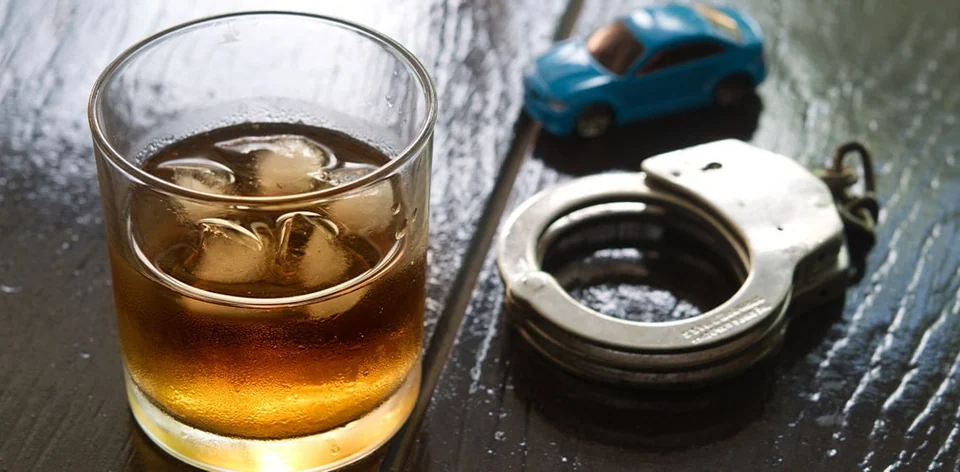
One Compton DUI arrest can actually create two separate legal problems: a criminal case filed in Los Angeles County's court system and a license case run entirely by the DMV. Vehicle Code 13558(b) gives a driver only 10 days from receiving the suspension notice to request a hearing before that suspension takes hold.
Our law firm has been featured on






David Chesley in the news
Select a photo to enlarge







Why can a Compton DUI arrest create two separate problems?
A Compton DUI arrest can open a criminal prosecution and, apart from it, a DMV action called Administrative Per Se, or APS, that reaches only the privilege to drive.
Conviction in court can mean probation, a fine and jail time. The DMV side runs on its own track entirely. DMV's own guidance puts it plainly:
The DMV suspension or revocation is an immediate administrative action taken against your driving privilege only. This is called Administrative Per Se (APS). Any sanctions imposed by DMV under APS are independent of any court-imposed jail sentence, fine, or other criminal penalty imposed when a person is convicted for driving under the influence (DUI).
A chemical test is not required for the arrest itself; someone can be arrested and convicted without a BAC reading at all based purely on an officer's observations. Winning at the DMV changes nothing in the criminal case, and a dismissal in court does not put a license back on its own. Both fronts need their own plan.
What's the actual deadline for saving a license after a Compton arrest?
A driver arrested in Compton gets 10 days from receiving the DMV's suspension notice to request a hearing held before that suspension becomes effective.
If the person wishes to have a hearing before the effective date of the order of suspension or revocation, the request for a hearing shall be made within 10 days of the receipt of the notice of the order of suspension or revocation. The hearing shall be held at a place designated by the department as close as practicable to the place where the arrest occurred, unless the parties agree to a different location.
That figure comes from Vehicle Code 13558(b). Miss it, and Vehicle Code 14101(b) cuts off the right to any hearing at all, although DMV is allowed to accept a late filing without being forced to. A hearing request by itself does not pause the countdown toward suspension (13558(e)).
DMV's current Fast Facts 26 guide gives a second figure for mailed notices, 14 days from the date on the notice rather than 10 from receipt, consistent with Vehicle Code 23, which treats a mailed notice as received four days after it goes out. Either timeline, the safest move is filing the request the same day the notice arrives.
What actually happens once a DMV hearing gets scheduled?
DMV's Fast Facts 26 guide gives a driver several concrete rights heading into the hearing, the first being access to DMV's own evidence beforehand.
- Bring a lawyer or another representative, at personal expense.
- Request DMV's evidence file, through discovery, at least 10 days ahead of the hearing.
- Cross-examine DMV's witnesses, give testimony, and subpoena records or witnesses of your own.
- Get a written decision, with a department review or a court appeal open after a loss.
These hearings proceed under the Administrative Procedures Act (Government Code 11400 to 11528) together with Vehicle Code 14100 to 14112. A hearing officer has no power to lengthen or shorten a suspension period the Vehicle Code already fixed. DMV's Administrative Hearings page describes a Microsoft Teams remote option or an in-person format, with a phone option listed on the driver's own notice, while DMV's Driver Safety Office page notes that many Driver Safety matters can be handled online through its case management system. That page lists one office for mail and email contact, in El Segundo, phone (833) 543-7703, and none in Compton.
Which courthouse actually handles a Compton DUI?
A Compton DUI goes to the Compton Courthouse, 200 West Compton Boulevard, Compton, CA 90220, the only courthouse the court's rules list for its South Central District.
The court's own Local Rules, Chapter 2, assign a criminal complaint to the courthouse serving the city or area where the offense allegedly happened, inside whichever of 12 geographic districts that falls under. The main line reaches the Compton Courthouse at (310) 761-4300, with a separate Criminal Clerk's Office line at (310) 761-8658, and the court's directory for the building lists the Public Defender at (310) 603-7271. Under Penal Code 987(a), a defendant who comes to arraignment without a lawyer, wants one and cannot afford one is assigned counsel. No single published list names which specific department hears a given calendar; the citation, notice to appear, or case summary from the court itself controls where a particular case actually lands.
Does the city or the county prosecute a Compton DUI?
Compton has no separate city prosecutor, so the Los Angeles County District Attorney handles every DUI filed there, misdemeanor or felony.
The District Attorney's own page lists the cities where a different agency, not the County, prosecutes misdemeanors: Burbank, Hawthorne, Hermosa Beach, Inglewood, Long Beach, Los Angeles, Pasadena, Redondo Beach, Santa Monica and Torrance. Compton is not on that list, so the County's own office, reachable by mail at 211 West Temple Street, Suite 1200, Los Angeles, CA 90012, prosecutes there directly, misdemeanors and felonies alike.
Policing in Compton itself runs through the Los Angeles County Sheriff's Department rather than a separate city police force. The Compton Sheriff's Station, 301 S. Willowbrook Ave., Compton, CA 90220, phone (310) 605-6500, covers the city around the clock, every day of the week.
Is bail even required to get out after a Compton DUI arrest?
Often not: Los Angeles County's Pre-Arraignment Release Protocol places a standard DUI arrest in a zero-dollar bail category before anyone ever sees a judge.
Under the county's own felony and misdemeanor bail schedules, effective January 1, 2026, a misdemeanor Vehicle Code 23152 charge falls into the "Book and Release" category, a felony 23152 or a 23153 injury charge into "Magistrate Review," and the court's own protocol describes both as zero-dollar designations; a 23153 charged with personally inflicting great bodily injury is the exception, listed at $100,000:
For those offenses designated as either CR or BR, eligible arrestees will be released on their own recognizance with a promise to appear at arraignment either at the time of arrest (CR) or after being booked at a police station or other facility (BR).
For those crimes designated as MR, arrestees will be referred to a magistrate for review.
That release is not unconditional. Someone already on felony probation, parole, or post-release community supervision, or who has missed court three or more times recently, still goes to a magistrate for review rather than an automatic release, and this pre-arraignment framework is separate from whatever a judge decides at the actual arraignment, which for a person held in custody must happen within 48 hours of arrest. Under Penal Code 825(a)(1), that 48-hour clock excludes Sundays and holidays. A misdemeanor defendant who does end up in front of a judge is generally entitled to release on their own recognizance under Penal Code 1270(a), unless the court finds on the record that release would compromise public safety or would not reasonably assure the person's appearance in court.
Booking for a Compton arrest generally runs through the Los Angeles County Sheriff's main custody system; the Sheriff's own custody page and the Inmate Information Line at (213) 473-6100 cover locating someone once they are inside it. Men are generally held at Men's Central Jail or Twin Towers Correctional Facility, both at the Bauchet Street complex in downtown Los Angeles, or at the Pitchess Detention Center in Castaic; women go to the Century Regional Detention Facility, 11705 S. Alameda Street, Lynwood.
How long does a conviction actually keep the license suspended?
A first DUI conviction brings a 6-month suspension by default, stretched to 10 months only when the court sends the driver into the longer, 9-month DUI program.
Vehicle Code 13352(a)(1) fixes the suspension at six months on a first conviction. The 10-month figure sits in a separate section: Vehicle Code 13352.1(a) extends it when the court orders the 9-month program under 23538(b)(2), triggered by a BAC of 0.20% or higher or a refused test. Any APS suspension already running from the arrest overlaps with the conviction suspension rather than adding to it, never stretching past whichever one runs longer (Vehicle Code 13353.3(c)).
| Point in the process | What triggers it | Duration |
|---|---|---|
| Paper license issued at the scene | When the arresting officer physically takes the license | Good for 30 days from the date of arrest (Vehicle Code 13382(b)) |
| APS suspension tied to a 0.08% or higher test result, nothing similar in the prior decade | Takes over once the 30-day paper license lapses | Four months flat (Vehicle Code 13353.3(b)(1)) |
| APS suspension or revocation tied to a refused or incomplete test | A distinct DMV action from the test-result row above | A one-year suspension the first time; a two-year revocation with one qualifying prior within 10 years; a three-year revocation with two or more within 10 years (Vehicle Code 13353(a)) |
| Conviction under the first-offense DUI statute (Vehicle Code 23536) | Layers on top of whichever APS suspension is already running | Six months by default, ten months once the court orders the 9-month program (Vehicle Code 13352(a)(1), 13352.1(a)) |
A test-result APS suspension can open the door to a restricted license under Vehicle Code 13353.2; a refusal suspension never does, since Vehicle Code 13353.4(a) blocks any restricted or hardship license for that entire period, with a few narrow exceptions not covered here. On the four-month test-result suspension of a driver 21 or older with no DUI-related conviction or DMV DUI suspension in the past 10 years, the driver can pursue an ignition interlock restriction lasting up to 4 months, or wait 30 days and take a work-and-program restriction lasting up to 5 months. Both call for proof of DUI program enrollment, an SR-22 insurance filing kept active for three years, and a $125 APS fee, straight from DMV's own DUI First Offenders flyer. A suspension can carry its own collateral consequences too, reaching into a professional license.
What jail time and fines actually come with a conviction?
A first conviction under Vehicle Code 23152 carries a county jail range of 96 hours to 6 months and a fine between $390 and $1,000.
Each additional offense within the 10-year lookback period raises the jail range, while the fine stays $390 to $1,000. The Vehicle Code sets a distinct range for every offense level.
If a person is convicted of a first violation of Section 23152, that person shall be punished by imprisonment in the county jail for not less than 96 hours, at least 48 hours of which shall be continuous, nor more than six months, and by a fine of not less than three hundred ninety dollars ($390), nor more than one thousand dollars ($1,000).
That text comes straight from Vehicle Code 23536(a). With probation, the fine stays mandatory, while jail becomes optional and, if ordered, runs from 48 hours up to 6 months (Vehicle Code 23538(a)(1)). Penal Code 18.5 trims every county jail maximum below to 364 days, one day under a full year.
| Offense level | Jail exposure | Fine range | DMV action at conviction |
|---|---|---|---|
| First offense (23536) | County jail, 96-hour floor (48 continuous) to a 6-month cap | $390 to $1,000 | Six-month suspension, extended to ten with the 9-month program (13352(a)(1), 13352.1(a)) |
| Second within 10 years (23540) | County jail, 90-day floor, 364-day cap (Penal Code 18.5) | $390 to $1,000 | Two-year suspension and, if alcohol was involved, a required 12-month ignition interlock (13352(a)(3), 23575.3(h)(1)(B)) |
| Third within 10 years (23546) | County jail, 120-day floor, 364-day cap (Penal Code 18.5) | $390 to $1,000 | Three-year revocation and, if alcohol was involved, a required 24-month ignition interlock (23575.3(h)(1)(C)) |
| Fourth within 10 years (23550) | 180 to 364 days in county jail, or, filed as a felony, 16 months, 2, or 3 years under Penal Code 1170(h) | $390 to $1,000 | Four-year revocation (13352(a)(7)) |
| New DUI within 10 years of an earlier felony DUI (23550.5) | As much as 364 days in county jail, or a felony state prison term | $390 to $1,000 | Revoked under either 13352(a)(6) or (a)(7) |
| First DUI with injury (23153, punished through 23554) | 90 to 364 days in county jail, or state prison if the District Attorney files it as a felony | $390 to $1,000 | One-year suspension (13352(a)(2)) and, after an alcohol-related injury DUI, a required 12-month ignition interlock (23575.3(h)(2)(A)) |
| Vehicular manslaughter while intoxicated, gross negligence absent (Penal Code 191.5(b)) | 364 days at most in county jail, or, as a felony, 16 months, 2, or 4 years | Up to $1,000 as a misdemeanor, $10,000 as a felony (Penal Code 672) | A mandatory 3-year revocation (Vehicle Code 13351) |
| Gross vehicular manslaughter while intoxicated (Penal Code 191.5(a)) | A felony term of 4, 6, or 10 years in state prison, or 15 years to life with a qualifying prior (191.5(d)) | Up to $10,000 (Penal Code 672) | A mandatory 3-year revocation (Vehicle Code 13351) |
Those last two rows punish standalone Penal Code crimes rather than a plain Vehicle Code 23152 or 23153 conviction, even though intoxicated driving sits behind each one. Once pled and proven, a breath or urine refusal adds extra jail time on conviction under Vehicle Code 23577: no fixed addition on a first DUI without injury, 48 continuous hours on a first DUI causing injury, 96 extra hours on a second within 10 years, 10 extra days on a third within 10 years, and 18 extra days on a fourth or later within 10 years. A blood test refusal does not trigger this particular enhancement. A charge can sometimes resolve as wet reckless instead, which carries its own separate terms, and the same traffic stop can occasionally raise exhibition of speed or ordinary reckless driving as well.

Does a clean record change anything about a first Compton DUI?
A first-time DUI, meaning no DUI-related conviction in the past decade, keeps the whole matter at misdemeanor level as long as nobody was hurt.
The table above already shows the range: 96 hours to 6 months in county jail and a $390 to $1,000 fine for a bare first offense, entirely apart from the separate DMV action on the license. The criminal side runs from arraignment through pretrial motions, reaching an actual trial only if nothing resolves it earlier. For many first-time clients without an injury or an unusually high reading, the pretrial stage opens the door to negotiations with the prosecutor, though what the District Attorney's office will agree to always depends on the specific facts. The DMV's 10-day window keeps running regardless of where the criminal case stands, so neither side waits for the other.
What angles does a Compton DUI defense usually pursue?
A Compton DUI defense usually tests four things: the reason for the stop, how the field sobriety tests were given, the breath or blood evidence, and rising BAC.
- Lawfulness of the stop. Without a legitimate reason for pulling someone over, whatever the officer finds afterward becomes vulnerable to a challenge.
- How the field sobriety tests were given. The walk-and-turn, the one-leg stand and horizontal gaze nystagmus are scored from an officer's own observations, not an instrument reading, and NHTSA's manual says all three are designed to be given and scored in a standardized way, so a departure from that script opens its own line of attack. See field sobriety tests.
- Whether the breath or blood evidence holds up. Equipment that is out of calibration or mishandled produces numbers worth questioning, which is exactly what discovery of faults in laboratory examinations is meant to surface, and a blood split motion opens the door to an independent lab's own retest.
- A rising-BAC explanation. Because the body keeps absorbing alcohol for a while after someone stops drinking, a number measured later at the station can run higher than what it actually was back behind the wheel.
Throughout any stop, Fifth Amendment protections stay in force, and a conviction does not require any positive chemical result; observation alone can support both the arrest and, later, the conviction. A driver still must produce license, registration and proof of insurance when asked, but answering questions about where they had been or what they had been drinking is never required, and anything offered voluntarily can resurface as evidence.
Does California prove a marijuana DUI differently than an alcohol one?
Yes: Vehicle Code 23152 also covers driving under a drug, or a drug combined with alcohol, and prosecutors reach for different evidence entirely to prove it.
Since most drugs have no roadside breath test, these cases usually come down to a blood draw, an officer's observations, and sometimes a Drug Recognition Expert's evaluation. Using a drug legally, a valid prescription included, is not a defense by itself once the drug actually impaired the driving (Vehicle Code 23630). The firm's own drug DUI, marijuana DUI and prescription drug DUI pages go into each of those differences in more depth.
What pushes a Compton DUI into felony territory?
An injury, a fourth qualifying offense, or an earlier felony DUI within 10 years opens the door for a new DUI to be filed as a felony.
Without an injury, the first three DUI convictions inside the lookback window almost always stay at the misdemeanor level. Four situations can be filed either way: an injury DUI with no more than one prior inside 10 years (23153, punished under 23554 or 23560), a fourth qualifying DUI inside 10 years (23550), a new DUI inside 10 years of an earlier felony DUI (23550.5(a)), or a new DUI after certain earlier vehicular manslaughter convictions, which carries no 10-year limit (23550.5(b)). Which way it gets filed depends on the particular facts, not a fixed rule. See DUI causing injury and fourth DUI felony escalation.
How does a DUI conviction interact with an immigration case?
How a DUI lands on immigration status comes down to the exact charge, how the case resolves, and the person's own status, which rules out guessing at it.
USCIS's own Policy Manual is specific on one point: two or more DUI convictions within the relevant period create a rebuttable presumption that someone lacks good moral character, a factor in naturalization and some other relief without automatically sinking every application. See the USCIS Policy Manual, Volume 12, Part F, Chapter 5. California law separately requires prosecutors to consider the avoidance of adverse immigration consequences as one factor in negotiating a plea deal (Penal Code 1016.3(b)), which matters directly for a non-citizen client facing this exact charge.
Immigration counsel should review the record before any plea whenever both a DUI charge and an immigration question are in play. See the firm's own Compton immigration lawyers, its page on DUI immigration consequences, its page on diversion programs, and its page on the citizenship application process.
Years later, can a Compton DUI still come off a record?
It depends entirely on how the case ended, and for an actual conviction, clearing it is a matter of judicial discretion rather than something that happens on its own.
Someone arrested but never convicted can turn to California's self-help resources, which explain how an arrest without a conviction gets cleared, with the firm's own record clearing attorneys available to help with that process directly. A DUI conviction itself can be dismissed under Penal Code 1203.4 once probation is completed (or ended early, or at a judge's own interest-of-justice discretion), provided the person is not then serving a sentence, on probation for another offense, or charged with a new crime; even then a judge decides whether to grant it, the dismissal does not erase the historical fact of the conviction, and it never reverses whatever the DMV already did to the license. The firm separately covers expungement and the process to seal your records, and the California Department of Justice explains its own process to clean your record through a direct request.
How much should a Compton driver expect to pay for a DUI lawyer?
The firm offers a free consultation on a Compton DUI charge, takes calls at any hour and offers payment plans; the fee turns on the charge and its level.
Actual cost depends on the charge, whether it stands as a misdemeanor or a felony, and whether it is a first offense or a later one. Affordable rates and payment plans are available; ask about fees and payment terms before agreeing to representation. A membership organization, America's Top 50 Lawyers, places David S. Chesley in its California DUI category; it describes its own selection process as subjective rather than independently verified. The firm's own DUI case results are published from its actual case files, where the specific facts never repeat from one matter to the next.
The firm's own office sits right in Compton, 1315 N Bullis Rd, Compton, CA 90221, phone (424) 529-1178; see the Compton location page for driving directions and local court information. That office operates as part of the firm's statewide criminal defense practice.
Fast answers to common Compton DUI questions
Is a DUI the same thing as a DWI in California?
Yes in substance: California's statute uses the term driving under the influence, or DUI, under Vehicle Code 23152, and has no separate DWI offense. A "DWI lawyer" search just lands on this same charge.
What happens if someone refuses the chemical test in Compton?
A refusal draws its own DMV action apart from a test-result case: a 1-year suspension the first time, a 2-year revocation with a prior within 10 years, 3 years with two or more such priors (Vehicle Code 13353(a)), with no restricted license (13353.4(a)). Jail can follow too, once proven: 48 straight hours even on a first DUI if someone was hurt, more on repeat offenses within 10 years, but never for refusing a blood draw (Vehicle Code 23577).
Does someone have to deal with both the criminal case and the DMV?
Yes, to protect the license specifically, when the driver refused testing or tested at or over the legal limit. The two proceedings run independently; winning at the DMV does not end the criminal case, though an acquittal makes DMV reinstate a privilege it suspended for a test result. Missing the DMV's 10-day window (Vehicle Code 13558(b)) forfeits the right to that hearing (Vehicle Code 14101(b)), though DMV occasionally still takes a late request.
Is a first Compton DUI treated as a misdemeanor?
Generally yes, assuming no injury occurred. A first DUI without injury stays a misdemeanor under Vehicle Code 23536. A first DUI that causes injury can be filed as either a felony or a misdemeanor, depending on the specific facts.
What can a DMV hearing actually accomplish?
Only a change to the license action, never the criminal case, and on a narrow set of issues: whether the stop and arrest held up legally, and whether the BAC or refusal finding was correct. No hearing officer can shorten a suspension length the Vehicle Code already set.
Can a restricted license follow a Compton DUI arrest?
Often, for a driver 21 or older whose suspension traces back to an actual test result. Proof of program enrollment and insurance can unlock earlier driving through an ignition interlock device, or, with no DUI-related conviction or DMV DUI suspension in the past 10 years, a work-and-program restriction after 30 days. Not after a refusal: Vehicle Code 13353.4(a) rules out a restricted license for that whole suspension period.
Want to dig into one specific angle of a Compton DUI case?
The firm's DUI defense coverage spans the entire state, and the pages grouped below break that coverage down by exactly what a Compton driver is usually trying to find.
License, DMV, and process
- Driving with a Suspended License
- DUI and Professional Licenses in California
- DMV Hearing Defense
- DUI License Reinstatement
- Driving Without a License
- DUI Refusal Cases
- Ignition Interlock Device Violations
- DUI Process: What to Expect
Testing and investigation
- DUI Checkpoint Defense Attorney
- Field Sobriety Tests
- Medical Conditions as a Defense to DUI
- Breathalyzer Test
- Illegal Traffic Stop, Probable Cause Defense
- Rising Blood Alcohol Defense
- DUI Blood Test Defense
- Title 17 Violation of Breath and Blood Test Procedures Defense
- Mouth Alcohol Defense to DUI
Charges and circumstances
- Underage DUI
- First-Time DUI
- DUI with Child Passenger
- Second Time DUI
- Commercial Driver CDL DUI
- Third DUI California
- Out-of-State DUI
- Fourth DUI Felony Escalation
- DUI in Construction Zones and School Zones
- Felony DUI
- DUI Probation Violation
- Misdemeanor vs Felony DUI Overview
- Hit and Run DUI
- DUI Causing Injury
- DUI Accident Defense
- Watson Murder / DUI Murder
- Hit and Run with Injury or Death
- Drug DUI
- DUI Trial, Jury Trial Defense
- DUI Marijuana
- Wet Reckless
- DUI Prescription Drugs
- DUI laws
- DUI Penalties
- DUI Expungement in California
- DUI Immigration Consequences
- DUI Defense Costs
Related driving and public-order offenses
- Drunk in Public
- Boating Under the Influence
- Public Intoxication
- Reckless Driving
- DUI Alcohol
- Exhibition of Speed
- Disturbing the Peace
- Street Racing
- Disorderly Conduct
- Evasion
- Hit and Run
- Driving Without Insurance
Facing a DUI somewhere else near Compton?
The firm's Carson, Lynwood, Gardena and Paramount DUI lawyer pages cover the surrounding South Bay and South Los Angeles communities, and its first-time DUI defense page explains a first arrest.
Reach a Compton DUI defense team right now
If you or someone close to you was arrested for a DUI in Compton, neither clock on this page should be left unattended. The Law Offices of David S. Chesley offer a free consultation on defending all Compton, CA DUI charges, available 24/7.
Affordable rates and payment plans are available. Ask about fees and payment terms before agreeing to representation. Call (800) 755-5174 or tell us about your charges online. Se habla español.
The firm also provides the following legal services in Compton, CA, part of its statewide criminal defense practice:
































