



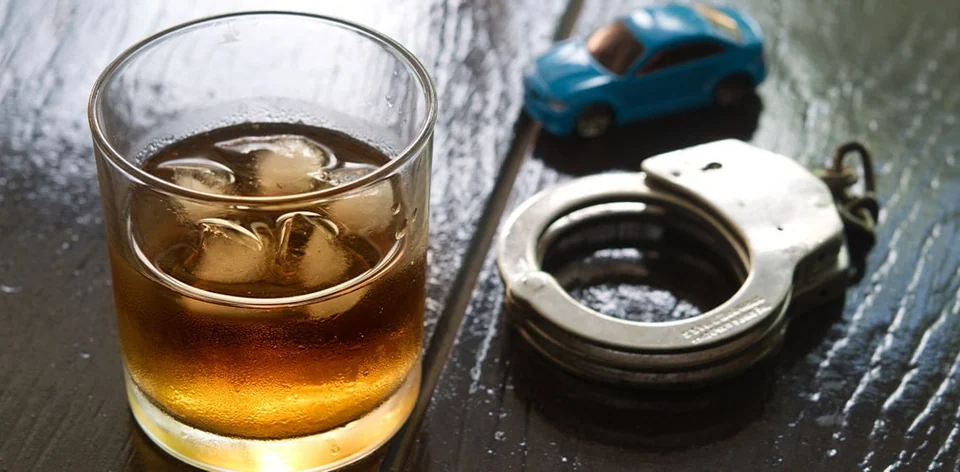
After a DUI arrest in the Santa Clarita Valley, a Santa Clarita DUI lawyer defends you in two separate matters. One is the criminal case the District Attorney decides whether to file. The other is the DMV's action against your license. The DMV deadline is short: you have 10 days from receiving the suspension notice to request a hearing.
Our law firm has been featured on






David Chesley in the news
Select a photo to enlarge







Who arrests drivers for DUI in the Santa Clarita Valley?
The Sheriff's Santa Clarita Valley Station serves the city and nearby unincorporated communities, and the California Highway Patrol's Newhall Area patrols the valley's freeways and county roads.
Santa Clarita was incorporated in 1987 from four towns: Newhall, Valencia, Saugus and Canyon Country. The CHP's own Newhall Area page tells that history. The Los Angeles County Sheriff's Department lists the City of Santa Clarita among the areas its Santa Clarita Valley Station serves. The same station covers Castaic, Stevenson Ranch, Val Verde and other unincorporated places. On Interstate 5 and State Route 14, the arresting officer may be from the CHP instead. The Newhall Area says it patrols 204 miles of freeway and 296 miles of unincorporated roadway, including the Interstate 5 and State Route 14 interchange.
The agency named on your citation matters. It wrote the arrest report the prosecutor reads, and its records are what your lawyer asks for in discovery.
| Office | What it does in your case | Address and phone |
|---|---|---|
| Sheriff's Santa Clarita Valley Station | Arrests inside the city and nearby unincorporated areas | 26201 Golden Valley Road, Santa Clarita, CA 91350; (661) 260-4000 |
| California Highway Patrol, Newhall Area | Freeway and unincorporated road arrests | 28648 The Old Road, Valencia, CA 91355; (661) 600-1600 |
| Santa Clarita Courthouse | Criminal and traffic cases | 23747 West Valencia Boulevard, Santa Clarita, CA 91355; (661) 253-5600 |
| District Attorney, at the Santa Clarita Courthouse | Decides what to charge | First floor; (661) 888-7112 |
| DMV Driver Safety | Decides the license suspension | El Segundo Driver Safety Office; (833) 543-7703 |
What should happen in the first 48 hours after a Santa Clarita DUI arrest?
Confirm the person is released or headed to court, request the DMV hearing, keep every paper from the arrest, and write down the night while memory is fresh.
- Find out where the person is. The Sheriff's Inmate Information Center searches by name and date of birth. Its custody line is (213) 473-6100. A person booked in the past two hours will not appear in the search yet, the Sheriff's page cautions.
- Read the release paper. Many misdemeanor arrests end with a written notice to appear. By law it must state the offense charged and the time and place to appear in court (Penal Code 853.6(a)(1)).
- Request the DMV hearing. The 10 days run from the day the suspension notice reached you, not from your court date.
- Keep everything. Hold on to the citation, any property receipt, any bail or release form and the suspension notice, which also serves as your temporary license.
- Write a timeline. Note where you were stopped, what you were asked, which tests you took and when you last ate or drank.
- Say nothing about the case to anyone but your lawyer. That includes texts and social media posts.
At booking, a person has the right to at least three completed phone calls, no later than three hours after arrest except where physically impossible. A call to a lawyer may not be monitored or recorded (Penal Code 851.5). Use one of those calls to reach a lawyer before answering more questions.
Will a Santa Clarita DUI arrest require bail money?
Usually not for a misdemeanor DUI: Los Angeles County's 2026 schedule codes Vehicle Code 23152 for book and release with $0 bail, though some DUI bookings go to a magistrate.
The Superior Court's 2026 Misdemeanor Bail Schedule, effective January 1, 2026, carries a Pre-Arraignment Release Protocol. That protocol has governed release before the first court date since October 1, 2023. Each listed offense gets a code: CR for cite and release, BR for book and release, or MR for magistrate review. A CR or BR arrestee is released on a promise to appear. An MR arrestee waits for a magistrate, and the court says its magistrates are available 7 days a week, 24 hours a day. The DUI entries read this way:
| Charge or allegation at booking | Code in the schedule | What it means |
|---|---|---|
| DUI, Vehicle Code 23152 | BR | Released after booking on a promise to appear, $0 bail |
| 23152 with a minor in the vehicle (23572), a BAC over 0.15% or a refusal (23578), or excessive speed (23582) | BR | Same: $0 bail, released after booking |
| 23152 with two or more prior convictions within 10 years (23580) | MR | A magistrate decides release and any conditions |
| DUI causing injury, Vehicle Code 23153 | MR | A magistrate decides release and any conditions |
| Felony 23152 under Vehicle Code 23550 or 23550.5 | MR (felony schedule) | A magistrate decides release and any conditions |
| 23153 with personal infliction of great bodily injury, or personal use of a dangerous or deadly weapon | $100,000 | Money bail listed |
| Vehicular manslaughter while intoxicated, Penal Code 191.5(a) or (b) | $100,000 or $50,000 | Money bail listed |
Two groups go to a magistrate even on a BR charge: people on felony probation, parole or post-release community supervision, and people with three or more failures to appear over the past three years for certain offenses. The magistrate can release outright, release on the least restrictive nonfinancial conditions, or defer release to arraignment. Deferral needs clear and convincing evidence that public or victim safety, or a return to court, cannot be reasonably assured.
Nothing in the protocol binds the arraignment judge. Someone still held must see a judge within 48 hours of arrest, not counting Sundays and holidays (Penal Code 825(a)(1)). At a misdemeanor arraignment, a person in custody is entitled to release on their own recognizance. The exception is a finding, on the record, that release would compromise public safety or would not reasonably assure their return to court (Penal Code 1270(a)). If a judge does set money bail, In re Humphrey (2021) requires a look at ability to pay and at whether nonfinancial alternatives would reasonably protect the public and the victim or reasonably assure the person's appearance in court. In re Kowalczyk (April 30, 2026) adds that the amount must generally be reasonably attainable, though not necessarily easily affordable. A defendant who claims inability to pay must back the claim with reliable evidence. The firm's guide to posting bail for someone in Los Angeles County jail walks through each payment step.
Which courthouse calendars a DUI from Santa Clarita?
Your citation or notice to appear names it; in the court's North Valley District, the Santa Clarita and San Fernando courthouses are the two that list criminal divisions.
The court's Local Rules, Chapter 2 (effective July 1, 2026) set the filing rule. A criminal complaint goes to the district where the offense allegedly happened, at the courthouse handling criminal matters for that city or unincorporated area. Where you live and where you were held do not decide it. The notice to appear must name the court that would have heard you if you had been taken straight to a judge (Penal Code 853.6(c)). The Local Rules place three courthouses in the North Valley District, and the court's own courthouse directory shows which of them take criminal cases:
| Courthouse | Address | Main phone | Criminal cases? |
|---|---|---|---|
| Santa Clarita Courthouse | 23747 West Valencia Boulevard, Santa Clarita, CA 91355 | (661) 253-5600 | Yes: criminal and traffic; its judicial officers are listed for misdemeanor cases |
| San Fernando Courthouse | 900 Third Street, San Fernando, CA 91340 | (818) 256-1800 | Yes: felony and misdemeanor assignments listed |
| Chatsworth Courthouse | 9425 Penfield Avenue, Chatsworth, CA 91311 | (818) 407-2200 | No criminal division listed |
The court lists the Santa Clarita Courthouse as open 8:00 a.m. to 4:30 p.m., with the clerk's office open 8:30 a.m. to 4:30 p.m., Monday through Friday except court holidays. Parking is in the lot entered from Valencia Boulevard. The criminal clerk answers at (661) 253-5600 during clerk hours. The firm's answer on which Los Angeles County courthouse hears a criminal case explains the filing rule and its exceptions in more depth.
Missing a date is costly. A judge may issue a bench warrant (Penal Code 978.5), and willfully breaking a signed promise to appear is its own misdemeanor (Penal Code 853.7).
Who handles the prosecution and the defense at the Santa Clarita Courthouse?
The Los Angeles County District Attorney prosecutes both misdemeanor and felony DUIs from Santa Clarita, and a public defender or alternate public defender can be appointed if you qualify.
Santa Clarita is not among the ten cities where the District Attorney leaves misdemeanors to another prosecutor. The District Attorney's office FAQ states the rule:
The Los Angeles County District Attorney's Office prosecutes felony crimes throughout Los Angeles County and misdemeanor crimes in unincorporated areas of the county and in all cities except Burbank, Hawthorne, Hermosa Beach, Inglewood, Long Beach, Los Angeles, Pasadena, Redondo Beach, Santa Monica and Torrance.
The court's directory for the Santa Clarita Courthouse lists a District Attorney office on the first floor, at (661) 888-7112, and an Alternate Public Defender, at (661) 253-7239. The Alternate Public Defender takes cases when the Public Defender has a conflict. The Public Defender's FAQ says you can reach a deputy before your first court date. Call its office at the courthouse where you were told to appear for arraignment, or the one nearest your arrest if you do not know. It accepts collect calls from people in custody.
At your first appearance in Santa Clarita, the judge tells you the charge and your right to a lawyer at each stage. If you want one and cannot pay, the court appoints one (Penal Code 858(a), 987(a)). The firm's guide to what happens at a California arraignment walks through that hearing step by step.
What does the DMV need from you before the 10 days run out?
A hearing request: Vehicle Code 13558(b) gives you 10 days from receiving the suspension notice to ask for a DMV hearing held before the suspension takes effect.
If the person wishes to have a hearing before the effective date of the order of suspension or revocation, the request for a hearing shall be made within 10 days of the receipt of the notice of the order of suspension or revocation.
That sentence opens Vehicle Code 13558(b). The officer's notice works as a temporary license for 30 days from the date of arrest (Vehicle Code 13382(b)). The suspension itself starts 30 days after the notice was served (Vehicle Code 13353.3(a)). If the DMV mailed the notice instead, its own Fast Facts 26 guide counts 14 days from the date of the notice.
Miss the window and you are no longer entitled to a hearing (Vehicle Code 14101(b)). DMV can still accept a late request, but nothing requires it to. Asking for a hearing does not pause the suspension by itself (Vehicle Code 13558(e)). The firm's answer on a missed 10-day DMV deadline covers what may still be possible.
DMV lists no Driver Safety office in the Santa Clarita Valley. Its Driver Safety Offices page says many matters can be handled through its online case management system. There you can receive notices, schedule hearings and upload documents. To reach a person instead, the page gives the El Segundo Driver Safety Office, 390 N. Pacific Coast Highway, Suite 2075, El Segundo, CA 90245-4470, phone (833) 543-7703. That office is open Monday, Tuesday, Thursday and Friday from 8:00 a.m. to 5:00 p.m., and Wednesday from 9:00 a.m. to 5:00 p.m.
A Driver Safety hearing officer, not a judge, runs the hearing, and DMV's administrative hearings page says each one is recorded and may take place in person or remotely by Microsoft Teams. You may bring a lawyer at your own expense, review DMV's evidence, cross-examine its witnesses, testify and get a written decision. In a test-result case, the issues are narrow. Did the officer have reasonable cause? Were you lawfully arrested? Was your blood alcohol 0.08% or more (Vehicle Code 13557(b)(3))? The hearing officer cannot shorten the suspension the Vehicle Code sets (13558(c)(2)).
Two outcomes in court can help with the DMV later. An acquittal requires DMV to lift a test-result suspension, never a refusal suspension. A case that is never filed for lack of evidence, or is dismissed for insufficient evidence, reopens the hearing right. You then have one year from the arrest to ask (Vehicle Code 13353.2(e)). How a lawyer prepares for and argues one of these hearings is the subject of the firm's DMV hearing defense page.
How long could a Santa Clarita driver lose the license?
For a driver 21 or older, a first arrest testing 0.08% or more brings a four-month DMV suspension, a refusal one year, and a conviction triggers a concurrent DMV suspension.
The DMV's DUI page calls the arrest suspension Administrative Per Se, or APS, and says it is independent of any jail, fine or other penalty a court imposes. When both apply, the periods run concurrently and the total cannot exceed the longer one (Vehicle Code 13353.3(c)).
| What happened | Length | Driving during it |
|---|---|---|
| Test result of 0.08% or more, no prior within 10 years (APS) | 4 months | An ignition interlock restricted license once the suspension takes effect, or a work and DUI program license after 30 days, for 5 months (Vehicle Code 13353.6, 13353.7) |
| Test result of 0.08% or more with a prior within 10 years (APS) | 1 year | An ignition interlock restricted license (Vehicle Code 13353.75) |
| Refused or did not complete the chemical test, first time | 1 year; 2-year revocation with one prior within 10 years; 3-year revocation with two or more within 10 years (Vehicle Code 13353(a)) | No restricted license (Vehicle Code 13353.4(a)) |
| Conviction, first DUI without injury | 6 months, or 10 months with the 9-month program (Vehicle Code 13352(a)(1), 13352.1(a)) | One of three options under Vehicle Code 23575.3(h)(1)(A) if alcohol was involved |
| Conviction, second DUI within 10 years, without injury | 2 years (Vehicle Code 13352(a)(3)) | Interlock restricted license; a 12-month interlock term if alcohol was involved (23575.3(h)(1)(B)) |
| Conviction, third DUI within 10 years, without injury | 3-year revocation (Vehicle Code 13352(a)(5)) | Interlock restricted license; a 24-month interlock term if alcohol was involved (23575.3(h)(1)(C)) |
Getting the license back after a conviction takes proof of insurance (an SR-22) plus proof that you finished the DUI program (Vehicle Code 13352(a)(1)(A)). DMV may release the insurance filing three years after it was first required (Vehicle Code 16480(a)(2)). The firm's pages on DUI license reinstatement and ignition interlock violations cover the next steps. A suspension can also reach your job, which the firm's page on license suspension and professional licensing discusses.
What jail terms and fines apply after a DUI conviction from Santa Clarita?
State law sets a first DUI at 96 hours to six months in county jail plus a $390 to $1,000 base fine; priors within 10 years raise the jail range.
The offense itself is Vehicle Code 23152: driving under the influence, or driving with a blood alcohol level of 0.08% or more. Its sentencing sections sit together in one article of the Vehicle Code. The base ranges look like this:
| Conviction | Jail or prison | Base fine |
|---|---|---|
| First DUI (Vehicle Code 23536) | 96 hours (48 continuous) to 6 months in county jail | $390 to $1,000 |
| Second DUI within 10 years (23540) | 90 days to 364 days in county jail | $390 to $1,000 |
| Third DUI within 10 years (23546) | 120 days to 364 days in county jail | $390 to $1,000 |
| Fourth DUI within 10 years (23550) | 180 days to 364 days in county jail, or 16 months, 2 or 3 years under Penal Code 1170(h) | $390 to $1,000 |
| First DUI causing injury (23554) | 90 days to 364 days in county jail, or 16 months, 2 or 3 years in state prison | $390 to $1,000 |
| DUI causing injury with two or more priors within 10 years (23566(a)) | 2, 3 or 4 years in state prison | $1,015 to $5,000 |
| Vehicular manslaughter while intoxicated, no gross negligence (Penal Code 191.5(b)) | Up to 364 days in county jail, or 16 months, 2 or 4 years | Up to $1,000, or up to $10,000 as a felony (Penal Code 672) |
| Gross vehicular manslaughter while intoxicated (Penal Code 191.5(a)) | 4, 6 or 10 years in state prison; 15 years to life with a listed prior conviction (Penal Code 191.5(d)) | Up to $10,000 (Penal Code 672) |
Where a statute says "one year" in county jail, Penal Code 18.5 caps it at 364 days, which is why the table reads 364. Probation changes the first-offense numbers. The fine stays mandatory, but jail becomes optional, from 48 hours up to six months (Vehicle Code 23538(a)(1)). On a second offense with probation, jail can be as little as 10 days, or 96 hours served as two 48-hour blocks (Vehicle Code 23542). DUI probation usually runs three to five years (Vehicle Code 23600(b)(1)).
Some facts push a sentence up. A child under 14 in the car adds 48 continuous hours on a first offense without injury, if pled and proven (Vehicle Code 23572). A blood alcohol of 0.15% or more, or a breath or urine refusal, is a factor the judge must weigh (Vehicle Code 23578). From a second offense on, a proven breath or urine refusal adds fixed jail time, and a first DUI causing injury gets 48 continuous hours added for it (Vehicle Code 23577). The firm's overview of California DUI penalties covers each level, and its pages on a second DUI and a third DUI go further.
Where can a Santa Clarita driver complete a court-ordered DUI program?
The county's approved list, dated August 7, 2026, includes Safety Consultant Services in Newhall; DMV will not accept an online program for reinstating a license.
A first offender below 0.20% is referred to a program of at least three months and 30 hours. At 0.20% or more, or after a refusal, it is at least nine months and 60 hours (Vehicle Code 23538(b)). A second offense within 10 years means an 18-month or 30-month program (Vehicle Code 23542(b)). Activities finished before the arrest date earn no credit. The court posts the county Department of Public Health's approved DUI program list, which shows these options in and near the valley:
| Program | Address and phone | Listed fees |
|---|---|---|
| Safety Consultant Services, Inc. | 25044 Peachland Avenue, Suite 207, Newhall, CA 91321; (661) 255-7720 | Wet reckless $251; first offender $591 to $1,211; 18 month $1,681; 30 month $2,831 |
| Northeast Valley Health Corporation | 1036 N. Maclay Avenue, San Fernando, CA 91340; (818) 365-2571 | Wet reckless $379; first offender $786 to $1,951; 18 month $2,483 |
| Driver Safety Awareness Program, Inc. | 16909 Parthenia Street, Suite 104B, Northridge, CA 91343; (818) 830-8870 | Wet reckless $425; first offender $750 to $1,500 |
The Newhall program lists weekday hours of 10:00 a.m. to 7:00 p.m. and Saturday hours of 8:00 a.m. to 1:00 p.m., with in-person and virtual services. The list's own footnote says online programs are not licensed by the state Department of Health Care Services and will not be accepted by DMV for reinstatement. If you live or work outside the county, the firm's answer on doing a DUI program in another county explains the transfer question.
Why is diversion rarely an option for a DUI filed in Santa Clarita?
California law bars courts from pausing a DUI case for a treatment program and then dismissing it; misdemeanor military diversion is the main statutory exception.
Vehicle Code 23640 tells courts not to pause a 23152 or 23153 case so the accused can attend education or treatment. It also bars dismissing the case because they did. The Court of Appeal applied that rule to the general misdemeanor diversion law in Tan v. Superior Court (2022). Mental health diversion has drawn the same answer: Tan describes two 2020 appellate decisions holding DUI defendants ineligible. Ask a lawyer about current law before counting on any program.
The exception is written into Penal Code 1001.80(n)(1). A current or former service member may seek pretrial diversion on a misdemeanor DUI. The person must be someone who may be suffering, as a result of military service, from sexual trauma, traumatic brain injury, post-traumatic stress disorder, substance abuse or mental health problems. DMV can still suspend the license either way. The firm's page on diversion programs describes the routes open for other charges.
Negotiation is far more common. A case can sometimes resolve during pretrial hearings and talks with the prosecutor. Depending on the evidence, the result may be a wet reckless, reckless driving or exhibition of speed. No reduction is automatic. A wet reckless still counts as a prior DUI for 10 years when the prosecutor states that alcohol or drugs were involved (Vehicle Code 23103.5(c)).
Which parts of the stop and the testing can a defense examine?
Most defenses test the reason for the stop, how field sobriety tests were given, whether breath or blood testing followed procedure, and when your blood alcohol actually peaked.
- The reason for the stop. A deputy or CHP officer needs a lawful reason to pull you over, and probable cause to arrest. See the firm's page on an illegal traffic stop.
- Roadside tests. The walk-and-turn and one-leg stand are observations, not measurements. All three standardized tests, these two and horizontal gaze nystagmus, come from a federal training manual, and mistakes in giving them can be raised. The firm explains scoring on its field sobriety tests page.
- Breath and blood results. Equipment has to be calibrated and samples handled correctly, and errors can be raised on the firm's contaminations or errors in blood, breath or urine tests page. A blood split motion asks for an independent retest of your sample.
- Timing. Alcohol can keep rising after you stop driving, the issue the firm's rising blood alcohol page explains.
A DUI case does not need a number. The DMV's driver handbook warns that a driver may be arrested and convicted without any BAC measurement, so know which test was requested. For a driver 21 or older who is not on DUI probation, the roadside breath screen counts as a field sobriety test. The officer must tell you that you may refuse it (Vehicle Code 23612(h), (i)). The chemical test after a lawful arrest is different: refusing it brings its own suspension. For an alcohol arrest you may choose blood or breath (Vehicle Code 23612(a)(2)(A)), and the firm's answer on choosing a breath or blood test explains that choice. You have the right to remain silent under the Fifth Amendment. Questions about your evening, such as where you had been or how many drinks you had, can go unanswered.
A drug DUI has no legal number. The question is whether a drug impaired your driving (Vehicle Code 23152(f)), and a valid prescription is not a defense (Vehicle Code 23630). The firm's pages on drug DUI, marijuana DUI and prescription drug DUI cover those cases.
What turns a DUI from the Santa Clarita Valley into a felony case?
Injury to someone else, a fourth DUI within 10 years, or a new DUI within 10 years of a felony DUI lets the District Attorney file a felony.
Those three situations are wobblers: the prosecutor may file them as felonies or as misdemeanors (Vehicle Code 23554, 23550, 23550.5(a)). So is a DUI after certain prior vehicular manslaughter convictions, such as gross vehicular manslaughter while intoxicated, with no 10-year limit (Vehicle Code 23550.5(b)). A DUI causing injury with two or more priors within 10 years is a straight felony under Vehicle Code 23566(a). A death can lead to vehicular manslaughter under Penal Code 191.5, and on some facts to murder. That is why every DUI conviction carries the warning in Vehicle Code 23593(a). The court's directory shows felony assignments at the San Fernando Courthouse rather than at Santa Clarita, so a felony case may be calendared there; your papers will say. For the differences between these charges, read the firm's guides to DUI causing injury, felony DUI, a fourth DUI and misdemeanor versus felony DUI.
Could a DUI affect a green card, citizenship or a professional license?
It can: USCIS treats two or more DUI convictions in the statutory period as a rebuttable presumption against good moral character, and some licenses can be reviewed after a conviction.
The USCIS Policy Manual, Volume 12, Part F, Chapter 5, puts the naturalization rule this way:
Evidence of two or more DUI convictions during the statutory period establishes a rebuttable presumption that an alien lacks GMC.
GMC means good moral character. According to that chapter, a person can rebut the presumption with substantial, credible evidence pointing the other way. What a single DUI means depends on the exact charge, the record and your status, so have an immigration lawyer review any plea first. The firm's pages on DUI immigration consequences, its Santa Clarita immigration lawyer page and its guide to the citizenship application go further. Nurses, real estate agents and other license holders should read the firm's page on DUI and professional licenses before resolving the case.
What record relief is possible after a Santa Clarita DUI case ends?
Without a conviction, you may petition to seal the arrest; after probation ends, a judge may dismiss a DUI unless you are serving a sentence, on probation or facing charges.
The courts' self-help center explains how an arrest that ended without a conviction can be sealed: no charges filed, charges dismissed, or a not guilty verdict. After a conviction, Penal Code 1203.4 dismissal is up to the judge for a DUI, "in the interest of justice." It is available only after probation ends, and only to someone not then serving a sentence, on probation or charged with an offense. A dismissed DUI still counts as a prior in a new case within 10 years, and it does not undo a DMV suspension (Vehicle Code 13555). The forms and filing steps are laid out on the firm's pages about expungement, sealing and destroying a criminal record and DUI expungement. To see what the state actually holds on you, the California Department of Justice runs a record review process through Live Scan fingerprints.
What does a Santa Clarita DUI defense cost, and where can you meet the firm?
Fees depend on the charge, your record, the DMV hearing and whether trial is needed; the firm offers a free consultation, payment plans and an office in Valencia.
Legal fees are only part of the bill. The program fees in the table above are another cost. An ignition interlock adds more, though installers must cut their charges for lower-income drivers on a scale set by Vehicle Code 23575.3(k). Each of these costs is explained on the firm's DUI defense costs page. Ask about the fee and the payment terms before you hire any lawyer.
Valencia is one of the four towns that became Santa Clarita, and the firm's office there is at 28005 Smyth Dr, Valencia, CA 91355, phone (661) 846-2754. Directions are on the firm's Valencia location page. David S. Chesley appears in the California DUI category of America's Top 50 Lawyers, a directory that calls its own honors subjective. The firm's published case results are its own accounts, and each depended on its facts.
Santa Clarita DUI questions from drivers and families
I refused the breath test at the station. What changes?
DMV suspends for one year on a first refusal, or revokes for two or three years with priors within 10 years (Vehicle Code 13353(a)), with no restricted license. A first-offense conviction then brings the nine-month program and a 10-month suspension. If the breath or urine refusal is proven, a first injury DUI adds 48 continuous hours of jail, and a second, third or fourth DUI within 10 years adds 96 hours, 10 days or 18 days (Vehicle Code 23577).
Does it matter that the CHP arrested me on Interstate 5 instead of a deputy?
Not for the rules. The same 10-day DMV deadline applies, and the case is filed where the offense allegedly happened. It matters for evidence, because the CHP's Newhall Area, not the Sheriff, wrote the arrest report. Your citation names the agency and the court.
Can my lawyer appear for me at the Santa Clarita Courthouse?
Often, in a misdemeanor case: Penal Code 977(a)(1) lets a misdemeanor defendant appear through counsel. For a DUI, though, Penal Code 977(a)(3) lets the judge order you to be present for the arraignment, the plea or sentencing in an appropriate case. A felony requires your presence at key hearings.
Is a wet reckless the same as a DUI on my record?
It is a reckless driving conviction under Vehicle Code 23103. When the prosecutor states that alcohol or drugs were involved, it counts as a prior DUI for 10 years (Vehicle Code 23103.5(c)). It also does not undo the DMV's arrest suspension.
How long would DUI probation last?
Usually three to five years under Vehicle Code 23600(b)(1). The law builds in three conditions: no driving with any measurable alcohol in your blood, no refusing a chemical test if arrested again for DUI, and no new crimes.
Do I need a lawyer at the DMV hearing?
No law requires one. DMV says you may be represented by an attorney or another representative at your own expense. A lawyer can request DMV's evidence ahead of time, cross-examine its witnesses, and present evidence and witnesses for you.
Firm guides for each kind of DUI charge and defense
These pages from the firm's DUI defense lawyers apply statewide, including to arrests in the Santa Clarita Valley. Start with the line that fits your situation.
- Your record and the charge: a first arrest, Watson murder, a probation violation, a driver under 21 and an out-of-state license.
- The evidence: blood test problems, mouth alcohol, Title 17 testing rules, medical conditions and sobriety checkpoints.
- The license: refusal cases, driving while suspended, driving without a license and commercial drivers.
- Extra facts in the case: a child in the car, a crash, a construction or school zone and alcohol-only cases.
- Court steps: what to expect in the process and a jury trial.
- Charges that come along with a DUI: hit and run, hit and run with a DUI, hit and run causing injury or death, evading police, street racing, no insurance, boating under the influence, drunk in public, public intoxication, disorderly conduct and disturbing the peace.
For nearby cities, see the firm's Palmdale and Lancaster DUI pages. The firm also keeps an Arcadia DUI lawyer page.
Call a lawyer about your Santa Clarita DUI today
Do not wait for the court date, because the DMV's 10-day window opened when you received the suspension notice. Call now to talk through both cases.
The Law Offices of David S. Chesley offers a free consultation on a Santa Clarita DUI, is available 24/7 and offers payment plans. Se habla español. Call (800) 755-5174 any time, or send the details of the arrest online to talk through both the court case and the DMV case.
If the same night led to a second charge, a Santa Clarita theft defense attorney or another lawyer at the firm can look at the whole picture. DUI defense is one part of the firm's statewide criminal defense work, which includes these Santa Clarita pages:
































