



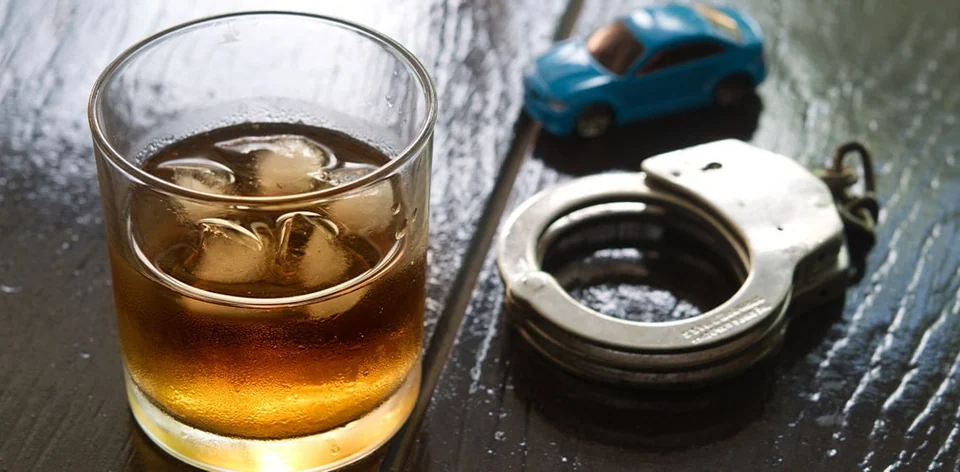
A DUI lawyer in Sacramento defends two cases that can start with one arrest. The criminal charge goes to Sacramento County Superior Court. The DMV opens a separate case against your license. That second case moves fastest: you have 10 days from receiving the suspension notice to request a DMV hearing.
Our law firm has been featured on






David Chesley in the news
Select a photo to enlarge







What happens in the first 10 days after a Sacramento DUI arrest?
If you want a DMV hearing before your suspension starts, you must ask for it within 10 days, while the criminal case follows the court date on your paperwork.
One arrest can open two files. The Sacramento County District Attorney decides what to file in court. The DMV's Driver Safety Branch decides what happens to your driving privilege. Neither office waits for the other. The DMV's DUI guidance calls the license side Administrative Per Se, or APS, and says its sanctions are "independent of any court-imposed jail sentence, fine, or other criminal penalty."
| When | What happens | Source |
|---|---|---|
| Day of the arrest | The officer can take a valid California license and issue a temporary license on the suspension notice, good for 30 days from the arrest | Vehicle Code 13382(b) |
| Within 48 hours, if you stay in custody | You must be brought before a judge, not counting Sundays and holidays | Penal Code 825(a)(1) |
| Within 10 days of receiving the notice | Last day to request a DMV hearing that is held before the suspension starts | Vehicle Code 13558(b) |
| 30 days after the notice is served | The DMV suspension takes effect | Vehicle Code 13353.3(a) |
| The date on your notice to appear | Your first court date, usually the arraignment | Penal Code 853.6 |
A mailed notice gets a slightly longer window. DMV's Fast Facts 26 hearing guide puts it this way:
Hearings must be requested within 10 days of receiving notice or 14 days from the date of the notice if the notice was mailed.
Wait past that window and Vehicle Code 14101(b) says you are not entitled to a hearing. The DMV can choose to hear a late request, but nothing requires it to. Asking for a hearing also does not pause the suspension on its own (Vehicle Code 13558(e)). The firm's answer on what to do after missing the 10-day DMV deadline covers the options that remain.
How do you request the DMV hearing from Sacramento?
You request it from DMV Driver Safety, not from the Sacramento court. DMV's Driver Safety Offices page lists one office, in El Segundo, at 390 N. Pacific Coast Highway, Suite 2075, El Segundo, CA 90245-4470, phone (833) 543-7703. Its hours are 8:00 a.m. to 5:00 p.m. on Monday, Tuesday, Thursday and Friday, and 9:00 a.m. to 5:00 p.m. on Wednesday. The same page points to an online case management system for notices, scheduling and document uploads.
DMV's administrative hearings page says hearings "are conducted remotely or in person" before a Driver Safety Hearing Officer, and a phone option appears on the hearing notice. The Fast Facts guide adds that the officer sits "instead of a judge." Ask for DMV's evidence, called discovery, at least 10 days before the hearing date. The firm's guide to remote DMV DUI hearings explains how a video or phone hearing runs. If your 10 days are almost gone, contact a Sacramento DUI defense lawyer the same day.
What should you say and do during a DUI stop in Sacramento?
Show your license, registration and proof of insurance, keep your answers short, and know the difference between the roadside breath test and the test after arrest.
California requires a driver to hand over three things when an officer asks: a license (Vehicle Code 12951(b)), the registration (Vehicle Code 4462(a)) and proof of insurance (Vehicle Code 16028(a)). Questions about where you were, or how much you drank, are different. The Fifth Amendment says no person shall be "compelled in any criminal case to be a witness against himself." You can politely decline to answer those questions.
Two different breath tests can come up, and the rules for each differ.
- The roadside screening test. The handheld device is a preliminary alcohol screening, or PAS, test. Vehicle Code 23612(h) treats it as a field sobriety test, and 23612(i) requires the officer to tell you that you may refuse it. Drivers under 21 and drivers already on DUI probation face their own suspension rules for refusing it.
- The chemical test after arrest. After a lawful DUI arrest, 23612(a)(1)(A) treats every driver as having consented to a blood or breath test. For alcohol, you may choose blood or breath. You have no right to speak with a lawyer before choosing or taking the test (23612(a)(4)), and a refusal can be used against you in court.
A low reading, or no reading, does not end the investigation. The DMV handbook warns that a driver may be arrested and convicted of a DUI even without a BAC measurement. An officer can also rely on how you were driving and on field sobriety tests such as the walk-and-turn.
Where is a Sacramento DUI case heard since the courthouse move?
Sacramento County hears DUI cases at the Tani G. Cantil-Sakauye Courthouse, 500 G Street, which replaced the old Gordon D. Schaber Courthouse in April 2026.
The Judicial Council's project page lists an occupancy date of April 13, 2026. It says the building "will hear criminal and civil case matters for court service to all residents of Sacramento County." It stands at the southwest corner of G Street and 6th Street, a few blocks from the old Schaber building.
The court's own facility listing gives the address as 500 G St., Sacramento, CA 95814, and names the criminal hearings held there:
Felony and misdemeanor trials (including criminal pretrial matters, DUI cases, and arraignments)
Criminal clerk hours are 8:30 a.m. to 4:00 p.m., Monday through Friday, at (916) 874-5522, option 1. The building holds 53 courtrooms on floors 3 through 17. A courtroom's number is its floor, and its letter runs from A on the west side to D on the east, so 3A sits on the west side of the third floor.
The court's Criminal Division page names a second criminal location, the Lorenzo Patiño Hall of Justice, which is the county's Main Jail building. It describes the division's work as spread across "two separate court facilities." Your notice to appear states the time and place of your first court date (Penal Code 853.6(a)(1)).
Since August 10, 2026, every Sacramento criminal case runs on a new case management system. The court's Criminal Case Portal lets you search by party name or case number, view calendars and check in for trials and preliminary hearings. Cases filed before that date may not have digitized documents. Public kiosks sit at the criminal front counter on the courthouse's second floor. To file a paper into a case that already exists, see the firm's answer on filing in an existing Sacramento criminal case.
For a misdemeanor, a lawyer can often appear in your place. Still, Penal Code 977(a)(3) lets the judge order a DUI defendant to attend the arraignment, the plea or sentencing in person. Skipping a required date can bring a bench warrant (Penal Code 978.5).
What happens at the Sacramento County Main Jail after a DUI arrest?
The Sheriff's Main Jail at 651 I Street holds people for the Sheriff's Office and outside agencies; release can follow bail, a signed citation, or a court appearance.
The Sheriff's inmate information page lists two adult facilities:
- Main Jail, 651 I Street, Sacramento, CA 95814, (916) 874-6752. The Main Jail page lists public hours of 7:00 a.m. to 11:00 p.m. daily.
- Rio Cosumnes Correctional Center, 12500 Bruceville Road, Elk Grove, CA 95757, (916) 874-1927.
The Sheriff says the Main Jail holds people "for the Sacramento County Sheriff's Office and other outside agencies," so people arrested by other agencies can be held there too. To find someone, search the Sheriff's system by name or by XREF number. The SIRENS service sends an email, text or phone alert when a person's custody status changes. Sign up from the custody record or by calling the jail at (916) 874-6752. Calls from inside run through Securus Technologies, at 1-800-844-6591, which also opens accounts for anyone who wants to accept those calls.
California law protects a few rights in these first hours:
- Phone calls. At least three completed calls right after booking, and no later than three hours after arrest where physically possible (Penal Code 851.5(a)(1)). A call to a lawyer may not be monitored or recorded.
- A lawyer's visit. Any California lawyer may visit at the request of the person or a relative (Penal Code 825(b)).
- Release on a citation. For many misdemeanors the officer must release the person on a written notice to appear, though 853.6(i) lists reasons to keep someone, such as an outstanding warrant.
- A judge within 48 hours. Someone who stays in custody must see a judge within 48 hours, not counting Sundays and holidays (825(a)(1)).
At a misdemeanor arraignment, a person still in custody gets own-recognizance release unless the judge states why release would endanger public safety or fail to reasonably ensure a return to court (Penal Code 1270(a)).
How is bail set for a Sacramento DUI?
Before a judge sees the case, bail follows the county's schedule; after that, the judge sets the amount and must weigh your ability to pay.
Under Penal Code 1269b(c), the county's superior court judges adopt a uniform bail schedule and revise it every year. The court's Criminal Division page links its current Felony and Misdemeanor Bail Schedule, updated November 2025, which sets the starting bail after an arrest without a warrant, before the person sees a judge. It lists $1,000 for a misdemeanor DUI with no prior and $5,000 with a prior; a DUI with three or more priors within 10 years is listed at $50,000, and a DUI causing injury to one person at $50,000. Have a lawyer confirm the scheduled amount for your exact charge, because the schedule is only a starting point.
Before arraignment, you, your lawyer, a friend or a family member can ask a judge for lower bail or for own-recognizance release (Penal Code 1269c), unless the charge is one listed in Penal Code 1270.1(a). If no order changes the amount within eight hours after booking, the scheduled bail can be posted.
Once a judge is involved, two California Supreme Court decisions shape the amount:
- In re Humphrey (2021). When money bail is needed, the court held that "the court must consider the arrestee’s ability to pay the stated amount of bail." The court added that judges should consider whether nonfinancial conditions of release could reasonably protect the public and the victim or reasonably assure a return to court.
- In re Kowalczyk (April 30, 2026). Bail "must generally be set in an amount that is reasonably attainable." The amount "need not be easily affordable or convenient to the defendant," and a person who says they cannot pay carries the burden "to support that allegation with reliable evidence."
Public safety remains the primary consideration when a judge sets, reduces or denies bail (Penal Code 1275(a)(1)). The firm's page on California bail amounts explains the schedule, the hearing and the bond options.
Who prosecutes a Sacramento DUI, and where are blood samples tested?
The Sacramento County District Attorney handles the county's misdemeanor calendars, and the DA's own crime lab analyzes blood, breath and urine samples for alcohol.
The District Attorney's Office is headquartered at 901 G Street, Sacramento, CA 95814, phone (916) 874-6218. On its prosecutions page, the DA lists a Misdemeanor Court Review unit that "handles the misdemeanor calendar departments and all misdemeanor appeals." A separate Misdemeanor Jury Trials unit "handles all misdemeanor cases set for trial in Sacramento." Vehicular homicides go to its Homicides unit.
The DA also runs the county's crime lab, listed at 4800 Broadway. Its toxicology page says the Alcohol section is "where biological samples such as blood, breath, urine, and tissue are analyzed for the presence of ethanol." A separate toxicology section tests blood and urine for drugs, including prescription and over-the-counter medicines.
Those records matter to the defense. How a sample was drawn, stored and tested can be examined through pretrial hearings and motions. A "blood split" motion asks the court to release part of the sample for an independent retest. Discovery rules require the prosecution to share the results of scientific tests it plans to offer at trial (Penal Code 1054.1(f)). Before any trial date, the defense can also open negotiations with the prosecutor.
Can the Sacramento County Public Defender take a DUI case?
If you cannot afford a lawyer, the court can appoint the Public Defender, whose Misdemeanor Division and felony divisions work from 700 H Street, Suite 0270.
The Public Defender's contact page lists its Administration, Misdemeanor Division and Felony and Major Crimes Divisions at 700 H Street, Suite 0270, Sacramento, CA 95814, (916) 874-6411. Office hours are 8:00 a.m. to 5:00 p.m., Monday through Friday, except holidays.
At arraignment, a judge must tell you about the right to a lawyer. If you want one and cannot afford one, the court must assign counsel (Penal Code 987(a)). The court may ask for a financial statement, signed under penalty of perjury. The Public Defender then defends "without expense to the defendant" (Government Code 27706(a)). You may still hire a private criminal defense lawyer at any stage.
What penalties can a DUI conviction bring in Sacramento County?
A first misdemeanor DUI carries 96 hours to 6 months in county jail and a $390 to $1,000 base fine; later offenses and injuries raise both.
Those first-offense numbers come from Vehicle Code 23536(a). If the judge grants probation, the fine stays mandatory and jail becomes optional, under Vehicle Code 23538(a)(1):
The court may also impose, as a condition of probation, that the person be confined in a county jail for at least 48 hours, but not more than six months.
A prior counts when the new offense happened within 10 years of an earlier DUI violation that led to a conviction. The table lists the base terms set by the DUI laws in force in November 2026.
| Conviction | County jail | Base fine | Felony option |
|---|---|---|---|
| First DUI, no injury (23536) | 96 hours to 6 months | $390 to $1,000 | None |
| Second within 10 years (23540) | 90 to 364 days | $390 to $1,000 | None |
| Third within 10 years (23546) | 120 to 364 days | $390 to $1,000 | None |
| Fourth within 10 years (23550) | 180 to 364 days | $390 to $1,000 | 16 months, 2 or 3 years under Penal Code 1170(h) |
| After a prior felony DUI within 10 years, or after certain vehicular manslaughter convictions with no time limit (23550.5) | Up to 364 days | $390 to $1,000 | State prison |
| First DUI causing injury (23554) | 90 to 364 days | $390 to $1,000 | State prison, 16 months, 2 or 3 years |
| Injury with one prior (23560) | 120 to 364 days | $390 to $5,000 | State prison |
| Injury with two or more priors (23566(a)) | At least 1 year if probation is granted | $1,015 to $5,000 | Felony only: 2, 3 or 4 years |
| Vehicular manslaughter while intoxicated, without gross negligence (Penal Code 191.5(b)) | Up to 364 days | Up to $1,000, or $10,000 as a felony (Penal Code 672) | 16 months, 2 or 4 years under Penal Code 1170(h) |
| Gross vehicular manslaughter while intoxicated (Penal Code 191.5(a)) | No county jail option | Up to $10,000 (Penal Code 672) | Felony only: 4, 6 or 10 years in state prison, or 15 years to life with a listed prior (Penal Code 191.5(d)) |
Each "364 days" figure comes from a statute that says "one year," read with Penal Code 18.5(a). A fourth offense, a DUI after a felony DUI within 10 years, and a first or second injury DUI are wobblers: the prosecutor can file them as felonies or misdemeanors, depending on the facts. The firm's pages on felony DUI and DUI causing injury go deeper.
Other terms can be added in specific cases:
- A breath or urine refusal that is pled and proven adds 96 hours, 10 days or 18 days on a second, third or fourth offense within 10 years (Vehicle Code 23577). On a first DUI without injury it adds no fixed jail, on a first DUI causing injury it adds 48 continuous hours, and it never applies to a blood test refusal.
- A child under 14 in the car, when pled and proven, adds jail time to a DUI without injury (Vehicle Code 23572).
- A blood alcohol level of 0.15% or more is a "special factor" the judge must consider at sentencing (Vehicle Code 23578).
- DUI probation usually lasts three to five years (Vehicle Code 23600(b)(1)), and its standard terms bar driving with any measurable alcohol in your blood.
Every DUI conviction also carries the advisement in Vehicle Code 23593: if you drive impaired again and someone dies, "you can be charged with murder." A death can also be charged as vehicular manslaughter while intoxicated under Penal Code 191.5, as the last two rows of the table show. Beyond the sentence, a conviction brings collateral consequences such as higher insurance costs and licensing problems.
How long can the DMV suspend your license after a Sacramento DUI?
For drivers 21 or older, the DMV's arrest suspension runs 4 months for a first test result of 0.08% or more, and a refusal brings 1 year or longer.
| Situation | DMV action | Section |
|---|---|---|
| First arrest with a test result of 0.08% or more | 4-month suspension | Vehicle Code 13353.3(b)(1) |
| Arrest with a prior within 10 years | 1-year suspension | Vehicle Code 13353.3(b)(2) |
| Refused or did not finish the chemical test | 1-year suspension; 2-year revocation with one prior within 10 years; 3-year revocation with two or more within 10 years | Vehicle Code 13353(a) |
| First DUI conviction | 6 months, or 10 months with the 9-month program | 13352(a)(1), 13352.1(a) |
| Second DUI conviction within 10 years | 2-year suspension | Vehicle Code 13352(a)(3) |
| Third DUI conviction within 10 years | 3-year revocation | Vehicle Code 13352(a)(5) |
| Fourth DUI conviction within 10 years | 4-year revocation | Vehicle Code 13352(a)(7) |
The arrest suspension and the conviction suspension run at the same time, and the total cannot exceed the longer of the two (Vehicle Code 13353.3(c)). The 9-month program, and the 10-month suspension that goes with it, applies to a first offender whose blood alcohol was 0.20% or more or who refused the test.
A first offender with a test-result suspension may still be able to drive, with limits. Once a test-result suspension takes effect, a driver 21 or older can apply for a license restricted to cars with an ignition interlock device (Vehicle Code 13353.6). Another route is to serve 30 days and then take a work and DUI program license for 5 months (Vehicle Code 13353.7). DMV's first offender flyer lists the paperwork, including proof of DUI program enrollment and an SR 22 insurance filing that must stay in place for 3 years.
No restricted license is issued during a refusal suspension (Vehicle Code 13353.4(a)). A drug-only case also follows different rules. DMV's drug-only offender flyer says those drivers are not subject to the test-result suspension at arrest, though a conviction suspension can still follow; a drug-only driver who refuses the blood test still faces the refusal suspension (Vehicle Code 13353(a)).
What is the Sacramento County DUI Treatment Court?
It is a voluntary court program for high-risk repeat DUI offenders, combining treatment, testing, probation supervision and frequent court dates for at least one year.
The District Attorney's DUI Treatment Court page says the program "was implemented in October 2017 to target high-risk repeat DUI offenders." It is a joint effort of the DA, the Superior Court, Probation, the county's behavioral health and alcohol and drug services, the Public Defender, the Sheriff and community providers. The DA lists its parts as counseling, self-help meetings, random drug testing, case management and probation supervision, and adds that the program "is a minimum of 1 year." Whether a case fits is a question to raise with your lawyer early.
It sits among several specialty courts. The DA's collaborative courts page also lists a Recovery Treatment Court, a Mental Health Court, a Prop 36 Court and a Veterans' Treatment Court. The court's Criminal Division page describes the idea plainly: "Instead of traditional sentencing, these courts focus on treatment and rehabilitation to reduce or eliminate future offenses."
Pretrial diversion is a different question, and for DUI the answer is usually no. Vehicle Code 23640 bars a court from pausing a DUI case so the defendant can attend a program. The Court of Appeal held in Tan v. Superior Court that the general misdemeanor diversion law applies "except when a defendant has been charged with a DUI." The clear exception is military diversion: Penal Code 1001.80(n)(1) reaches a misdemeanor DUI by a current or former service member who may be suffering from sexual trauma, traumatic brain injury, post-traumatic stress disorder, substance abuse or mental health problems as a result of military service, though the DMV can still act on the license. The firm's page on diversion programs compares the options.
Where do Sacramento drivers complete a court-ordered DUI program?
The state licenses seven DUI program locations in Sacramento County, and each one offers both the first-offender program and the 18-month multiple-offender program.
| Program | Address | Phone |
|---|---|---|
| Safety Center, Inc. | 3909 Bradshaw Road, Sacramento, CA 95827 | (916) 438-3360 |
| Safety Center, Inc. (satellite) | 10170 Missile Way, Mather, CA 95655 | (916) 438-3360 |
| Safety Center, Inc. | 4704 Roseville Road, Suite 102, North Highlands, CA 95660 | (916) 438-3360 |
| Safety Center, Inc. | 7777 Greenback Lane, Suites 204 and 206, Citrus Heights, CA 95610 | (916) 366-7233 |
| Terra Nova Drinking Driver Program | 2012 H Street, Suite 101, Sacramento, CA 95811 | (916) 444-5680 |
| Terra Nova Drinking Driver Program | 4700 Northgate Boulevard, Suite 122, Sacramento, CA 95834 | (916) 564-0600 |
| Bridges DUI Program | 4241 Florin Road, Suite 75, Sacramento, CA 95823 | (916) 840-7874 |
None of the seven listings is marked for the 30-month multiple-offender program. The state's DUI program page covers providers in other counties, and this list is not a recommendation of any provider.
Program length depends on the case. A first offender under 0.20% attends at least 3 months, with 30 hours of activities (Vehicle Code 23538(b)(1)). At 0.20% or more, or after a refusal, it is at least 9 months and 60 hours (23538(b)(2)). A second offense calls for an 18-month or 30-month program (Vehicle Code 23542(b)). Activities completed before the date of the offense earn no credit (23538(b)). The DMV will not reinstate a license until the program is finished and proof of insurance is filed (Vehicle Code 13352(a)(1)(A)).
Which defenses can a Sacramento DUI lawyer raise?
Common defense work tests the reason for the stop, how field sobriety tests were given, how breath or blood evidence was handled, and when the alcohol peaked.
- The reason for the stop. An officer needs a lawful reason to pull you over. Evidence that flows from an unlawful stop can be challenged with a motion to suppress (Penal Code 1538.5). See the firm's page on the illegal traffic stop and probable cause defense.
- Field sobriety tests. The eye test called horizontal gaze nystagmus is taught from a federal NHTSA manual with set instructions. A lawyer can question departures from those steps, the conditions at the scene or a medical condition that affects balance or eye movement.
- Breath and blood evidence. Breath and blood testing follow state Title 17 procedures. Records can show weaknesses in the breathalyzer test or a gap in how a blood sample was kept.
- Rising blood alcohol. Alcohol can keep rising after you stop driving, so a test taken later may read higher than your level behind the wheel. See the rising blood alcohol defense.
- The 0.05% to 0.08% range. A result in that band creates no presumption either way under Vehicle Code 23610(a)(2). The prosecution still has to prove impairment with other evidence.
Drug cases turn on different evidence. Vehicle Code 23152(f) sets no number for drugs, so the question is whether the driver was under the influence. A valid prescription is not a defense (Vehicle Code 23630). The firm's pages on drug DUI, marijuana DUI and prescription drug DUI cover those charges.
Some cases end in a plea to a lesser charge. A wet reckless is a reckless driving plea where the record states alcohol or drugs were involved (Vehicle Code 23103.5). It still counts as a prior for 10 years. Other lesser charges sometimes discussed include reckless driving and exhibition of speed. Any offer depends on the evidence and the prosecutor's view, and none is assured.
Could a Sacramento DUI affect immigration status?
It can. Two or more DUI convictions in the statutory period create a rebuttable presumption against good moral character, so get immigration advice before any plea.
The USCIS Policy Manual says that evidence of two or more DUI convictions during the statutory period "establishes a rebuttable presumption that an alien lacks GMC," meaning good moral character. That standard matters for naturalization. The manual also explains that the presumption can be overcome with strong contrary evidence.
California builds in a warning. Since January 1, 2026, a judge must read the immigration advisement in Penal Code 1016.5 word for word before taking a guilty or no contest plea to any misdemeanor or felony. It begins: "If you are not a citizen of the United States." Defense lawyers must also give accurate advice about the immigration effect of a proposed plea (Penal Code 1016.3).
A non-citizen driver can also see the firm's Sacramento immigration lawyer page for the separate immigration question. The firm's pages on DUI immigration consequences, plea deals and the citizenship application explain how a plea choice can carry over into an immigration file.
Can a Sacramento DUI be cleared from your record later?
A judge may dismiss a DUI conviction after probation under Penal Code 1203.4, but for DUI the relief is discretionary and the conviction still counts as a prior.
For DUI convictions, Penal Code 1203.4(c) makes dismissal a matter for the judge's discretion, granted "in the interest of justice." A Sacramento judge can grant it only after the probation period ends, and only if you are not then serving a sentence, on probation or charged with an offense (1203.4(a)(1)). A dismissed DUI can still be used to raise penalties in a later case (1203.4(a)(1)), and it does not undo any DMV suspension (Vehicle Code 13555). The court's portal includes a petition status check, so you can follow a filed petition online.
If you were arrested but never convicted, California's self-help center explains how to clear an arrest that did not lead to a conviction. A petition to seal the arrest is available under Penal Code 851.91. The California Department of Justice lets you request your own criminal history record to see what it shows. The firm's pages on expungement, sealing and destroying a criminal record and DUI expungement cover each route.
What does a Sacramento DUI lawyer cost?
Fees depend on the charge, any priors, whether there is a DMV hearing and whether the case goes to trial; the firm offers payment plans and a free consultation.
Legal fees are separate from court fines, program fees and insurance costs. Ignition interlock costs are scaled to income: at or below the federal poverty level, a driver pays 10 percent of the standard program cost (Vehicle Code 23575.3(k)(1)(A)). Ask about fees and payment terms at the free consultation, before you sign anything. The firm's page on DUI defense costs lists what usually affects the total.
America's Top 50 Lawyers lists David S. Chesley in its California DUI category. That is a third-party listing, not a prediction about any case. The firm's DUI case results are firm-published accounts, and each result depended on its own facts.
The firm's Sacramento office is at 770 L Street, Suite 950, Sacramento, CA 95814. Call ahead to confirm the appointment location. See the Sacramento location page for the address, phone number and local courts.
Sacramento DUI questions people ask
Is a Sacramento DUI a misdemeanor or a felony?
With no injury, a DUI is a misdemeanor unless it is a fourth within 10 years, comes within 10 years of a prior felony DUI, or follows certain vehicular manslaughter convictions; those, and a DUI that injures someone, can be filed either way (Vehicle Code 23550, 23550.5, 23554). Injury with two or more priors within 10 years is a felony (23566).
Can I keep driving after a Sacramento DUI arrest?
For a while, usually. If the officer gave you a suspension notice and your license was otherwise valid, its temporary license lasts 30 days from the arrest (Vehicle Code 13382(b)). After that, the suspension starts unless the DMV sets it aside. A first offender 21 or older with a test-result suspension can then apply for a restricted license with an ignition interlock.
Do I have to appear in person for a misdemeanor DUI?
Not always. In a misdemeanor case a lawyer can appear for you, and with your agreement many early hearings can be remote (Penal Code 977(a)(1)). In a DUI case, though, the judge may order you to be present for the arraignment, the plea or sentencing (977(a)(3)).
Does a DUI from another state count as a prior here?
Yes. Vehicle Code 23626 treats an out-of-state conviction that would be a DUI in California as a California DUI conviction. It can raise both the penalties and the license action in a new Sacramento case if it falls within 10 years of the new offense.
Can a Sacramento DUI be reduced to reckless driving?
Sometimes a prosecutor agrees to a reckless driving plea, called a wet reckless when the record notes alcohol or drugs (Vehicle Code 23103.5). It still counts as a prior for 10 years, and DMV says the reduction does not affect the arrest suspension. Whether it is offered depends on the evidence.
Can my blood sample be retested?
You can ask for it by motion. A blood split motion asks the court to release part of the sample to an independent lab. The DA's crime lab analyzes samples from DUI cases, so an outside retest can check its result. Ask early, before the case is set for trial.
What other DUI topics does the firm cover?
These guides apply statewide, including in Sacramento County. Start with the firm's California DUI lawyer page or its DUI defense practice overview.
- DUI Alcohol
- Boating Under the Influence
- Breathalyzer Test
- DUI Penalties
- Commercial Driver CDL DUI
- Disorderly Conduct
- Disturbing the Peace
- DMV Hearing Defense
- Driving with a Suspended License
- Driving Without a License
- Driving Without Insurance
- Drunk in Public
- DUI Accident Defense
- DUI and Professional Licenses in California
- DUI Blood Test Defense
- DUI Checkpoint Defense
- DUI in Construction Zones and School Zones
- DUI License Reinstatement
- DUI Probation Violation
- DUI Process: What to Expect
- DUI Trial and Jury Trial Defense
- DUI with Child Passenger
- Evasion
- First-Time DUI
- Fourth DUI Felony Escalation
- Hit and Run
- Hit and Run DUI
- Hit and Run with Injury or Death
- Ignition Interlock Device Violations
- Medical Conditions as a Defense to DUI
- Misdemeanor vs Felony DUI Overview
- Mouth Alcohol Defense to DUI
- Out-of-State DUI
- Public Intoxication
- DUI Refusal Cases
- Second Time DUI
- Street Racing
- Third DUI California
- Title 17 Violations of Breath and Blood Test Procedures
- Underage DUI
- Watson Murder and DUI Murder
Which nearby Sacramento County cities have their own DUI pages?
Arrests in Folsom and Elk Grove go to the same Sacramento County Superior Court, and each city has its own DUI page with local details.
Talk to a Sacramento DUI lawyer today
If you or someone you love was arrested for DUI in Sacramento County, act before the DMV's 10 days run out. The Law Offices of David S. Chesley offers a free consultation, answers calls 24/7 and offers payment plans. Se habla español.
Call (800) 755-5174 or tell us about your case online.
We also provide the following legal services in Sacramento, CA:
































