



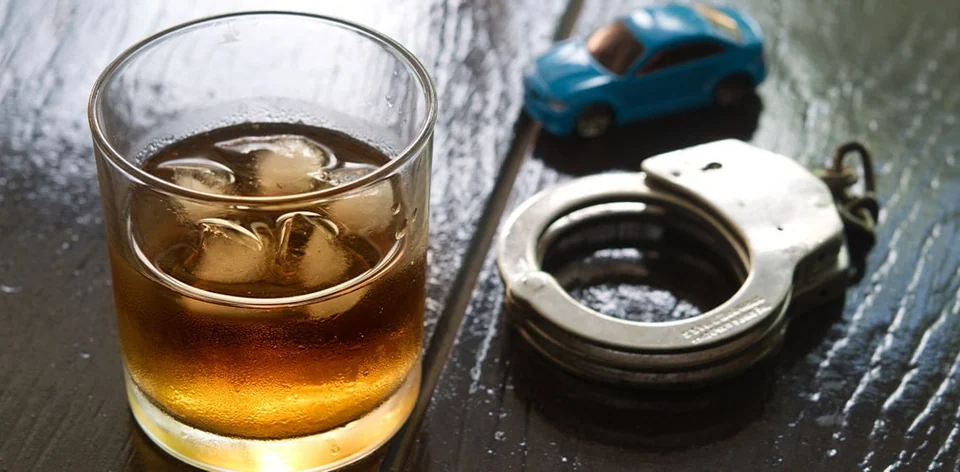
A DUI lawyer for a Folsom arrest works on two cases. The criminal charge is heard in downtown Sacramento, because the county's criminal courts are there, not in Folsom. The DMV runs a separate license case, and its clock gives you 10 days after you receive the suspension notice to ask for a hearing.
Our law firm has been featured on






David Chesley in the news
Select a photo to enlarge







What should you do in the first week after a Folsom DUI arrest?
In the first week, request the DMV hearing within 10 days, note your court date, keep the paperwork, and talk to a lawyer before speaking with anyone about the arrest.
- Find the suspension notice. If the officer took your California license, the notice serves as a temporary license for 30 days from the arrest (Vehicle Code 13382(b)). If no notice was handed to you, the DMV mails one to the address on its records (Vehicle Code 13353.2(b)).
- Count the DMV days. The hearing request is due within 10 days of receiving the notice (Vehicle Code 13558(b)). For a mailed notice, DMV's hearing guide counts 14 days from the date on the notice.
- Read the notice to appear. It sets the time and place of your first court date (Penal Code 853.6(a)(1)).
- Write down what happened. Note where you were stopped, which tests were offered and the times, while the details are fresh. Share them only with your lawyer.
- Stay quiet about the facts. You have the right to remain silent about where you were and what you drank. Statements to friends or on social media can become evidence.
- Get advice early. Contact a Folsom DUI defense attorney before the 10 days run out, so the hearing request is not missed.
Two DMV rules work in your favor if the criminal case falls apart. If you are acquitted, the DMV must reinstate the driving privilege it suspended because of the chemical test result; an acquittal does not lift a refusal suspension. And if prosecutors do not file for lack of evidence, or the court dismisses for insufficient evidence, Vehicle Code 13353.2(e) gives you a renewed right to a hearing:
The request for a hearing shall be made within one year from the date of arrest.
How do you reach the Folsom Police Department and get a police report?
The Folsom Police Department is at 46 Natoma Street, and its records portal takes report requests, though arrest reports not yet adjudicated may not be released.
The city's police department page lists the station at 46 Natoma Street, Folsom, CA 95630, with 911 for emergencies and (916) 461-6400 for business and non-emergency calls.
The department's records request page sends requests through its public records portal, called NextRequest. It asks how you are connected to the report, such as driver, witness or victim, and says the Records Division "has 10 days to respond." It also warns that not every report is public, naming "Arrest Reports not adjudicated and reports still under investigation" as examples.
So for a pending DUI, expect the arrest report, the test results and any video to come through the criminal case instead. Penal Code 1054.1(f) requires the prosecution to turn over the results of scientific tests it plans to offer at trial. In Sacramento County, the District Attorney's crime lab analyzes blood and breath samples from DUI cases, so its records can be part of that file.
Which court hears a Folsom DUI case?
Sacramento County's criminal courts sit downtown, so a Folsom DUI is heard in Sacramento, where the Tani G. Cantil-Sakauye Courthouse at 500 G Street lists DUI cases and arraignments.
The court's Criminal Division page describes its work as taking place in "two separate court facilities." Both are in downtown Sacramento: the Tani G. Cantil-Sakauye Courthouse and the Lorenzo Patiño Hall of Justice, the county's Main Jail building. The Judicial Council's courthouse project page says the new building serves "all residents of Sacramento County" and replaced the Gordon D. Schaber Courthouse, with occupancy in April 2026.
The court's listing for 500 G St. includes DUI cases, criminal pretrial matters and arraignments among the hearings held there. The building is open 7:00 a.m. to 5:00 p.m. on weekdays and closed on court holidays. The criminal clerk answers at (916) 874-5522, option 1. The court lists metered street parking and nearby public lots, including a county lot at 725 7th Street.
If an older notice names the Schaber courthouse, call the criminal clerk to confirm where to go. And plan the trip downtown with care: in a misdemeanor case your lawyer can appear for you at many hearings (Penal Code 977(a)(1)), but the judge can still require a DUI defendant to come in person for the arraignment, the plea or sentencing (977(a)(3)).
How can a Folsom driver follow the case online?
Since August 10, 2026, Sacramento criminal cases run on a new system. The court's public portal searches by party name or case number, shows calendars and handles check-in for trials and preliminary hearings. Older cases may not include digitized documents.
Where is someone held after a Folsom DUI arrest?
A Folsom arrest that leads to booking can end at the Sheriff's Main Jail at 651 I Street, which holds people for outside agencies as well as for deputies.
The Sacramento County Sheriff's Main Jail page says the jail serves "the Sacramento County Sheriff's Office and other outside agencies." Its address is 651 I Street, Sacramento, CA 95814, and its number is (916) 874-6752. The Sheriff's second adult facility is the Rio Cosumnes Correctional Center at 12500 Bruceville Road in Elk Grove. Family members can look someone up on the Sheriff's inmate information page by name or XREF number, and can sign up there for SIRENS custody alerts.
A person held in custody must be brought before a judge within 48 hours, not counting Sundays and holidays (Penal Code 825(a)(1)). On a misdemeanor, release on your own recognizance is the default at arraignment unless the judge finds on the record that release would compromise public safety or would not reasonably assure your return to court (Penal Code 1270(a)).
Before that hearing, bail follows the county's schedule, set by the court's judges and revised yearly (Penal Code 1269b). When a judge sets bail, two California Supreme Court rulings apply. In re Humphrey (2021) requires the judge to look at your ability to pay and at nonfinancial conditions before relying on money bail. In re Kowalczyk (2026) adds that the amount must generally be "reasonably attainable." A person who says they cannot pay a set amount must back that claim with reliable evidence.
If you want a lawyer and cannot afford one, the court must assign counsel at arraignment (Penal Code 987(a)), and the Public Defender then defends you "without expense to the defendant" (Government Code 27706(a)). The Sacramento County Public Defender's contact page lists its Misdemeanor Division and its Felony and Major Crimes Divisions at 700 H Street, Suite 0270, Sacramento, CA 95814, (916) 874-6411.
How does the DMV hearing work for a Folsom driver?
The hearing is a DMV proceeding, not a court case: a Driver Safety hearing officer decides a few narrow questions, remotely or in person, and cannot shorten the suspension.
For a test result of 0.08% or more, the hearing is limited to the facts listed in Vehicle Code 13557(b)(3). In plain terms, the officer asks three things:
- Did the officer have reasonable cause to believe you were driving under the influence?
- Were you lawfully arrested?
- Was your blood alcohol 0.08% or more?
A refusal hearing asks the same cause and arrest questions, plus whether you refused or failed to finish the test after the officer's request and whether you were warned of the license consequences. The officer cannot shorten the suspension period the Vehicle Code sets (13558(c)(2)). A restricted license is not decided at the hearing either; California DMV explains license consequences on its DUI page, where it answers that a restricted license request "cannot be considered at the DMV hearing."
The DMV's administrative hearings page says hearings are recorded and held remotely or in person, and that you may bring a lawyer at your own expense. DMV's Driver Safety Offices page lists one office, in El Segundo, phone (833) 543-7703, plus an online case system. Whatever the DMV decides has no binding effect on the criminal case (Vehicle Code 13558(g)).
If you lose, two deadlines follow. A request for a departmental review is due within 15 days of the decision's effective date (Vehicle Code 14105.5(a)), and the DMV says the review carries a $120 fee. A petition to a court is due within 30 days of the decision notice, and filing it does not stay the suspension (Vehicle Code 13559(a)).
What happens if you refuse a chemical test in Folsom?
A refusal after a lawful arrest brings a 1-year suspension the first time, no restricted license, and possible extra jail on an injury DUI or a repeat within 10 years.
After a lawful DUI arrest, California treats every driver as having agreed to a blood or breath test (Vehicle Code 23612(a)(1)(A)). The officer must warn you that a refusal can be used against you in court. That chemical test is different from the handheld roadside screening device, which the same section treats as a field sobriety test that drivers 21 and over who are not on DUI probation may decline. Even without any number, DMV's handbook notes a driver can be arrested and convicted if they aren't tested at all.
The license penalties for a refusal come from Vehicle Code 13353(a):
- First refusal: a 1-year suspension.
- One prior DUI conviction or suspension within 10 years: a 2-year revocation.
- Two or more within 10 years: a 3-year revocation.
No restricted or hardship license is issued during a refusal suspension (Vehicle Code 13353.4(a)). On a first DUI conviction, a refusal also means the longer 9-month DUI program and a 10-month conviction suspension. A breath or urine refusal that is pled and proven adds jail on a first injury DUI (48 continuous hours) and on a repeat conviction within 10 years: 96 hours on a second, 10 days on a third and 18 days on a fourth (Vehicle Code 23577). A blood test refusal is treated differently:
The penalties in this section do not apply to a person who refused to submit to or complete a blood test pursuant to Section 23612.
For a commercial driver, two refusals in separate incidents bring a lifetime disqualification from commercial driving (13353(b)). The firm's pages on DUI refusal cases and blood test defense go further.
What does a DUI conviction bring when probation is granted?
With probation, a first DUI requires the $390 to $1,000 fine, makes jail optional, and adds a 3-month or 9-month program; each prior within 10 years raises the minimum jail.
When a judge grants probation, its terms set the minimum jail, the interlock period and the license result. The table shows the floor the Vehicle Code sets for each level.
| Offense | County jail on probation | Interlock after an alcohol conviction | License after conviction |
|---|---|---|---|
| First (23538) | Optional, 48 hours to 6 months | No set term; one of three options | 6 months, or 10 months with the 9-month program |
| Second (23542) | 10 days, or 96 hours in two 48-hour blocks, up to 364 days | 12 months | 2-year suspension |
| Third (23548) | 120 to 364 days, or 30 days with a 30-month program if you ask and show good cause | 24 months | 3-year revocation |
| Fourth (23552) | 180 to 364 days, or 30 days with a 30-month program if you ask and show good cause | 36 months | 4-year revocation |
Every offense also carries a base fine of $390 to $1,000. Without probation, the minimum jail terms are higher: 96 hours to 6 months for a first offense under Vehicle Code 23536(a), then 90, 120 and 180 days at the low end for a second, third and fourth (23540, 23546, 23550). Each county jail maximum written as "one year" means 364 days under Penal Code 18.5. A first-offense jail term is served on days other than your regular work days (23536(b)). The second-offense rule on short jail terms reads:
A sentence of 96 hours of confinement shall be served in two increments consisting of a continuous 48 hours each. The two 48-hour increments may be served nonconsecutively.
Probation for a DUI usually lasts three to five years (Vehicle Code 23600(b)(1)), and the court cannot excuse the minimum jail or the minimum fine (23600(c)). A third conviction also brings a 3-year habitual traffic offender designation (23546(b)). The interlock terms in the table come from Vehicle Code 23575.3(h)(1) and apply to alcohol-involved convictions without injury; an alcohol-involved injury DUI carries longer terms, starting at 12 months for a first offense (23575.3(h)(2)). The DUI program runs at least 3 months for a first offender under 0.20%, or 9 months at 0.20% or more or after a refusal (Vehicle Code 23538(b)); a second offense calls for an 18-month or 30-month program (23542(b)). The DUI laws also bring collateral consequences outside court, such as insurance costs and professional license questions.
When can a Folsom DUI be filed as a felony?
A Folsom DUI becomes a possible felony when someone else is hurt, on a fourth offense in 10 years, or after a prior felony DUI within 10 years.
An injury case is charged under Vehicle Code 23153, which requires an unlawful act or a neglected duty while driving that causes the injury:
(a)It is unlawful for a person, while under the influence of any alcoholic beverage, to drive a vehicle and concurrently do any act forbidden by law, or neglect any duty imposed by law in driving the vehicle, which act or neglect proximately causes bodily injury to any person other than the driver.
- First injury DUI. A wobbler: 90 to 364 days in county jail, or 16 months, 2 or 3 years in state prison, plus a fine of $390 to $1,000 (Vehicle Code 23554).
- Injury DUI with one prior within 10 years. Also a wobbler, with 120 to 364 days in jail or state prison, and a fine that can reach $5,000 (Vehicle Code 23560).
- Injury DUI with two or more priors within 10 years. A straight felony: 2, 3 or 4 years in state prison (Vehicle Code 23566(a)).
- A death. Vehicular manslaughter while intoxicated without gross negligence carries up to 364 days in county jail or 16 months, 2 or 4 years (Penal Code 191.5(c)(2)); with gross negligence, it is 4, 6 or 10 years in state prison (191.5(c)(1)), or 15 years to life with certain prior convictions (191.5(d)). The section sets no fine, so Penal Code 672 allows up to $1,000 for a misdemeanor and $10,000 for a felony.
- More than one injured person. On a felony conviction, each additional injured victim can add one year, up to three (Vehicle Code 23558).
- Fourth DUI, or a DUI after a felony DUI within 10 years. Either can be filed as a felony or a misdemeanor (Vehicle Code 23550, 23550.5). As a felony, a fourth DUI carries 16 months, 2 or 3 years under Penal Code 1170(h). A DUI after certain vehicular manslaughter convictions can also be filed as a felony, with no 10-year window (Vehicle Code 23550.5(b)). See the firm's pages on fourth DUI felony escalation and felony DUI.
Leaving the scene makes things worse. Hit and run with an injury carries state prison or up to 364 days in jail, a fine of $1,000 to $10,000, or both (Vehicle Code 20001(b)(1)). With death or permanent, serious injury, the range rises to 2, 3 or 4 years in state prison or 90 to 364 days in county jail, with the same fine range (20001(b)(2)). See hit and run DUI and hit and run with injury or death. Every DUI conviction includes a warning under Vehicle Code 23593 that a later impaired-driving death can be charged as murder, which the firm covers on its Watson murder page.
Does a boating DUI near Folsom count as a DUI prior?
A boating-under-the-influence conviction is a separate Harbors and Navigation Code offense, but California counts it as a prior DUI for later driving cases.
The City of Folsom's own website lists the Folsom Lake Recreation Area among its visitor attractions. An arrest on the water falls under a different law, which reads:
(b)No person shall operate any vessel or manipulate water skis, an aquaplane, or a similar device while under the influence of an alcoholic beverage, any drug, or the combined influence of an alcoholic beverage and any drug.
That is Harbors and Navigation Code 655(b). Subdivision (c) sets a 0.08% limit for recreational vessels, and (d) sets 0.04% for other vessels. A first conviction carries a fine of up to $1,000, up to 6 months in county jail, or both (Harbors and Navigation Code 668(e)). A second within seven years raises the jail maximum to 364 days (668(f), read with Penal Code 18.5).
The bigger effect can come later. Under Vehicle Code 23620(b), a boating conviction under 655(b), (c), (d) or (e) is a separate violation of Vehicle Code 23152 for the driving DUI rules. A boating case within 10 years can turn a later road DUI into a second offense. The firm's page on boating under the influence explains the charge.
Can you drive to work while your license is suspended?
Often: after a test-result suspension starts, a first offender 21 or older can apply for an ignition interlock license, or wait 30 days for a 5-month work and program license.
Those two options come from Vehicle Code 13353.6 and 13353.7, and they apply to drivers 21 and older with a test-result suspension, not a refusal. After a first conviction without injury, Vehicle Code 23575.3(h)(1)(A) allows only one of three paths: a court-ordered interlock for up to 6 months, a work and program license for 12 months under 13352.4, or an interlock-restricted license. A first alcohol-involved injury DUI instead requires an interlock for 12 months (23575.3(h)(2)(A)). After a second or later conviction, a restricted license generally requires an interlock if alcohol was involved; for a drug-only conviction, 12 months of the suspension must pass first.
Interlock costs are scaled to income. The law caps the share of the standard program cost a driver pays:
| Income compared with the federal poverty level | Share of standard cost |
|---|---|
| At or below 100% | 10% |
| 101% to 200% | 25% |
| 201% to 300%, or receiving CalFresh | 50% |
| 301% to 400% | 90% |
| Above 400% | 100% |
A few limits catch people off guard. Anyone with an interlock restriction may not ride a motorcycle during it (23575.3(o)(5)). A commercial driver must downgrade to a Class C license to get a restricted license, according to the DMV. And driving on a license suspended for a DUI conviction, when you know of the suspension, is its own crime, with 10 days to 6 months in jail on a first conviction (Vehicle Code 14601.2). The firm's pages on DUI license reinstatement, interlock violations and driving with a suspended license cover the details.
Is there a treatment court or diversion option in Sacramento County?
The county's collaborative courts include a DUI Treatment Court for high-risk repeat offenders, but California bars pretrial diversion for DUI charges, with an exception for military diversion.
The District Attorney describes the Driving Under the Influence Treatment Court as a voluntary program that started in October 2017. It pairs counseling and testing with probation supervision and frequent court dates, and it lasts at least a year. The firm's Sacramento DUI lawyer page covers DUI cases across the rest of the county.
Diversion before trial is a different matter. Vehicle Code 23640 stops a court from pausing a DUI case for a program, and the Court of Appeal in Tan v. Superior Court read the general misdemeanor diversion law the same way. A current or former service member who may be suffering from sexual trauma, traumatic brain injury, post-traumatic stress disorder, substance abuse or mental health problems from their service can still ask about military diversion for a misdemeanor DUI under Penal Code 1001.80(n)(1). The DMV can still act on the license either way. See the firm's overview of diversion programs.
Which defenses fit the evidence in a Folsom DUI case?
The right defense depends on the evidence: the stop or checkpoint, the field tests, the breath or blood result, and any medical or timing issue.
- Stops and checkpoints. A stop needs a lawful basis, and a checkpoint has its own rules. The firm's DUI checkpoint defense page explains them. Evidence from an unlawful stop can be challenged through pretrial motions, including a motion to suppress (Penal Code 1538.5).
- Field tests. The eye-tracking test known as horizontal gaze nystagmus comes from a federal NHTSA training manual. How an officer gave it, and the other field sobriety tests, can be tested on cross-examination.
- Breath results. Problems can include mouth alcohol and weaknesses in the breathalyzer test, along with the state's Title 17 testing rules.
- Blood results. A "blood split" motion asks for part of the sample so an independent lab can retest it.
- Timing and health. Alcohol can still be rising at the time of a later test; see rising blood alcohol. The firm's page on medical conditions explains when a health problem can be mistaken for impairment.
Drug cases follow a different path. No blood level defines a drug DUI under Vehicle Code 23152(f), and a valid prescription is no defense (Vehicle Code 23630). See drug DUI, marijuana DUI and prescription drug DUI.
Cases can also be resolved through negotiations with the prosecutor. Possible lesser pleas include a wet reckless, plain reckless driving or exhibition of speed. A wet reckless still counts as a prior for 10 years (Vehicle Code 23103.5(c)), and no plea offer is assured.
How can a DUI affect immigration status or a license to work?
A DUI plea can reach beyond court: two or more DUI convictions during the statutory period create a rebuttable presumption against good moral character for naturalization.
That rule appears in the USCIS Policy Manual, which treats two or more DUI convictions in the statutory period as a rebuttable presumption that the applicant lacks good moral character. Before any plea to a misdemeanor or felony, a California judge must read the immigration advisement in Penal Code 1016.5 word for word, and defense counsel must give accurate advice about immigration consequences (Penal Code 1016.3(a)). Non-citizen drivers can see the firm's Sacramento County immigration lawyer page, its page on DUI immigration consequences and its guide to the citizenship application process.
Work licenses raise their own questions. A nurse, contractor or other licensee should read the firm's page on DUI and professional licenses in California before deciding how to resolve the case. Commercial drivers should also review the CDL DUI rules.
Can a Folsom DUI arrest or conviction be cleared later?
Yes, in part: a judge may dismiss a DUI conviction after probation, and an arrest that never led to charges can qualify for sealing or automatic relief.
For a conviction, Penal Code 1203.4 dismissal is up to the judge in a DUI case (1203.4(c)), and only for someone not then serving a sentence, on probation or charged with an offense. The dismissed case still counts as a prior if you are charged again, and the DMV's actions stand (Vehicle Code 13555). See the firm's pages on expungement and DUI expungement in California.
For an arrest that went nowhere, there are three routes:
- A petition to seal an arrest that did not end in a conviction (Penal Code 851.91). California's self-help site explains the steps for an arrest without a conviction.
- Automatic relief from the state Department of Justice in listed cases, including a misdemeanor arrest where "the charge was dismissed" (Penal Code 851.93(a)(2)(A)).
- A petition to the arresting agency, when no charge was ever filed, asking it to find you factually innocent and then seal and destroy its arrest records (Penal Code 851.8).
To see what your record shows, the Department of Justice lets you request a copy of your own record with fingerprints and a $25 processing fee, unless a fee waiver applies. The firm's page on how to seal and destroy a criminal record covers the court side.
What does it cost to defend a Folsom DUI?
Cost depends on whether the case is a first offense, whether you want the DMV hearing, and whether it settles or goes to trial; payment plans are available.
Plan for more than legal fees. Court fines, the DUI program, an interlock device and an SR 22 insurance filing each add their own cost. The firm's page on DUI defense costs walks through them, and a free consultation is the place to ask about fees and payment terms.
David S. Chesley appears in the California DUI category of America's Top 50 Lawyers, an outside listing that says nothing about how any case will end. The firm also publishes recent DUI case results; each one turned on its own facts.
For an in-person meeting, the firm has a downtown Sacramento office at 770 L Street, Suite 950. Call before visiting to confirm the appointment location, or see the Sacramento office page.
Folsom DUI follow-up questions
How soon is the first court date after a Folsom DUI arrest?
If you were cited and released, the notice to appear sets the date, and unless you waive it the date is at least 10 days after the arrest when the officer files the notice (Penal Code 853.6(b)). Prosecutors may file within 25 days, but a later filing can still happen with a new citation or a warrant.
Can I leave California while my DUI case is open?
Check your release terms first. A person released on their own recognizance signs a promise not to leave the state without the court's permission (Penal Code 1318(a)(3)). Talk to your lawyer before any trip, and never miss a court date for travel.
How many points does a DUI add to a California driving record?
Two. Vehicle Code 12810(b) gives a DUI conviction under 23152 or 23153 a value of two points on your DMV record, separate from the suspension itself.
What if I never received a DMV suspension notice?
If the officer did not serve one, the DMV mails the notice to the address on its records (Vehicle Code 13353.2(b)). DMV's hearing guide counts 14 days from the date on a mailed notice. Keep your DMV address current, and ask a lawyer to check the timing.
Do I need a lawyer for the DMV hearing?
No, but you may bring one. DMV says you have the right to an attorney or other representative at your own expense, and that you are not required to have one. A lawyer can request the evidence early and question the officer's report.
What if the driver arrested in Folsom is under 21?
Stricter rules apply. A driver under 21 with a blood alcohol of 0.01% or more violates Vehicle Code 23136(a), and DMV says the result is a one-year suspension. A regular DUI charge is still possible at 0.08% or more.
Where can you read more about DUI charges and penalties?
These guides apply across California, including Folsom. The firm's California DUI lawyer page is the hub, and its DUI defense practice page links its guides to each charge.
Charges and penalties
- First-Time DUI
- Second Time DUI
- Third DUI California
- Misdemeanor vs Felony DUI Overview
- DUI Causing Injury
- DUI Accident Defense
- DUI with Child Passenger
- Underage DUI
- Out-of-State DUI
- DUI in Construction Zones and School Zones
- DUI Probation Violation
- DUI Penalties
- DUI Alcohol
Court and DMV
- DMV Hearing Defense
- DUI Process: What to Expect
- DUI Trial and Jury Trial Defense
- Driving Without a License
- Driving Without Insurance
- Illegal Traffic Stop and Probable Cause Defense
Related offenses
- Hit and Run
- Street Racing
- Evasion
- Drunk in Public
- Public Intoxication
- Disorderly Conduct
- Disturbing the Peace
Which nearby DUI page covers the rest of Sacramento County?
The firm's Sacramento DUI page covers DUI cases in the county seat, and Folsom cases use the same court and the same District Attorney. For charges beyond DUI, see the firm's California criminal defense page.
Get a free consultation about a Folsom DUI
A Folsom DUI moves on two clocks, and the DMV's is the shorter one. The Law Offices of David S. Chesley offers a free consultation, takes calls 24/7 and offers payment plans. Se habla español.
Call (800) 755-5174 or get in touch online.
We also provide the following legal services in Folsom, CA:
































