



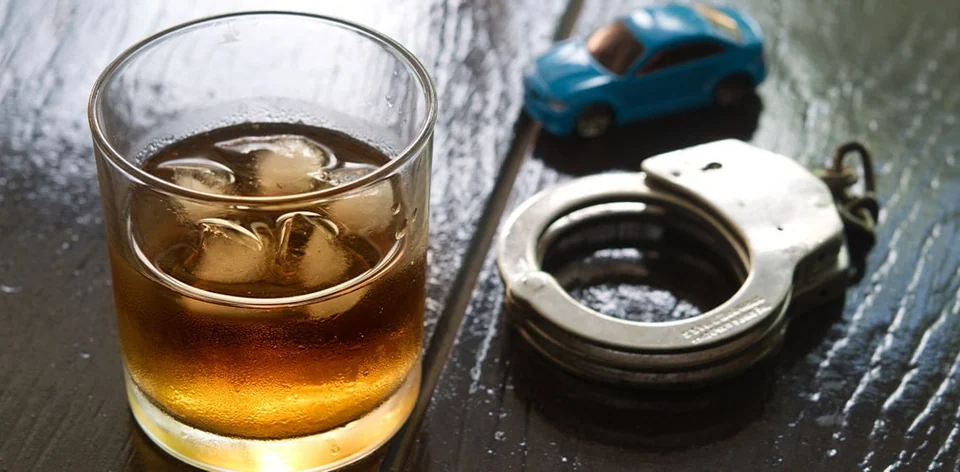
A DUI lawyer in Woodland Hills defends people arrested for driving under the influence in this San Fernando Valley community, where one arrest can open both a criminal court case and a DMV license case. The two run on their own clocks, and missing the DMV's 10 day deadline can cost a hearing even if the court case goes well.
Our law firm has been featured on






David Chesley in the news
Select a photo to enlarge







What two legal cases can start after a Woodland Hills DUI arrest?
An arrest can start a criminal prosecution in court and, separately, an Administrative Per Se action against the license at the DMV, each running on its own schedule.
The California DMV explains license consequences this way: its suspension is an immediate administrative step against driving privileges only, independent of whatever a court later imposes. An officer can arrest you even on a result below the legal limit, or if you refuse to be tested at all, based on field sobriety observations. A dismissal in criminal court does not automatically give the license back, and a DMV win does not end the prosecution; both sides have to be worked, usually by the same lawyer, from the first week forward.
The firm's statewide DUI defense practice treats these as one coordinated case rather than two unrelated problems, since a choice made early on one side, such as what a client says at a DMV hearing, can affect the other side later.
Which court hears a Woodland Hills DUI charge?
For Woodland Hills ZIP code 91367, the court's rules point to its Northwest District, where criminal cases are heard at Van Nuys Courthouse West, not the East building.
The court's own local rules list zip code 91367 as a Northwest District zip and name no other Woodland Hills zip; the only carve out moves certain family law filings elsewhere, not criminal complaints. The Northwest District's criminal courthouse is Van Nuys Courthouse West, 14400 Erwin Street Mall, Van Nuys, CA 91401; Van Nuys Courthouse East at 6230 Sylmar Avenue is a different building in the same district, used for other calendars rather than criminal arraignments. The Los Angeles County Public Defender keeps its own office inside the West courthouse building, (818) 374-2350, available to anyone who wants to speak with a lawyer before their first appearance there and cannot afford one. Your citation or release papers usually name the court and the date and time of the first appearance, and the court's case search shows the department; the firm's criminal defense page explains how a case is defended from that first appearance on.
Who prosecutes a DUI charge arising in Woodland Hills?
Woodland Hills is part of the City of Los Angeles, so the Los Angeles City Attorney, not the County District Attorney, prosecutes a misdemeanor DUI here.
The County District Attorney's own office page says it prosecutes misdemeanors in all cities except a short list, and Los Angeles is on that list, so a standard first through third DUI without injury stays with the City Attorney. The District Attorney still prosecutes any DUI filed as a felony, regardless of where in the county it happened.
What happens at booking, and how is bail decided?
LAPD's Topanga Division covers Woodland Hills, and Los Angeles County's own 2026 release rules put a standard DUI arrest on a path to release without money bail in most cases.
Under the Los Angeles Superior Court's 2026 Misdemeanor Bail Schedule, effective January 1, 2026, and its Pre-Arraignment Release Protocol, a Vehicle Code 23152 arrest is coded for Book and Release: $0 bail, no financial condition required, released on a promise to appear once booked. Two listed add ons, a blood alcohol result over 0.15% and a chemical test refusal, stay in that same Book and Release category; a DUI with two or more prior convictions within 10 years, and any DUI that injured someone (Vehicle Code 23153), move instead to Magistrate Review, where a judicial officer applying Penal Code 1275 and the state constitution's bail provisions decides between own recognizance release, release on $0 bail with conditions, or holding the person until arraignment on clear and convincing evidence that no less restrictive option would reasonably protect the public, the victim or the person's return to court, the same standard the California Supreme Court set out in In re Humphrey (2021) 11 Cal.5th 135. For any case where money bail is still set, In re Kowalczyk (April 30, 2026) holds that the amount must generally be reasonably attainable for that specific person, a standard the court itself distinguishes from easy convenience. Booking itself happens at an LAPD jail; the nearest to Woodland Hills is the Valley Jail Section inside the Van Nuys station, 6240 Sylmar Avenue, Van Nuys, CA 91401, though LAPD operates two other citywide jail facilities as well, so the jail used can vary. Families can confirm custody status, day or night, by calling (213) 473-6100, which covers people held at either an LAPD or a Los Angeles County Sheriff's Department jail.
What is the DMV's 10 day deadline, and what does it actually control?
You have 10 days from receiving the suspension notice to request a DMV hearing that happens before the suspension takes effect, and missing that window ends the right to one.
That rule is in Vehicle Code 13558(b); once the 10 days pass, Vehicle Code 14101(b) removes the right to that hearing, though DMV may still choose to accept a late request. A hearing request alone does not stop the suspension (Vehicle Code 13558(e)), and the hearing is held before a Driver Safety hearing officer, not a judge, remotely or in person. DMV's current page lists a single statewide location for anyone who wants to reach Driver Safety directly rather than use its online system: the El Segundo Driver Safety Office, 390 N. Pacific Coast Highway, Suite 2075, El Segundo, CA 90245, phone (833) 543-7703. DMV's administrative hearing page explains the process and the driver's rights at the hearing.
What are the criminal penalties for a DUI conviction?
Without probation, a first conviction brings 96 hours to 6 months in county jail and a $390 to $1,000 fine; repeat and injury convictions carry longer ranges.
| Offense | County jail or prison | Fine |
|---|---|---|
| First offense (Vehicle Code 23536) | 96 hours (48 continuous) to 6 months county jail | $390 to $1,000 |
| Second offense within 10 years (Vehicle Code 23540) | 90 days to 364 days (Penal Code 18.5) | $390 to $1,000 |
| Third offense within 10 years (Vehicle Code 23546) | 120 days to 364 days | $390 to $1,000 |
| Fourth or later offense within 10 years (Vehicle Code 23550) | 180 days to 364 days, or a felony term of 16 months, 2 or 3 years | $390 to $1,000 |
| First DUI causing injury (Vehicle Code 23554) | 90 days to 364 days, or a felony term of 16 months, 2 or 3 years | $390 to $1,000 |
| DUI causing injury, two or more priors (Vehicle Code 23566) | Felony: 2, 3 or 4 years in state prison | $1,015 to $5,000 |
| Gross vehicular manslaughter while intoxicated (Penal Code 191.5(a)) | Felony: 4, 6 or 10 years in state prison, or 15 years to life after a listed prior DUI or vehicular manslaughter conviction (Penal Code 191.5(d)) | Up to $10,000 |
Each 364-day figure above comes from a statute that says "one year"; Penal Code 18.5 caps that at 364 days. When a first DUI ends in probation, the $390 to $1,000 fine is still required, while any jail becomes optional and, if ordered, runs 48 hours to 6 months (Vehicle Code 23538(a)(1)). Refusing the breath or urine test, when pled and proven, adds its own jail time on conviction under Vehicle Code 23577: none fixed for a first standard DUI, 48 continuous hours for a first injury DUI, then 96 hours, 10 days and 18 days for a second, third or fourth DUI within 10 years. A wet reckless, a plea to reckless driving with an admitted alcohol or drug connection, is a separate reduced outcome some cases reach instead, though it still counts as a prior DUI for 10 years and does not touch the DMV's own arrest suspension. Every DUI or wet reckless conviction also comes with the so called Watson advisement, a required warning that driving under the influence again and causing a death could lead to a murder charge; the court must give it, either in a plea form or with the advice noted on the record (Vehicle Code 23593).
How long is your license suspended after a conviction?
A first conviction brings a 6 month suspension, or 10 months with the longer 9 month program, and the arrest suspension runs alongside it rather than adding to it.
Vehicle Code 13352(a)(1) sets six months for a first conviction, extended under 13352.1(a) only when the court orders the 9 month program because the blood alcohol level was 0.20% or more or the person refused the test. The conviction suspension and any arrest (APS) suspension run concurrently, and the combined total never exceeds the longer of the two. On the arrest side alone, for a driver 21 or older a first APS suspension under a test result is four months and a second or later one within 10 years is a full year; a driver under 21 found to have driven with 0.01% or more (Vehicle Code 23136) faces at least one year. A refusal is its own, separate suspension track: one year for a first refusal, two years with a qualifying prior within 10 years, three years with two or more, and no restricted license is available during a refusal suspension. An acquittal on the criminal charge makes DMV lift a test result suspension it already imposed, though it never undoes a separate refusal suspension, and a dismissal for insufficient evidence gives a renewed hearing right for one year from the arrest.
What happens if you refuse the chemical test?
Refusing the breath or blood test after a lawful DUI arrest brings its own DMV suspension, separate from and usually longer than an ordinary test result suspension.
Implied consent law treats anyone lawfully arrested for DUI as having already agreed to a blood or breath test, with the choice between the two left to the driver (Vehicle Code 23612). That is different from the roadside preliminary alcohol screening test: an adult driver who is 21 or older and not on DUI probation may decline that earlier screening test, though the officer can still rely on field sobriety observations to justify the arrest. Refuse the actual chemical test after arrest and DMV suspends driving privileges for one year on a first refusal, two years with a qualifying prior within 10 years, and three years with two or more, and no restricted license is available for the length of a refusal suspension. If a breath or urine refusal is pled and proven in the criminal case, it adds its own jail time on conviction, scaled to how many prior DUIs within 10 years the person already has, though a first standard DUI without injury gets no fixed extra jail for the refusal itself. An attorney can review whether the arrest itself was lawful before assuming a refusal finding will stand.
Can you get a restricted license while suspended?
Often yes, at 21 or older with a test-result suspension: an interlock license is available, and first offenders can choose a work and program license instead.
An ignition interlock device lets a driver operate any vehicle equipped with the device; California's DMV describes this option as available once the suspension period under Vehicle Code 13353.3 begins. For a driver with no DUI-related conviction or DMV DUI suspension in the prior 10 years, a work and program restriction instead starts after an initial 30 day suspension and runs for 5 months, limited to driving for work and the required DUI program. After a conviction, the court can also order an ignition interlock device for up to 6 months on a first offense, and it becomes mandatory on an alcohol involved second or later conviction, running 12, 24 or 36 months depending on how many priors are involved. None of this applies to a refusal suspension, which carries no restricted license option at all, and a commercial license holder must first downgrade to an ordinary Class C license before any restricted license becomes available.
What is the court ordered DUI program, and how long does it last?
A first offender's licensed program lasts at least 3 months, or at least 9 months when the blood alcohol level was 0.20% or more or the driver refused.
Vehicle Code 23538(b) sets the shorter program at 30 hours of activities and the longer one at 60 hours, and no credit is given for program activities completed before the current arrest date. No program on the county's own approved list is physically located inside Woodland Hills; the nearest options on the county's current list are California Diversion Programs, 21054 Sherman Way, Suite 205, Canoga Park, CA 91303, (818) 716-0188, and the Safety Education Center, 18700 Sherman Way, Suite 117, Reseda, CA 91335, (818) 708-1198. Failing to enroll in, participate in or complete the assigned program can lead the court to revoke probation absent good cause shown, so confirm the exact enrollment deadline with the assigned program directly rather than assuming it matches the sentencing date.
What defenses come up in a Woodland Hills DUI case?
Common Woodland Hills DUI defenses test the reason for the stop, the field sobriety tests, the breath or blood evidence, or whether blood alcohol was still rising.
- The stop. An officer needs a lawful reason to pull you over in the first place.
- Field sobriety tests. The walk and turn and one leg stand reflect an officer's own judgment, not a chemical reading; see the firm's page on field sobriety tests.
- Breath and blood evidence. Equipment has to be calibrated and used correctly, which discovery can confirm, and a blood split motion allows an independent retest; see the page on weaknesses in the breathalyzer test.
- Rising blood alcohol. A level can keep climbing after driving stops, so a later test can read higher than the actual driving BAC.
Throughout the stop you keep the right to remain silent; you must show license, registration and insurance on request, but you never have to explain where you were or what you drank, and anything volunteered beyond those documents can become evidence later. None of these defenses depends on admitting guilt first; a lawyer can raise more than one at the same time where the facts support it, and the order they get raised in a specific case is a judgment call that depends on the police report and the test results actually obtained.
Does a drug DUI charge work differently?
Yes: Vehicle Code 23152 also reaches driving under a drug or a drug and alcohol combination, with no numeric limit and different evidence than a breath test.
Because there is no roadside breath test for most drugs, these cases usually rest on a blood draw, an officer's observations and sometimes a Drug Recognition Expert. Using a drug legally, including a valid prescription, is not itself a defense if it actually impaired driving. The firm separately covers marijuana DUI and prescription drug DUI on their own pages, alongside its broader drug DUI guide.
Can a Woodland Hills DUI be diverted instead of prosecuted in the normal way?
Generally no; California law blocks the usual pretrial diversion programs for a DUI, with one narrow exception for current or former military service members.
Vehicle Code 23640 bars a court from suspending a DUI case for a treatment program and then dismissing it, and published appellate decisions hold that ordinary misdemeanor judicial diversion does not reach DUI either. Penal Code 1001.80(n)(1) is the one real exception, letting a misdemeanor DUI go to military diversion when a current or former service member may be suffering from sexual trauma, a traumatic brain injury, post traumatic stress disorder, substance abuse or a mental health problem connected to service; DMV can still act on the license either way. The firm's overview of diversion programs explains which routes actually exist.
Why does a non-citizen need immigration advice before resolving a DUI?
A plea can carry immigration consequences, so before a plea to a misdemeanor or felony, California requires a word for word court warning and accurate advice from defense counsel.
Before accepting a guilty or no contest plea to any offense other than an infraction, the judge must read the immigration advisement in Penal Code 1016.5 word for word on the record, and Penal Code 1016.3 separately requires defense counsel to give accurate, affirmative advice about that plea's immigration effects. For a naturalization applicant specifically, USCIS's own Policy Manual states that evidence of two or more DUI convictions during the statutory period establishes a rebuttable presumption that the person lacks good moral character, which can be overcome with strong contrary evidence; a single DUI is simply weighed with the rest of the record. See the firm's Woodland Hills immigration lawyer page, its guide to DUI immigration consequences, and its page on the citizenship application process. A proposed plea should go past immigration counsel before it goes anywhere else, and that review should happen before the plea is entered, not after, since a court generally will not undo an already accepted plea just because a consequence came as a surprise.
Can a Woodland Hills DUI be cleared from your record later?
A conviction can sometimes be dismissed after probation, at the judge's discretion rather than automatically, and an arrest that never led to a conviction can often be sealed outright.
For DUI, Penal Code 1203.4 relief sits with the judge rather than happening on its own: it can be granted after probation is completed or ends early, or when the court finds it in the interest of justice, and only while the person is not serving a sentence, on probation or charged with another offense. A dismissed DUI still counts as a prior if a new one happens within 10 years, and it leaves the DMV's own suspension untouched. Someone who was found not guilty, or never charged, can use California's own self help steps for an arrest with no conviction attached. The firm's pages on sealing your records, on how to expunge a conviction and on DUI expungement in California cover each step, and the Department of Justice's record review process lets you see what your state record shows before you clean it up.
What does a DUI defense cost, and where is the firm's Woodland Hills office?
The firm offers a free consultation on a Woodland Hills DUI charge, available by phone around the clock, with fees that depend on the charge level and any priors.
The firm's Woodland Hills office is at 5850 Canoga Avenue, Suite 400, Woodland Hills, CA 91367, phone (818) 812-5705; see the criminal defense overview for how the firm works a case from arrest forward. Fees are not fixed in advance because the work itself is not the same from case to case: a book and release first offense without an accident takes a different amount of attorney time than a felony injury case headed toward a jury trial. Ask about the firm's payment plans at the free consultation, before any representation begins. David S. Chesley appears in the DUI category for California on America's Top 50 Lawyers, a membership directory that calls its own selections subjective, and the firm's published DUI case results are its own accounts, each tied to the facts of that particular case, not a prediction for a new client's outcome.
Where can you read about other DUI situations the firm handles?
The firm's statewide DUI defense coverage reaches well beyond the facts above, organized here by the kind of situation each page answers.
Stops, testing and evidence
- Challenging the traffic stop itself
- DUI checkpoint stops
- Problems with a blood draw
- Title 17 testing procedure violations
- Rising blood alcohol after driving
- Mouth alcohol and false breath readings
- A medical condition mistaken for impairment
Repeat offenses and felony exposure
- A first DUI arrest
- A second DUI within 10 years
- A third DUI in California
- When a fourth DUI becomes a felony
- Defending a felony DUI
- Misdemeanor versus felony DUI
- An out of state driver's license
- A driver under 21
- A prior DUI and a later death, the Watson rule
Crashes, flight and related driving charges
- A DUI that injured someone
- A DUI collision
- Leaving the scene of a DUI crash
- A hit and run charge on its own
- A hit and run causing injury or death
- Fleeing from police
- A reckless driving charge
- Street racing
- An exhibition of speed charge
- Boating under the influence
License, employment and probation
- Getting a license back
- Driving on a suspended license
- Driving without a valid license
- Driving without proof of insurance
- An ignition interlock device violation
- A DUI probation violation
- A commercial driver's license at risk
- A professional license at risk
- How a license action can spread to a career license
Public conduct and zone related charges
- Being drunk in public
- A public intoxication charge
- Disorderly conduct
- Disturbing the peace
- DUI in a construction or school zone
- A child passenger in the car
- Alcohol related DUI generally
The process itself
- What to expect through the whole case
- Taking a DUI to a jury trial
- A test refusal case
- A fuller look at California's DUI statutes
- What a DUI defense actually costs
- Pretrial motions generally
- Negotiating with the prosecutor
- Fighting the DMV side of the case
Those statutes are also summarized on the Legislature's own page for Vehicle Code 23152 and read in context in a general explanation of California DUI charges and its section on Woodland Hills area DUI criminal penalties, alongside the standardized field testing manual regulators use, the one leg stand and walk and turn training manual.
Questions Woodland Hills drivers ask about a DUI arrest
Do I really have to deal with both the court and the DMV?
Yes, after a refused test or one at or over the legal limit. They are separate systems with separate deadlines; a DMV win leaves the court case standing, while an acquittal requires DMV to reinstate a driving privilege it suspended over the test result. Miss the DMV's 10 day window and you lose the right to a pre-suspension hearing, even though DMV can still choose to accept a late request.
Will I be released the same day I am booked?
Often, yes. Los Angeles County's 2026 bail rules put a standard first or second DUI arrest, even with a high test result or a refusal, on a book and release path with no money bail. An injury DUI or a DUI with two or more priors within 10 years goes to a magistrate instead.
Can I get a restricted license while the case is pending?
Often, yes. If you are 21 or older and DMV suspended your license over a test result, you can apply for an interlock restriction once the suspension takes effect; with no DUI-related prior or DMV DUI suspension in the past 10 years, a work and program restriction after 30 days is another option, each with proof of enrollment and insurance. No restricted license exists during a refusal suspension.
What changes if the driver is under 21?
California sets a 0.01% limit for drivers under 21 under Vehicle Code 23136, with its own one year suspension, and an adult DUI charge under Vehicle Code 23152 can still apply on top of that if the facts support it.
Can a lawyer visit someone held after a Woodland Hills arrest?
Yes. Any California lawyer may visit a person in custody at the request of the person or a relative, and an officer who willfully refuses to allow that visit commits a misdemeanor.
Will this affect a commercial driver's license?
It can. A commercial license holder must drop to a Class C license to get any restricted license during a suspension, and two chemical test refusals in separate incidents bring a lifetime commercial license disqualification.
Talk to a Woodland Hills DUI lawyer today
If you or someone you love was arrested for a DUI in Woodland Hills, do not let the DMV clock run out while you decide what to do. The Law Offices of David S. Chesley defends DUI charges across California and offers a free consultation, available 24/7.
Payment plans are available, and se habla español. Call (800) 755-5174 or contact a Woodland Hills DUI defense lawyer online to set up an appointment.
If the arrest also led to a domestic violence charge, see our Woodland Hills domestic violence lawyer page.
We also provide the following legal services in Woodland Hills, CA, part of the firm's statewide criminal defense practice:
































