



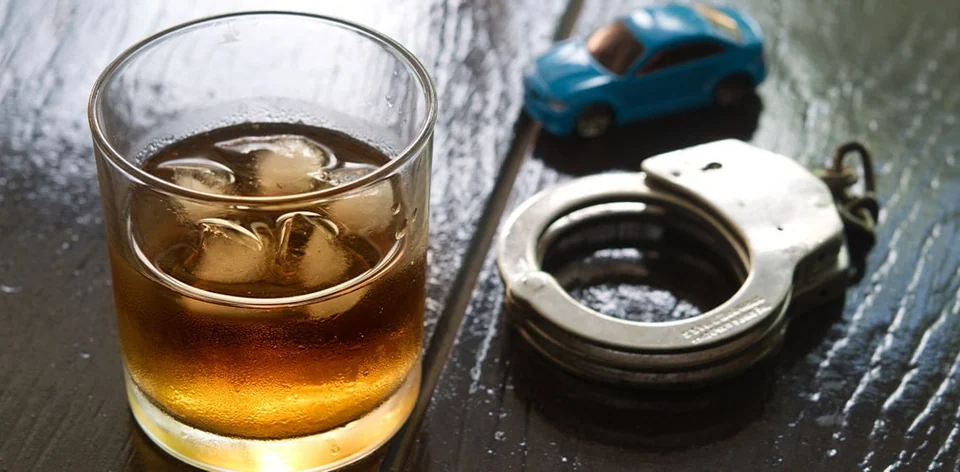
A DUI lawyer in Walnut Creek handles two separate cases that can follow an arrest: the criminal charge filed in Contra Costa County Superior Court, and the DMV's action against your license. The DMV side has the shortest clock. You generally have 10 days from receiving the suspension notice to request a hearing that is held before the suspension begins.
Our law firm has been featured on






David Chesley in the news
Select a photo to enlarge







This page walks a Walnut Creek driver through both cases: booking and release under Contra Costa's 2026 bail schedule, the DMV hearing, the penalties and license rules, local DUI programs and the defenses that come up. Looking for a specific Walnut Creek case type? See our Walnut Creek drug charges lawyer page.
Why can a Walnut Creek DUI arrest put your license and your freedom on separate tracks?
California can treat a DUI arrest as two matters: a criminal charge decided in Contra Costa Superior Court and a separate DMV action against your driving privilege.
California DMV explains license consequences in plain terms. Its side is "an immediate administrative action taken against your driving privilege only," called Administrative Per Se, or APS. Its sanctions are "independent of any court-imposed jail sentence, fine, or other criminal penalty." The court case, by contrast, decides guilt, jail, fines and probation.
For the most part, neither result controls the other. An acquittal in court requires DMV to lift an APS suspension, never a refusal suspension (Vehicle Code 13353.2(e)). But a plea to reckless driving does not help with DMV: the agency says that kind of reduction "does not affect the driving privilege suspension." A test result is not even required for an arrest. The DMV's own handbook warns that you may be arrested and convicted of a DUI even without a BAC measurement, based on how impaired you seemed.
The criminal statute itself, Vehicle Code 23152, sets out seven separate offenses, (a) through (g). Subdivision (a) covers driving "under the influence of any alcoholic beverage," and subdivision (b) covers driving with 0.08 percent or more alcohol in the blood.
How do you keep the right to a DMV hearing after a Walnut Creek arrest?
Request a DMV hearing within 10 days of receiving the suspension notice; after that you lose the right to one, though DMV may still accept a late request.
If the person wishes to have a hearing before the effective date of the order of suspension or revocation, the request for a hearing shall be made within 10 days of the receipt of the notice of the order of suspension or revocation. The hearing shall be held at a place designated by the department as close as practicable to the place where the arrest occurred, unless the parties agree to a different location.
That rule is Vehicle Code 13558(b). If you miss the window, Vehicle Code 14101(b) says you are not entitled to a hearing, so any late request depends on DMV's discretion. When DMV mailed the notice instead of an officer handing it to you, DMV's Fast Facts 26 hearing guide counts 14 days from the date of the notice. Under 13558(e), sending in the request does not, on its own, stay the suspension. The firm's answer on a missed 10-day DMV deadline covers what can still be done.
To request the hearing, call DMV Driver Safety at (833) 543-7703, the number DMV's Administrative Hearings page gives for hearing requests. DMV's Driver Safety Office page lists a single office for the whole state, at 390 N. Pacific Coast Highway, Suite 2075, El Segundo, CA 90245-4470, open Monday, Tuesday, Thursday and Friday from 8:00 a.m. to 5:00 p.m., and Wednesday from 9:00 a.m. to 5:00 p.m. Many Driver Safety matters can be handled through DMV's online case management system.
What happens at the DMV hearing itself?
The hearing is held before a Driver Safety hearing officer, not a judge, remotely over Microsoft Teams or in person, and its rules of evidence are looser than a courtroom's.
DMV says hearings "are conducted remotely or in person," with a phone option printed on your hearing notice. You may bring a lawyer "at your own expense," cross-examine DMV's witnesses and present your own evidence. Ask for DMV's evidence, its discovery, at least 10 days before the hearing. The firm's answer on how remote DMV DUI hearings work explains the video format.
For a test-result suspension, the hearing turns on three questions under Vehicle Code 13557(b)(3): whether the officer had reasonable cause to believe you were driving under the influence, whether you were lawfully arrested, and whether your blood alcohol was 0.08 percent or more. The hearing officer cannot shorten a suspension the Vehicle Code fixes (13558(c)(2)), and a restricted license is handled separately, not at the hearing.
Do you have to take the roadside breath test or the chemical test?
Drivers 21 and older who are not on DUI probation may decline the roadside screening test, but after a lawful DUI arrest California's implied consent law requires a chemical test.
The handheld roadside device is a preliminary alcohol screening test. Vehicle Code 23612(h) calls it "a field sobriety test," and 23612(i) requires the officer to tell you of your right to refuse it. The walk-and-turn and other field sobriety tests are an officer's observations, not chemical tests.
After an arrest, the rules change. A driver "is deemed to have given his or her consent" to a blood or breath test for alcohol (23612(a)(1)(A)), and in an alcohol case you choose which. You have no right to talk to a lawyer before deciding, and a refusal may be used against you in court (23612(a)(4)). The firm's answer on choosing a breath or blood test weighs the two.
Refusing has its own price. DMV suspends for 1 year on a first refusal, and revokes for 2 years with one prior or 3 years with two or more, counted within 10 years (Vehicle Code 13353(a)). No restricted license is allowed during a refusal suspension (13353.4(a)). If the refusal of a breath or urine test is charged and proven, a conviction adds 48 continuous hours of jail on a first DUI causing injury, 96 hours on a second offense within 10 years, 10 days on a third within 10 years and 18 days on a fourth within 10 years (Vehicle Code 23577). A blood test refusal does not trigger those added days. You also keep your Fifth Amendment protections: you can decline to answer questions about where you were or what you drank.
Where is a Walnut Creek DUI arrestee booked, and when do they get out?
Booking runs through the Sheriff's Martinez Detention Facility, and under the court's 2026 schedule a first DUI without injury is book and release, with no bail to post.
The Sheriff describes the Martinez Detention Facility, at 901 Court Street, Martinez, CA 94553, as "the primary point of intake for all arrestees booked in Contra Costa County." Its listed number is (925) 335-4600. Family members can check custody status through the Sheriff's Inmate Information page, which links the In-Custody Locator.
Release before the first court date follows the court's Pre-Arraignment Release Protocol, effective July 8, 2026. Under the misdemeanor schedule narrative, a BR offense means release after booking on a signed promise to appear, at $0 bail. A BC offense means the listed bail must be posted, or the person waits in custody for arraignment. Here is how the 2026 misdemeanor and felony schedules list DUI-related charges:
| Charge as the schedule lists it | Designation | Listed amount |
|---|---|---|
| DUI, Vehicle Code 23152(a) or (b), no listed prior | BR (book and release) | $5,000, with $0 to post unless an exception applies |
| DUI with one prior within 7 years | BC (bail condition) | $10,000 |
| DUI with two priors within 7 years | BC | $30,000 |
| DUI causing injury, misdemeanor (23153(a) or (b)) | BC | $25,000 |
| DUI causing bodily injury, felony (23153) | BC | $50,000 or more |
| DUI with three prior DUI convictions, felony (23550 or 23550.5) | BC, marked serious | $100,000 |
| Reckless driving (23103) | CR (cite and release) | $7,500 |
| Driving on a DUI suspension (14601.2), first | CR | $2,000 |
Two cautions go with that table. The schedule's "within 7 years" grouping is a release rule only; the Vehicle Code counts priors over 10 years for sentencing. And the $0 designations do not apply to a person on felony probation, parole or similar supervision, or when an officer cites a Penal Code 853.6(i) reason to hold someone, such as dangerous intoxication. The narrative adds that its designations "are not binding on judicial officers at arraignment."
Whoever stays in custody must see a judge within 48 hours of arrest, not counting Sundays and holidays (Penal Code 825(a)(1)). At that hearing, a misdemeanor defendant is entitled to own recognizance release unless the court finds on the record that release would compromise public safety or not reasonably assure a return to court (Penal Code 1270(a)). If money bail is still set, In re Humphrey (2021) requires the court to consider ability to pay and nonfinancial conditions, and In re Kowalczyk (April 30, 2026, S277910) requires that bail generally be set in an amount that is "reasonably attainable," with the defendant carrying the burden to show inability to pay through reliable evidence.
Which courthouse will hear a Walnut Creek DUI case?
Your citation or release papers name the courthouse; the Walnut Creek court building handles traffic tickets and juvenile cases, not misdemeanor or felony DUI charges.
The Walnut Creek Juvenile and Traffic Center at 640 Ygnacio Valley Road lists only traffic and juvenile cases, and the court's Local Rule 4.40 bars misdemeanor filings in its Walnut Creek traffic division. Of the court's buildings, the one whose page names DUI work is the Wakefield Taylor Courthouse, 725 Court Street, Martinez, which hears "Felony and misdemeanor trials (including criminal pretrial matters, DUI cases, and arraignments)." At 1020 Ward Street, also in Martinez, the A.F. Bray Courthouse holds general trials and criminal arraignments. Under Local Rule 4.11, any felony defendant held in custody is arraigned in the Martinez arraignment department.
The court's location pages and local rules do not name one building for Walnut Creek DUI cases, so trust the courthouse printed on your citation or release papers, and the department when the papers show one. The court's general criminal page states that "You cannot change your court date on any criminal case," and its calendars page says the Criminal Department "conducts hearings both via Zoom and in the courtroom." In a misdemeanor DUI, a lawyer can often appear for you, but in an appropriate case the judge may order you to be present for the arraignment, the plea or sentencing (Penal Code 977(a)(3)). Case status is searchable on the court's Public Portal. The firm's guide to what happens at a California arraignment covers that first hearing.
Who handles the prosecution and the defense in Contra Costa County?
Charges come from the Contra Costa District Attorney; a driver who cannot pay for counsel may be assigned the Public Defender, which keeps a branch office in Walnut Creek.
The District Attorney's Central Operations office is at 900 Ward Street, Martinez, CA 94553, (925) 957-2200. On the defense side, the Contra Costa Public Defenders list a Walnut Creek Branch at 2020 N. Broadway, Suite 208, Walnut Creek, CA 94596, (925) 608-4400, and a Main Branch at 800 Ferry Street, Martinez, (925) 608-9600.
Appointment is not automatic for everyone. Under Penal Code 987(a), the judge asks at arraignment whether you want counsel and assigns one if you cannot afford a lawyer, sometimes after a sworn financial statement. A private lawyer can step in at any stage, including before the DMV hearing request is due, which the court case does not cover. Beyond DUI, the firm's criminal defense practice handles any related charge filed in the same case.
What sentence does California law set for a DUI conviction?
A first DUI without injury carries 96 hours to 6 months in county jail and a $390 to $1,000 fine, and each prior within 10 years raises the range.
If a person is convicted of a first violation of Section 23152, that person shall be punished by imprisonment in the county jail for not less than 96 hours, at least 48 hours of which shall be continuous, nor more than six months, and by a fine of not less than three hundred ninety dollars ($390), nor more than one thousand dollars ($1,000).
That is Vehicle Code 23536(a). If the judge grants probation instead, the fine stays mandatory and jail becomes optional, from 48 hours up to 6 months (23538(a)(1)). DUI probation lasts 3 to 5 years (Vehicle Code 23600(b)(1)). The ranges for every level appear in the Vehicle Code's article on different penalties by offense:
| Offense | Custody range | Base fine |
|---|---|---|
| First DUI, no injury (Vehicle Code 23536) | 96 hours, with 48 in a row, up to 6 months in county jail | $390 to $1,000 |
| Second within 10 years (23540) | 90 days up to 364 days in county jail | $390 to $1,000 |
| Third within 10 years (23546) | 120 days up to 364 days in county jail | $390 to $1,000 |
| Fourth within 10 years (23550) | 180 days up to 364 days in county jail, or a felony term of 16 months, 2 or 3 years | $390 to $1,000 |
| First DUI causing injury (23554) | 90 days up to 364 days in county jail, or state prison for 16 months, 2 or 3 years | $390 to $1,000 |
| Injury DUI with one prior within 10 years (23560) | 120 days up to 364 days in county jail, or state prison | $390 to $5,000 |
| Injury DUI with two or more priors within 10 years (23566) | State prison for 2, 3 or 4 years | $1,015 to $5,000 |
| Vehicular manslaughter while intoxicated, without gross negligence (Penal Code 191.5(b)) | Up to 364 days in county jail, or 16 months, 2 or 4 years | Set by other sections |
| Gross vehicular manslaughter while intoxicated (191.5(a)) | State prison for 4, 6 or 10 years; 15 years to life with a listed prior (191.5(d)) | Set by other sections |
Where a statute says county jail for "one year," Penal Code 18.5 caps it at 364 days. The fines listed are base fines only. Two facts can push a sentence higher. A blood alcohol of 0.15 percent or more, or a breath or urine refusal, is a "special factor" the judge must consider (Vehicle Code 23578). On a DUI without injury, a child under 14 in the car adds mandatory jail, starting at 48 continuous hours on a first offense, when it is pleaded and proven (23572).

How long can DMV suspend your license, and can you keep driving to work?
For drivers 21 or older, a first arrest with a 0.08% or higher test brings a 4-month DMV suspension, and a first offender who tested may seek a restricted license.
The officer usually takes your license and issues a temporary one, valid for 30 days from the arrest date (Vehicle Code 13382(b)). The APS license suspension then starts 30 days after the notice is served (13353.3(a)). DMV's page states that "A first offense will result in a four-month suspension," and a second within 10 years a one-year suspension.
| Event | DMV action | Source |
|---|---|---|
| Test of 0.08% or more, first APS | 4-month suspension | Vehicle Code 13353.3(b)(1) |
| Test of 0.08% or more, prior within 10 years | 1-year suspension | 13353.3(b)(2) |
| Chemical test refused, first | 1-year suspension, no restricted license | 13353(a)(1), 13353.4(a) |
| First DUI conviction, no injury | 6 months, or 10 months with the 9-month program | 13352(a)(1), 13352.1(a) |
| Second DUI conviction within 10 years, no injury | 2-year suspension; 12-month interlock if alcohol was involved | 13352(a)(3), 23575.3(h)(1)(B) |
| Third DUI conviction within 10 years, no injury | 3-year revocation; 24-month interlock if alcohol was involved | 13352(a)(5), 23575.3(h)(1)(C) |
The conviction suspension and the APS suspension run at the same time, and the total does not exceed the longer of the two (Vehicle Code 13353.3(c)). For a first test-result suspension of a driver 21 or older, DMV's first offender restriction flyer describes two options. One is an ignition interlock restriction that lets you drive anywhere in an equipped car for up to 4 months. The other, after serving 30 days, is a license limited to work and your DUI program for up to 5 months. Both need proof of DUI program enrollment, proof of insurance called an SR 22, and a $125 APS fee, and the flyer says to keep the SR 22 for 3 years. The firm's answer on whether a first DUI requires an interlock covers the court side. A suspension can also ripple into collateral consequences for people who hold professional licenses.
Where do Walnut Creek drivers complete a court-ordered DUI program?
California requires a licensed DUI program after a conviction, and the state's directory lists two Contra Costa providers in Walnut Creek, with others in Pittsburg, Richmond and Brentwood.
The program length comes from Vehicle Code 23538(b). A first offender below 0.20 percent attends at least 3 months with 30 hours of activities. At 0.20 percent or more, or after a refusal, it is at least 9 months with 60 hours. A second offense within 10 years brings an 18-month or 30-month program (23542(b)). Classes taken before the arrest date earn no credit. The state Department of Health Care Services keeps the DUI program directory, and its provider data listed these Contra Costa programs on November 12, 2026:
| Program | Address | Phone |
|---|---|---|
| Alcohol & Drug Abuse Council of Contra Costa, Inc. | 2020 North Broadway, Suite 101, Walnut Creek, CA 94596 | (925) 932-8100 |
| Future Solutions | 560 Lennon Lane, Suite 200, Walnut Creek, CA 94598 | (925) 932-7791 |
| Dawn Center | 1251 California Avenue, Suite 600, Pittsburg, CA 94565 | (925) 439-1332 |
| Neighborhood House of North Richmond | 12972 San Pablo Avenue, Richmond, CA 94805 | (510) 998-6516 |
| Pueblos Del Sol Education Program | 121 Sand Creek Road, Suite A, Brentwood, CA 94513 | (925) 240-7213 |
Each lists a first offender program and an 18-month multiple offender program. Directories change, so confirm with the program before you enroll; this list is not a recommendation of one provider over another. If you live in another county, the firm's answer on taking a DUI program in a different county explains the transfer question.
Can a Contra Costa DUI be diverted or reduced to reckless driving?
General diversion is barred for DUI, but veterans may qualify for military diversion, and some cases resolve as a plea to reckless driving, often called a wet reckless.
Vehicle Code 23640(a) says that before a DUI case ends, the court "shall neither suspend nor stay the proceedings" so the accused can attend education or treatment programs. Published appellate decisions have also held that the judge-granted misdemeanor diversion law does not reach DUI. The firm's overview of diversion programs covers the routes that remain.
The main one is military diversion. Penal Code 1001.80(n)(1) expressly includes a misdemeanor DUI for a current or former service member who may be suffering from sexual trauma, traumatic brain injury, post-traumatic stress disorder, substance abuse or mental health problems as a result of military service. DMV can still suspend the license. Contra Costa's court runs a Veterans Treatment Court and Military Diversion program for those cases, with a veteran mentor assigned to each participant.
The other common path runs through negotiations with the prosecutor. Depending on the evidence, a DUI may resolve as a wet reckless, an exhibition of speed plea or plain reckless driving. A wet reckless is a reckless driving plea under Vehicle Code 23103 where the prosecutor states on the record that alcohol or drugs were involved (23103.5(a)). It carries 5 to 90 days in jail, a $145 to $1,000 fine or both, and it still counts as a prior DUI for 10 years (23103.5(c)). No outcome is assured, and the DMV suspension from the arrest stands either way.
What defenses fit the facts of a Walnut Creek DUI?
Defenses usually test whether the stop was lawful, how the field tests were given, whether breath or blood testing followed the rules, and what your blood alcohol was while driving.
- The reason for the stop. An officer needs a lawful basis to pull you over. If the stop fails, the evidence it produced can be challenged through pretrial motions.
- Field sobriety tests. These rest on an officer's judgment. The standardized eye test, horizontal gaze nystagmus, is taught from a federal NHTSA training manual, and what the officer actually did can be compared with it.
- Breath and blood results. Machines need calibration and samples need proper handling, so contaminations or errors in blood, breath, or urine tests are fair targets. A "blood split" motion asks for a portion of the sample for independent testing.
- Timing. Vehicle Code 23152(b) presumes a reading of 0.08 percent or more within three hours reflects the level while driving, but the statute calls that "a rebuttable presumption." Rising blood alcohol is one way to rebut it.
- Drugs and prescriptions. There is no numeric limit for drugs; the question is impairment (Vehicle Code 23152(f)). A valid prescription is not a defense (23630), but the evidence of impairment still has to hold up.
Every one of these depends on the reports, videos and lab records, which the defense obtains after arraignment. The more of them are gathered early, the sooner the weak points show.
When can a DUI be charged as a felony in California?
Injuring another person, a fourth DUI within 10 years, or a prior felony DUI within 10 years lets prosecutors file a felony, though most can be filed as misdemeanors.
The first three DUIs without injury are ordinarily misdemeanors. Vehicle Code 23153 covers a DUI that "proximately causes bodily injury to any person other than the driver," and a first one can be filed either way (23554). A fourth within 10 years (23550), a new DUI within 10 years of a felony DUI (23550.5(a)) and a new DUI after certain vehicular manslaughter convictions, with no time limit (23550.5(b)), are also wobblers. Only an injury DUI with two or more priors within 10 years is a straight felony (23566). The firm's pages on felony DUI and DUI causing injury go further.
How can a DUI affect immigration status, a professional license or your record?
Two or more DUI convictions during the statutory period create a rebuttable presumption against good moral character for naturalization, and a DUI keeps counting as a prior for 10 years.
The USCIS Policy Manual states that "Evidence of two or more DUI convictions during the statutory period establishes a rebuttable presumption that an alien lacks GMC," meaning good moral character. A single conviction does not trigger that presumption, but anyone who is not a citizen should get advice before any plea. The firm's pages on DUI immigration consequences, immigration review before a criminal plea and the citizenship application process explain the stakes.
Clearing the record later is possible but limited. If you were arrested and not convicted, the courts' self-help center explains sealing. After probation, a judge may grant a Penal Code 1203.4 dismissal, which the firm calls expungement, to someone not then serving a sentence, on probation or charged with an offense, but for DUI it is discretionary (1203.4(c)), the prior still counts in a later case, and it does not undo a DMV suspension (Vehicle Code 13555). The firm can also help seal your records, and the Attorney General's office lets you review your own criminal record first.
What does a DUI defense cost in Walnut Creek?
The cost depends on whether the charge is a misdemeanor or a felony, whether there are priors or an injury, and whether the case needs a DMV hearing and trial.
The firm starts with a free consultation and is available 24/7. Affordable rates and payment plans are available, so ask about fees and payment terms before agreeing to representation. Se habla español. David S. Chesley appears in the DUI category for California on America's Top 50 Lawyers, a membership organization whose page says its selections are "subjective in nature." Our recent DUI case results are firm-published accounts, and each one turned on its own facts.
Frequently asked questions about a Walnut Creek DUI
What if the driver was under 21?
California has a zero tolerance rule. A driver under 21 with a blood alcohol of 0.01 percent or more on a screening or chemical test violates Vehicle Code 23136, and DMV suspends the license for one year. An adult DUI charge under 23152 is still possible on top of that.
What if I am already on probation for an earlier DUI?
Then the limit is 0.01 percent. Vehicle Code 23154 makes it unlawful for someone on DUI probation to drive with that level, and DMV suspends for one year. Probation terms also forbid refusing a chemical test.
Will I have to install an ignition interlock device?
Not automatically on a first DUI without injury. The court may order one for up to six months, or you may choose a work and program license or an interlock-restricted license instead. An interlock is mandatory for 12 months after a first alcohol-involved DUI causing injury, or a second alcohol-involved conviction within 10 years without injury (Vehicle Code 23575.3).
Do I need SR 22 insurance after a DUI?
Yes, to drive on a restricted license or to reinstate. DMV requires proof of insurance, called an SR 22, and its first offender flyer says to maintain it for 3 years.
Do I have to attend every court date in person?
Not always. In a misdemeanor case, a lawyer can appear for you at many hearings, but in a misdemeanor DUI the judge may, in an appropriate case, order you to be present for the arraignment, the plea or sentencing (Penal Code 977(a)(3)). Felony defendants must attend key hearings unless the law allows a waiver.
How long does a DUI count against me as a prior?
Ten years. A new DUI within 10 years of an earlier DUI or wet reckless that led to a conviction is punished as a second, third or fourth offense (Vehicle Code 23540, 23546, 23550). Convictions from other states count too (23626).
Which DUI and driving charges does the firm defend in Walnut Creek?
The firm handles every common DUI and driving charge in Contra Costa County, and each link below leads to its in-depth page on that situation.
These pages belong to the firm's statewide DUI defense practice and its DUI defense library, which apply in Walnut Creek as anywhere in California. For an overview of the statutes, see California DUI laws.
Charges by offense level
- First-time DUI
- Second DUI
- Third DUI in California
- Fourth DUI and felony escalation
- Misdemeanor versus felony DUI
- Watson murder (DUI murder)
- DUI probation violation
Alcohol, drugs and testing
- Alcohol DUI
- Drug DUI
- Marijuana DUI
- Prescription drug DUI
- Breathalyzer test
- Blood test defense
- Chemical test refusal
- Rising blood alcohol
- Mouth alcohol
- Title 17 testing violations
- Medical conditions as a defense
The stop and the courtroom
- Illegal traffic stop and probable cause
- DUI checkpoints
- DUI jury trial defense
- The DUI process, step by step
- DUI defense costs
License and DMV matters
- DMV hearing defense
- License reinstatement
- Ignition interlock violations
- Driving on a suspended license
- Driving without a license
- Driving without insurance
- DUI and professional licenses
- Commercial driver (CDL) DUI
Special circumstances
- Underage DUI
- DUI with a child passenger
- Out-of-state DUI
- Construction and school zone DUI
- DUI accidents
- Hit and run with a DUI
- Hit and run
- Hit and run with injury or death
- Boating under the influence
- DUI expungement
Related driving and public-order charges
- Street racing
- Evading police
- Drunk in public
- Public intoxication
- Disorderly conduct
- Disturbing the peace
Talk to a Walnut Creek DUI lawyer today
If you were arrested for a DUI in Walnut Creek or anywhere in Contra Costa County, the DMV clock may already be running. Law Offices of David S. Chesley offers a free consultation and is available 24/7.
Affordable rates and payment plans are available, and Se habla español. Call (800) 755-5174 or tell us about your case online.
We also provide the following legal services in Walnut Creek, CA:
































