



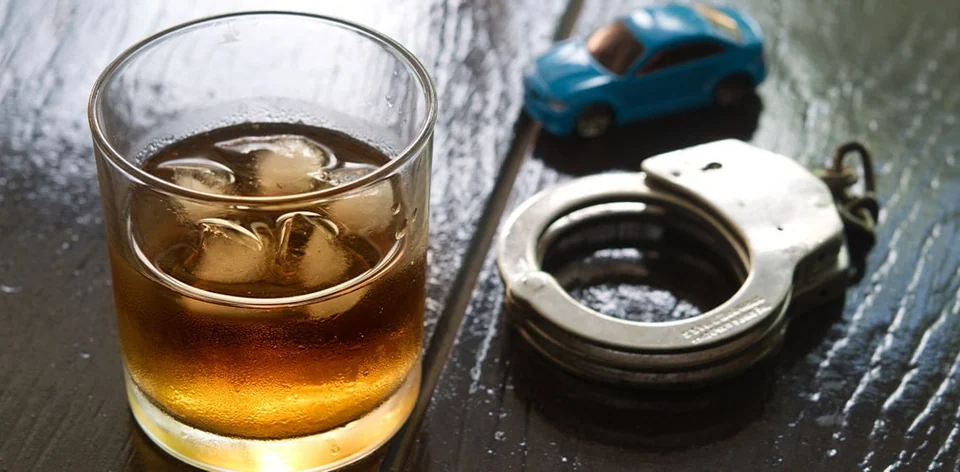
A Modesto DUI arrest can start two cases at once: a criminal case in the Stanislaus County Superior Court, whose criminal clerk's office is at the Main Courthouse on 11th Street, and a DMV case against your license. You have 10 days from the suspension notice to ask for a DMV hearing. A Modesto DUI lawyer handles both.
Our law firm has been featured on






David Chesley in the news
Select a photo to enlarge







What happens in the first days after a Modesto DUI arrest?
Within days, you may face booking or a citation, a 30-day temporary license, a 10-day window to request a DMV hearing, and an arraignment date at the Main Courthouse.
The Modesto Police Department is the city's own police agency. Its headquarters is at 600 10th Street, Modesto, CA 95354, and its listed phone is (209) 572-9500, with non-emergency dispatch at (209) 552-2470. An officer can arrest a driver even with a breath result under the legal limit, or with no test result at all, when other signs point to impairment. The paperwork you leave with sets the first deadlines.
| When | What happens | Where |
|---|---|---|
| At the arrest | The officer can take your California license and issue a temporary license, valid 30 days from the arrest (Vehicle Code 13382(b)) | At the roadside or at booking |
| Within 10 days of receiving the suspension notice | Ask for a DMV hearing that is held before the suspension starts (Vehicle Code 13558(b)) | DMV Driver Safety, online or at (833) 543-7703 |
| The date printed on your citation, bail bond or jail cite | Arraignment: 8:30 a.m. for people out of custody, 1:30 p.m. for people in custody, Monday through Friday | Stanislaus County Superior Court, Main Courthouse, 800 11th Street |
| 30 days after the notice is served | The DMV's administrative suspension takes effect (Vehicle Code 13353.3(a)) | DMV |
The DMV explains license consequences in plain terms: its suspension is an action against your driving privilege only, and its sanctions are independent of any jail, fine or other penalty the court imposes after a conviction. One court result does reach it: an acquittal requires DMV to reinstate a driving privilege it suspended on a test result, though not after a refusal (Vehicle Code 13353.2(e)). That is why the license case and the criminal case need separate attention from the first week.
Which Stanislaus County courthouse hears a Modesto DUI, and when?
Stanislaus County Superior Court's criminal clerk's office is in the Main Courthouse at 800 11th Street, and the court hears arraignments every weekday, at 8:30 a.m. or 1:30 p.m.
The court's location list places the Criminal Clerk's Office on the first floor of the Main Courthouse, through the 11th Street entrance. Its criminal division page gives Room 140 and the phone line (209) 530-3100, option 4, answered from 8:15 a.m. to 3:00 p.m. on weekdays, with the counter open until 4:00 p.m. The same page says the division "has jurisdiction over felonies, misdemeanors and infractions."
The court's other buildings do different work. City Towers at 801 10th Street is the civil and probate courthouse, the Blue Gum Avenue building hears juvenile cases, the Traffic Court sits at 2260 Floyd Avenue, and the Turlock branch takes small claims and eviction cases. Your own paperwork controls: the court's criminal FAQ says your court date and time are printed on the citation, bail bond or jail cite you received.
That FAQ also sets the arraignment calendar. Defendants who are out of custody are heard Monday through Friday at 8:30 a.m., and defendants in custody at 1:30 p.m. At arraignment the judge reads the charge, explains your right to a lawyer and asks for a plea; the firm's guide to what happens at a California arraignment walks through each step.
The court expects the defendant to appear personally, although a lawyer may appear for you unless the court orders you to come. For a misdemeanor DUI, Penal Code 977(a)(3) lets the judge, "in an appropriate case," order you to be present for arraignment, plea or sentencing. Remote hearings need advance approval: the court's remote appearance page says Zoom links go only to lawyers and self-represented parties who already have authorization, and a represented person must ask through counsel.
Two court tools help you track the case. The Stanislaus public case portal shows public case information, and the court's text notification service sends reminders for hearings in certain case types up to four days ahead once you answer YES to its first message. The court cautions that a reminder never excuses a missed date, and that a phone number given to the service may become part of the public case record.
What if you miss a Modesto court date?
Act the same day. The court's FAQ says a represented defendant should have the lawyer put the case back on calendar, while an unrepresented defendant must apply in person at the Clerk's Office, since the request cannot be handled by phone and only a judge can grant a new date. The clerk will not give bench warrant information over the telephone either. A missed date can bring a bench warrant, and willfully failing to appear can be a separate crime, as the firm's page on clearing a California bench warrant explains.
How does release work after a DUI booking in Stanislaus County?
Stanislaus jail deputies may release some people on a written promise to appear, a judicial officer may grant own-recognizance release, or bail from the 2026 schedule can be posted.
The county jail system belongs to the Stanislaus County Sheriff's Office, at 250 E. Hackett Road, Modesto, CA 95358. The Sheriff lists the Sheriff's Detention Center East, the Sheriff's Detention Center West and Minimum Housing Units 1 and 2 among its detention facilities, alongside a Jail Alternatives Unit. To learn whether a family member is in custody, search the Sheriff's Who's in Jail list.
The court's own bail schedule describes the early release routes. In its words, jail deputies "may release certain eligible individuals on their promise to appear in court on a future court date," or "a judicial officer may release an individual on their own recognizance." Some charges block release before a court hearing, including most serious and violent felonies and intimate partner battery charges under Penal Code 243(e)(1) and 273.5.
Someone who stays in custody must see a judge quickly. Penal Code 825(a)(1) sets the limit at 48 hours after arrest, not counting Sundays and holidays; if that time ends while court is closed, 825(a)(2) extends it through the next court session on the following court day. At an in-custody misdemeanor arraignment, Penal Code 1270(a) entitles the person to own-recognizance release unless the court finds, on the record, that release would compromise public safety or would not reasonably assure a return to court. After booking, Penal Code 851.5 allows at least three completed phone calls, and the call to a lawyer may not be monitored or recorded.
When a judge does set money bail, two California Supreme Court rulings frame the decision. In re Humphrey (2021) requires the judge to consider your ability to pay and whether nonfinancial conditions, such as supervision, could reasonably protect the public and the victim or reasonably assure your appearance in court. In re Kowalczyk (April 30, 2026) adds that bail must generally be reasonably attainable, though it "need not be easily affordable or convenient," and a defendant who claims inability to pay carries the burden of backing that claim with reliable evidence. The Stanislaus schedule itself tells judges to consider own-recognizance release for every bail-eligible defendant unless an individualized finding of flight risk or danger is made. The firm's explainer on how California bail amounts are set covers the hearing itself.
What bail does the 2026 Stanislaus schedule list for a DUI?
The court's 2026 bail schedule lists $3,000 for a misdemeanor DUI and adds $3,000 for each prior, while felony DUI charges are scheduled at $50,000 to $350,000.
| Charge | Schedule section | Scheduled bail |
|---|---|---|
| DUI, Vehicle Code 23152(a) or (b) | Misdemeanor | $3,000, plus $3,000 for each prior |
| DUI causing bodily injury, 23153 | Misdemeanor | $5,000, plus $3,000 for each prior |
| DUI with three priors, 23152 and 23550 | Felony | $75,000 |
| DUI with a felony DUI prior, 23152 and 23550.5 | Felony | $100,000 |
| DUI causing bodily injury, first offense, 23153 and 23554 | Felony | $50,000 |
| DUI causing bodily injury, second offense, 23153 and 23560 | Felony | $100,000 |
| DUI causing bodily injury with two priors, 23153 and 23566(a) | Felony | $200,000 |
| DUI causing great bodily injury with two priors, 23153 and 23566(b) | Felony | $350,000 |
A scheduled figure is only a starting point. Under Penal Code 1269b(b), once you have appeared before a judge, bail becomes whatever amount that judge fixes. The schedule's Rule 8 also matters when charges are combined: a felony booking normally carries felony bail only, but a misdemeanor DUI charge under 23152(a) or (b) is added on top. The same document lists $1,020 for driving on a DUI suspension under Vehicle Code 14601.2 and $505 for reckless driving under 23103.
Who prosecutes a Modesto DUI, and when can the Public Defender help?
The Stanislaus County District Attorney is the county's public prosecutor, and the county Public Defender represents people charged with crimes who cannot afford a lawyer.
The District Attorney's adult crimes office is at 832 12th Street, Suite 300, Modesto, CA 95354, phone (209) 525-5550, open weekdays from 8 a.m. to 5 p.m. Its FAQ page calls the office "the public prosecutor for Stanislaus County" and invites callers to give a police report or booking number to learn whether the report has arrived. The same page notes that prosecutors cannot speak with a defendant who has a lawyer.
The Stanislaus County Public Defender works from 1021 I Street, Suite 201, Modesto, CA 95353, phone (209) 525-4200, weekdays 8:00 a.m. to 4:30 p.m. with a noon to 1:00 p.m. closure. Its misdemeanor guide says the arraignment judge asks whether you want a referral to the office, and that only people who cannot afford to hire a lawyer qualify. Under Government Code 27706(a), a public defender represents a qualifying client "without expense to the defendant." The county also lists an Alternate Defender's Office at 1012 11th Street, Suite 100, phone (209) 525-2000.
How do you keep your right to a DMV hearing after a Modesto arrest?
Ask the DMV for a hearing within 10 days of receiving the suspension notice, because that is the window for a hearing held before the suspension takes effect.
If the person wishes to have a hearing before the effective date of the order of suspension or revocation, the request for a hearing shall be made within 10 days of the receipt of the notice of the order of suspension or revocation. The hearing shall be held at a place designated by the department as close as practicable to the place where the arrest occurred, unless the parties agree to a different location.
That text is Vehicle Code 13558(b). After the window closes, Vehicle Code 14101(b) says you are not entitled to a hearing; DMV may still accept a late request, but it does not have to. If DMV mailed the notice rather than an officer handing it to you, its Fast Facts 26 hearing guide counts 14 days from the date on the notice. A request does not, by itself, stop the suspension (Vehicle Code 13558(e)).
To make the request, call DMV Driver Safety at (833) 543-7703, the number on the DMV's administrative hearings page. The DMV's Driver Safety office page lists no Modesto office. It names a single office, in El Segundo, at 390 N. Pacific Coast Highway, Suite 2075, open Monday, Tuesday, Thursday and Friday from 8:00 a.m. to 5:00 p.m. and Wednesday from 9:00 a.m. to 5:00 p.m., and it notes that many Driver Safety matters can be handled in DMV's online case system.
What the hearing officer decides
A Driver Safety hearing officer, not a judge, runs the hearing, which the DMV holds remotely over Microsoft Teams or in person, with a phone option in the notice. Its evidence rules are looser than a courtroom's. For a test-result suspension, the issues are narrow: whether the officer had reasonable cause, whether you were lawfully arrested, and whether your blood alcohol was 0.08% or more (Vehicle Code 13557(b)(3)). The officer cannot shorten the suspension period the code fixes (Vehicle Code 13558(c)(2)), and a restricted license is not decided at the hearing. You can ask for the DMV's evidence at least 10 days before the hearing, and a lawyer can appear for you at your own expense. The firm's page on DMV hearing defense explains how that evidence is reviewed.
How long can your license be suspended, and can you still drive?
For a driver 21 or older, a first 0.08% or higher result brings a four-month DMV suspension, while a refusal brings at least a year with no restricted license.
| Trigger | Length | Driving during it |
|---|---|---|
| Test result of 0.08% or more, no prior in 10 years (DMV, at arrest) | 4 months (Vehicle Code 13353.3) | Interlock-restricted license once the suspension takes effect, or a work and program license after 30 days |
| Test result with a prior in 10 years | 1 year | Interlock-restricted license |
| Refusal of the chemical test | 1 year; 2 or 3 years with priors (Vehicle Code 13353) | No restricted license (Vehicle Code 13353.4(a)) |
| First DUI conviction | 6 months, or 10 months with the 9-month program (Vehicle Code 13352, 13352.1) | One of three restricted options (Vehicle Code 23575.3(h)(1)(A)) |
The DMV suspension and the conviction suspension run at the same time, and the total cannot exceed the longer of the two (Vehicle Code 13353.3(c)). For a first test-result suspension of a driver 21 or older, the interlock route is in Vehicle Code 13353.6, and the work and DUI program license, which follows a 30-day suspension and lasts five months, is in Vehicle Code 13353.7. Both require proof of DUI program enrollment and proof of insurance. DMV's first-offender restriction flyer adds that the SR 22 insurance filing must stay in place for three years. Any license suspension can also affect jobs that depend on driving or on a professional license.
Getting the license back after a conviction takes proof of insurance and a completed DUI program, which the firm's guide to DUI license reinstatement lays out. Driving before then is its own crime, covered on the firm's page about driving with a suspended license, and interlock rules carry their own penalties, as its page on ignition interlock device violations describes.
Which tests can you decline during a Modesto traffic stop?
An adult 21 or older who is not on DUI probation may refuse the roadside breath screening, but refusing the chemical test after a lawful arrest brings its own penalties.
California treats the roadside preliminary alcohol screening, or PAS, test as a field sobriety test, and the officer must tell you that you can refuse it (Vehicle Code 23612(h), (i)). The breath or blood test after arrest is different: by driving, you are deemed to have consented to it, and you have no right to a lawyer before choosing. Drivers under 21 and drivers already on DUI probation face a suspension for refusing even the PAS test. The firm's page on DUI refusal cases covers what a refusal adds.
You must still show your license, registration and proof of insurance when asked (Vehicle Code 12951(b), 4462(a) and 16028(a)). Beyond that, the right to remain silent means you need not explain where you were or how much you drank, and anything you say can be used later. Exercises such as the walk-and-turn are observations an officer scores, and the firm's guide to field sobriety tests explains how those scores are questioned. A stop at a checkpoint raises its own issues, discussed on the firm's page about DUI checkpoint defense.
What sentences does California set for a first, second, third or fourth DUI?
A first DUI carries 96 hours to six months in county jail and a $390 to $1,000 fine, and each prior within 10 years raises the minimums and license loss.
The Vehicle Code sets out different penalties for each offense level. For a first offense, the base rule is this:
If a person is convicted of a first violation of Section 23152, that person shall be punished by imprisonment in the county jail for not less than 96 hours, at least 48 hours of which shall be continuous, nor more than six months, and by a fine of not less than three hundred ninety dollars ($390), nor more than one thousand dollars ($1,000).
That is Vehicle Code 23536(a). With probation, the fine is still required, and jail becomes optional, from 48 hours up to six months (Vehicle Code 23538(a)(1)). Wherever a DUI statute says "one year" of county jail, Penal Code 18.5 caps it at 364 days.
| Offense | Jail or custody | Fine | License after conviction |
|---|---|---|---|
| First DUI (Vehicle Code 23536) | 96 hours to 6 months; on probation, 48 hours to 6 months | $390 to $1,000 | 6 months, or 10 months with the 9-month program |
| Second DUI (23540) | 90 to 364 days; on probation, 10 days, or 96 hours in two 48-hour blocks (23542) | $390 to $1,000 | 2-year suspension; 12-month interlock if alcohol was involved |
| Third DUI (23546) | 120 to 364 days | $390 to $1,000 | 3-year revocation; 24-month interlock if alcohol was involved |
| Fourth DUI (23550) | 180 to 364 days in county jail, or 16 months, 2 or 3 years under Penal Code 1170(h) | $390 to $1,000 | 4-year revocation; 36-month interlock if alcohol was involved |
The interlock terms come from Vehicle Code 23575.3(h)(1) and apply only to alcohol-involved convictions. A third DUI also brings a three-year habitual traffic offender designation (Vehicle Code 23546(b)). DUI probation itself runs three to five years (Vehicle Code 23600(b)(1)). These penalties can follow you into insurance costs and careers as well, which the firm calls collateral consequences. The firm's pages on a first DUI, a second DUI and a third DUI go deeper on each level, and its guide to DUI penalties covers enhancements.
Refusing a breath or urine test can add jail on conviction when it is charged and proven: 96 hours on a second DUI, 10 days on a third and 18 days on a fourth (Vehicle Code 23577). That addition does not apply to a blood test refusal. A blood alcohol level of 0.15% or more is a factor the judge must weigh at sentencing, not an automatic extra term (Vehicle Code 23578), and a child under 14 in the car adds mandatory jail when pleaded and proven, as the firm's page on DUI with a child passenger explains.
Which licensed DUI program serves Stanislaus County?
The state's licensing directory lists one DUI program in Stanislaus County, Safety Center, Inc., on Evergreen Avenue in Modesto, offering first-offender, 18-month and 30-month programs.
The California Department of Health Care Services keeps the statewide DUI program directory. Its downloadable provider list shows Safety Center, Inc. - Stanislaus at 2005 Evergreen Avenue, Suite 350, Modesto, CA 95350, phone (209) 526-9393, licensed for the first-offender, 18-month and 30-month programs. Provider lists change, so confirm enrollment details directly before signing up.
Program length follows the record. A first offender with a blood alcohol level under 0.20% is referred for at least three months and 30 hours of activities, and one at 0.20% or more, or who refused the test, for at least nine months and 60 hours (Vehicle Code 23538(b)). Repeat offenders face the 18-month or 30-month programs. Credit is never given for classes completed before the arrest date.
Is there diversion or a treatment court for a DUI in Stanislaus County?
Ordinary pretrial diversion is barred for DUI charges in California, but military diversion can reach a misdemeanor DUI, and Stanislaus runs a Veterans Treatment Court.
Vehicle Code 23640 stops a court from pausing a DUI case so the defendant can attend a program and then dismissing it. Published appellate decisions, including Tan v. Superior Court (2022), hold that the general misdemeanor diversion statute does not reach DUI. The clear exception is Penal Code 1001.80(n)(1), which allows military diversion for a misdemeanor DUI for a current or former member of the U.S. military who may be suffering from sexual trauma, traumatic brain injury, post-traumatic stress disorder, substance abuse or mental health problems as a result of that service (1001.80(b)), though the DMV action still proceeds.
Locally, the Stanislaus County Public Defender lists homeless court, drug court, mental health court and a Veterans Treatment Court among the collaborative courts where it represents clients. The Veterans Treatment Court serves veterans whose cases connect to post-traumatic stress, traumatic brain injury, military sexual trauma, substance abuse or other symptoms from service. Whether a DUI fits any of these depends on the charge and the person's history, so raise it early. The firm's overview of diversion programs and treatment courts compares the options.
When can a Modesto DUI become a felony?
Injury to another person, a fourth DUI in 10 years, or a prior felony DUI within 10 years can let prosecutors file the case as a felony, not a misdemeanor.
A first, second or third DUI without injury is a misdemeanor. A fourth within 10 years (23550) and a DUI within 10 years of a prior felony DUI (23550.5(a)) can be charged either way, as can a DUI after certain vehicular manslaughter convictions, with no 10-year limit (23550.5(b)). A DUI that injures someone else falls under Vehicle Code 23153, and the punishment grows with the record:
- First injury DUI: 90 to 364 days in county jail, or 16 months, 2 or 3 years in state prison, and a $390 to $1,000 fine (Vehicle Code 23554).
- With one prior: 120 to 364 days in county jail or a state prison term, and a $390 to $5,000 fine (Vehicle Code 23560).
- With two or more priors: a felony only, with 2, 3 or 4 years in state prison and a $1,015 to $5,000 fine (Vehicle Code 23566(a)).
A death changes the charge. Gross vehicular manslaughter while intoxicated carries 4, 6 or 10 years in state prison, or 15 years to life with certain prior convictions (191.5(d)); without gross negligence, it carries up to 364 days in county jail or 16 months, 2 or 4 years under Penal Code 1170(h) (Penal Code 191.5(c)). Because that section names no fine, Penal Code 672 allows up to $1,000 for a misdemeanor and up to $10,000 for a felony. Every DUI conviction also carries a court warning that a future fatal DUI can be charged as murder (Vehicle Code 23593). The firm's pages on felony DUI, DUI causing injury, a fourth DUI, Watson murder charges, hit and run with injury or death and the misdemeanor and felony DUI comparison cover each path.
How are breath, blood and field sobriety results challenged in a Modesto case?
The defense tests each link in the chain: the reason for the stop, the officer's observations, the testing equipment and procedures, and the timing of the breath or blood sample.
- The stop itself. An officer needs a lawful reason to pull you over, and evidence from an unlawful stop can be challenged, as the firm's page on illegal stops and probable cause explains.
- Field sobriety exercises. Federal training materials standardize how tests such as the walk-and-turn are given and scored, so departures from that training are worth examining.
- Breath results. Instruments must be maintained and operated correctly; see the firm's pages on faults in breath testing, mouth alcohol and Title 17 testing rules.
- Blood results. A "blood split" motion asks for an independent retest of the sample, and the firm's guide to blood test defense covers chain of custody.
- Timing and health. Alcohol can keep rising after driving stops, which the page on rising blood alcohol addresses, and some medical conditions can affect results.
For an "under the influence" charge, Vehicle Code 23610 also matters: a level under 0.05% creates a presumption that the driver was not under the influence. Drug cases work differently, because the law sets no number for drugs and a valid prescription is no defense (Vehicle Code 23630); the firm's pages on drug DUI, marijuana DUI and prescription drug DUI explain the evidence used. Motions and evidence review happen during pretrial motions, and many cases are settled through negotiations with the prosecutor. A reduction can sometimes be to a wet reckless, exhibition of speed or reckless driving charge, though a wet reckless still counts as a prior for 10 years (Vehicle Code 23103.5(c)) and leaves the DMV suspension in place. Cases that do not settle go to a jury trial.
Should a non-citizen in Modesto talk to an immigration lawyer before a DUI plea?
Yes: a DUI plea can matter in immigration cases, and USCIS says two or more DUI convictions in the statutory period create a rebuttable presumption against good moral character.
The USCIS Policy Manual puts the rule for naturalization this way: "Evidence of two or more DUI convictions during the statutory period establishes a rebuttable presumption that an alien lacks GMC," meaning good moral character. California also requires every judge, before taking a guilty or no contest plea to a misdemeanor or felony, to read an immigration advisement word for word (Penal Code 1016.5), and defense counsel must give accurate advice about immigration effects of a proposed plea (Penal Code 1016.3).
The firm's Modesto immigration lawyer page covers the federal offices that serve Stanislaus County, and its guides to DUI immigration consequences, reviewing a plea for immigration effects and the citizenship application process explain what to bring to that review. The firm's page on diversion programs also notes which routes avoid a conviction.
What record relief is possible after a Stanislaus County DUI?
An arrest that ends without a conviction can often be sealed, and a DUI conviction can be dismissed after probation, although that dismissal is up to the judge.
For a DUI, relief under Penal Code 1203.4 is discretionary rather than automatic (1203.4(c)); the court can grant it once probation is over, and not while the person is serving a sentence, on probation or facing a charge (1203.4(a)(1)). A dismissed DUI still counts as a prior in a later case, and it does not undo a DMV suspension (Vehicle Code 13555). If you were found not guilty or never charged, the courts' self-help site explains how to clear the arrest. The firm's pages on expungement, sealing and destroying a record and DUI expungement cover each step, and the Department of Justice explains how to request a copy of your record for review.
The Stanislaus County Public Defender also runs a Clean Slate Program that reviews a client's state criminal history and pursues dismissals, felony reductions and arrest sealing. Fines from a Modesto case are paid through the court's Revenue Recovery office at 1010 10th Street, Suite 2500, phone (209) 525-4450, according to the court's FAQ.
How are fees and payment plans handled for a Modesto DUI case?
The firm offers a free consultation and payment plans; the fee depends on the charge, the record and how far the case goes.
Cost turns on whether the case is a misdemeanor or a felony, whether there are priors, whether the DMV hearing is contested and whether the case goes to trial. The firm's page on DUI defense costs breaks down those variables, and its step-by-step DUI process guide shows where the work happens. A violation of DUI probation later on is a separate proceeding, explained on its page about DUI probation violations.
David S. Chesley appears in the DUI category for California on America's Top 50 Lawyers, a membership organization that describes its own selections as subjective. The firm's recent DUI case results are firm-published accounts, and every result depended on the facts of that case. Drivers with a professional license can read the firm's page on DUI and professional licenses, and the firm's DUI defense overview links every DUI topic it covers.
Modesto DUI questions from drivers and families
Can the clerk move my Modesto arraignment to another day?
For a misdemeanor, the court's FAQ says the Clerk's Office can advance an arraignment to an earlier date. Pushing a hearing later is different: only a judge can grant a continuance, so ask your lawyer to request it or appear on the scheduled date.
How do I find out whether the DA has my police report?
The Stanislaus County District Attorney's FAQ says to call (209) 525-5550 with your police report number or booking number. If you already have a lawyer, let the lawyer make that contact, because prosecutors will not speak with a represented defendant.
I live outside California. Do I still have to handle the Modesto case?
Yes. The DMV action affects your privilege to drive in California, and the criminal case stays in Stanislaus County. A lawyer can often appear for you on a misdemeanor, unless the judge orders you to attend. See the firm's page on out-of-state DUI.
What happens if the driver was under 21?
Drivers under 21 face a one-year DMV suspension at 0.01% or more on a screening or chemical test (Vehicle Code 23136), and an adult DUI charge is still possible. See the firm's page on underage DUI.
Does a DUI in a personal car affect a commercial license?
It can. DMV says a commercial driver must downgrade to a Class C license to get a restricted license during a suspension, and two refusals in separate incidents bring a lifetime commercial disqualification (Vehicle Code 13353(b)). See the firm's page on commercial driver DUI.
Can I talk about the case on a jail phone call?
Keep case details for your lawyer. Penal Code 851.5 protects the call to a lawyer after booking from monitoring or recording; it gives no such protection to calls with family or friends.
Firm guides to other DUI and driving charges
These guides from the firm's statewide DUI coverage explain other charges that can come with a DUI arrest, and they apply to Stanislaus County cases too.
Alcohol, crashes and the courtroom
- Alcohol DUI charges
- Defending a DUI after an accident
- Hit and run with a DUI charge
- DUI in a construction or school zone
- Boating under the influence
Other driving offenses
- Hit and run without injury
- Street racing
- Evading a police officer
- Driving without a valid license
- Driving without insurance
Public order charges that come up with a DUI arrest
Getting help with a Modesto DUI today
The 10-day DMV window starts with the notice, not with the court date, so call a Modesto DUI lawyer before that deadline passes.
The Law Offices of David S. Chesley gives a free consultation on Modesto DUI arrests, answers calls 24/7, offers payment plans, and se habla español. Reach the firm at (800) 755-5174, or send your case details through the contact form.
The firm handles DUI defense across California as part of its criminal defense practice. For neighboring counties, see its DUI lawyer pages for Stockton and Merced. Other Modesto pages:
































